UAE Restores Power to Barakah Nuclear Plant Following Drone Strike
The Barakah nuclear facility in the UAE has successfully re-established off-site power after a drone attack, as confirmed by the International Atomic Energy Agency, amid escalating regional tensions.
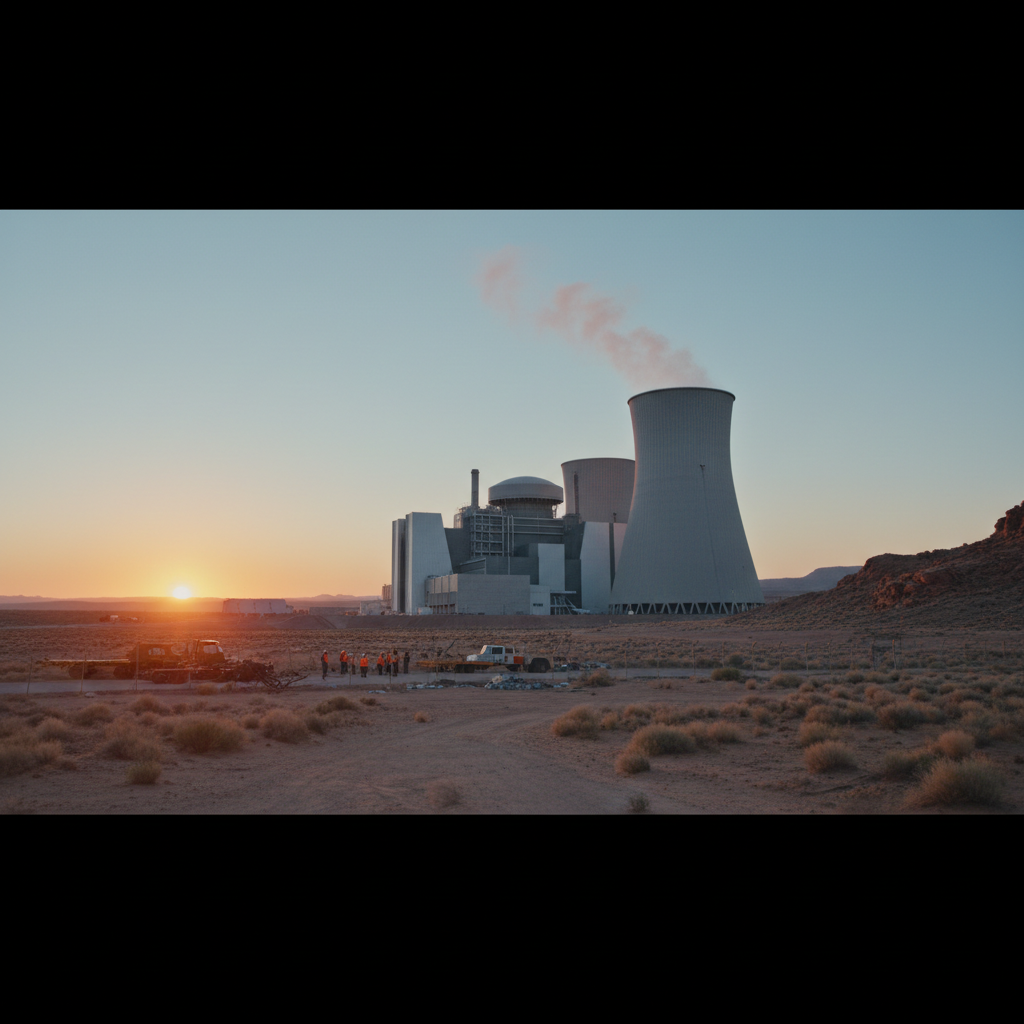
The United Arab Emirates has successfully restored off-site electrical power to its Barakah nuclear power plant, following a drone strike that had disrupted operations. This critical development was confirmed by the International Atomic Energy Agency (IAEA) on Monday, May 18, 2026, marking a significant step in re-establishing stability at the facility amidst heightening geopolitical sensitivities.
The incident at the Barakah plant, a cornerstone of the UAE's energy strategy, occurred during a period of intense regional instability. Tensions have been particularly high around Iran, with ongoing discussions and diplomatic maneuvers involving the United States, Israel, and various Gulf states. The drone attack on the Barakah plant underscores the potential vulnerabilities of critical infrastructure in the face of modern warfare tactics.
News of the power restoration emerged as part of a wider series of events encompassing the US-Israel conflict with Iran. On the same day, former US President Donald Trump stated that a planned military attack on Iran, initially set for Tuesday, was postponed. This decision came after Tehran reportedly submitted a new peace proposal to Washington, leading Trump to express optimism about the potential for a deal that would curtail Iran's nuclear ambitions. He indicated a "very good chance" of reaching such an agreement through ongoing "serious negotiations."
Trump further elaborated that leaders from Gulf nations had informed him of their proximity to finalizing a deal that would ensure Iran does not develop nuclear weapons, terming this a "very positive development." However, he reiterated a strong warning, stating that the US remained prepared for a "large scale assault of Iran, on a moment's notice" if peace talks failed to yield an acceptable resolution.
Despite these diplomatic overtures from the US, Iranian state media conveyed a defiant stance. Following Trump's announcement, Iran issued warnings against any further "strategic mistakes or miscalculations" by the US and its allies. Iranian military officials asserted that their armed forces were "more prepared and stronger than in the past," signalling their readiness to respond to any perceived threats.
In a related development on the economic front, the US administration announced a 30-day extension of a sanctions waiver. This waiver permits the purchase of Russian seaborne oil, a move aimed at aiding "energy-vulnerable" countries affected by the ongoing conflict with Iran. This decision reversed previous intentions not to grant such an extension, highlighting the complex interplay between geopolitical strategy and global energy markets.
The successful restoration of power at the Barakah nuclear plant, as verified by the IAEA, provides a measure of relief amid these volatile regional dynamics. It also brings into sharp focus the imperative for robust security protocols for critical energy infrastructures in a region prone to escalations and strategic attacks.