Trump's AI Stance Spurs MAGA Backlash Amid Calls for Regulation
While former President Trump champions rapid AI development, some of his core supporters, including figures like Steve Bannon, are urging caution and stringent regulation, fearing job displacement and societal disruption.
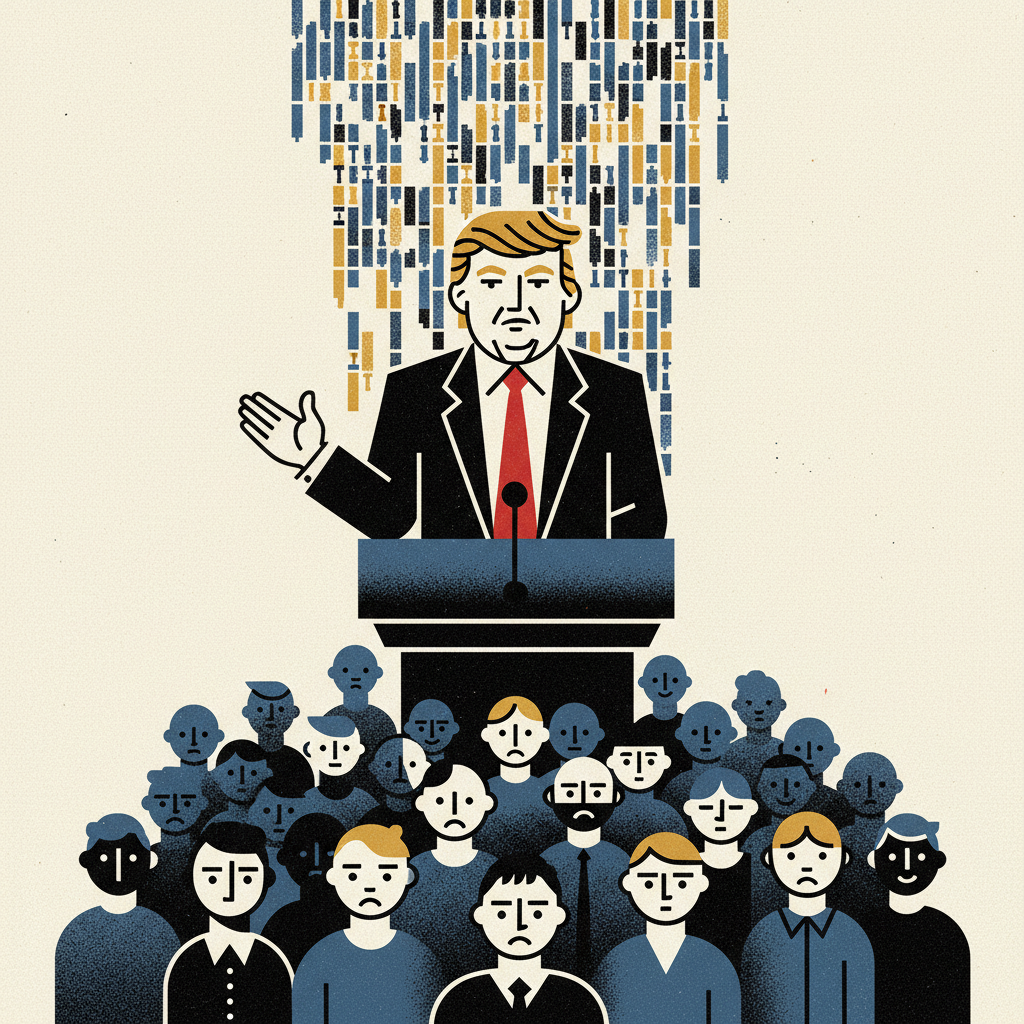
Donald Trump, a vocal proponent of swift artificial intelligence (AI) innovation in the United States, dismisses regulatory measures as stifling America's competitive edge against China. However, this stance has created a fissure within his 'Make America Great Again' (MAGA) base, where anxieties about AI's potential to displace human labor and disrupt society are growing.
Amy Kremer, president of the organization Humans First, is a leading voice in this conservative movement, warning that the U.S. must recognize the dangers posed by AI. Kremer, a long-standing Trump supporter since his 2016 presidential victory, critically notes the lack of AI regulation compared to everyday items, stating, "There are more regulations on a ham sandwich that I can buy at a street corner in New York City or Washington, DC, than there is on AI." She also suggests that some lawmakers, seemingly passive on AI oversight, may be influenced by financial contributions from powerful tech executives.
Recently, dozens of activists, predominantly conservatives, co-signed a letter to Trump, initiated by Humans First and published by Axios. The letter emphatically stated, "America did not become the greatest nation in the world by allowing unelected elites to experiment on the public without safeguards or accountability." Notable signatories included Kremer and former Trump adviser Steve Bannon, who has previously labeled AI as "the most dangerous technology in the history of mankind." Both individuals, alongside other signatories, advocated for a presidential decree mandating government testing for new AI models prior to their public release.
A proposed executive order on AI, focusing on voluntary industry controls, unexpectedly fell through on May 21st. This last-minute reversal prompted speculation that allies of the president within Silicon Valley, who generally oppose government oversight, were influential in its shelving. Trump, at 79, consistently aligns himself with rapid AI advancement, viewing regulations as detrimental to the U.S.'s race against China, even as public anger over AI's implications, such as the energy consumption of massive data centers, intensifies among Americans across the political spectrum.
Rural Communities and the AI Divide
Megan Mullin, a political science professor at UCLA, observes that this public backlash, spanning both major American parties, echoes past protests against housing developments. Mullin highlights a crucial difference in the current AI protest: the placement of data centers, which are often built in rural areas. These regions, where residents frequently feel marginalized by conventional politics and hold strong community ties, perceive the massive data centers as consuming vast amounts of water and electricity while creating minimal new jobs. Mullin describes this as "activating that feeling of siege and resentment for folks who live in rural communities."
Since entering politics, Trump has successfully tapped into the anger of such populations who feel overlooked by perceived elitist leaders. Data from the Economic Innovation Group indicates that Trump won 90% of all rural counties in the last three presidential elections. Pew Research data further shows his rural vote share rising from 59% in 2016 to 65% in 2020, and 69% in 2024. Despite this, Trump's enthusiastic support for AI hasn't yet alienated his most fervent supporters.
Kremer, while critical of tech companies and lobbyists whom she believes have "built a moat around the White House" isolating Trump from public concerns about AI, still lauds his leadership as "absolutely amazing" and believes his "heart and soul is with the American people." Mullin acknowledges the "simmering roots of an AI backlash" but notes it's not yet strong enough to predict its impact on future voting patterns.
Alex Dray, a 23-year-old activist and co-signer of the Axios letter, views AI as a rapidly emerging key issue for young voters, who he believes are worried about its effects on mental health, job security, and living costs. Dray's bipartisan organization, the Young People's Alliance, anticipates a "reckoning in the next couple months" concerning AI's role in society.
Synthesized from primary source
France 24 — https://www.france24.com/en/live-news/20260602-as-trump-cheerleads-for-ai-some-in-maga-world-fret