Middle East De-escalation: Iran and Israel Announce Halt to Hostilities Amidst U.S. Intervention
Both Iran and Israel declare a cessation of military operations, with former U.S. President Donald Trump claiming that both nations desire an "immediate ceasefire" and are engaging in "final peace negotiations."
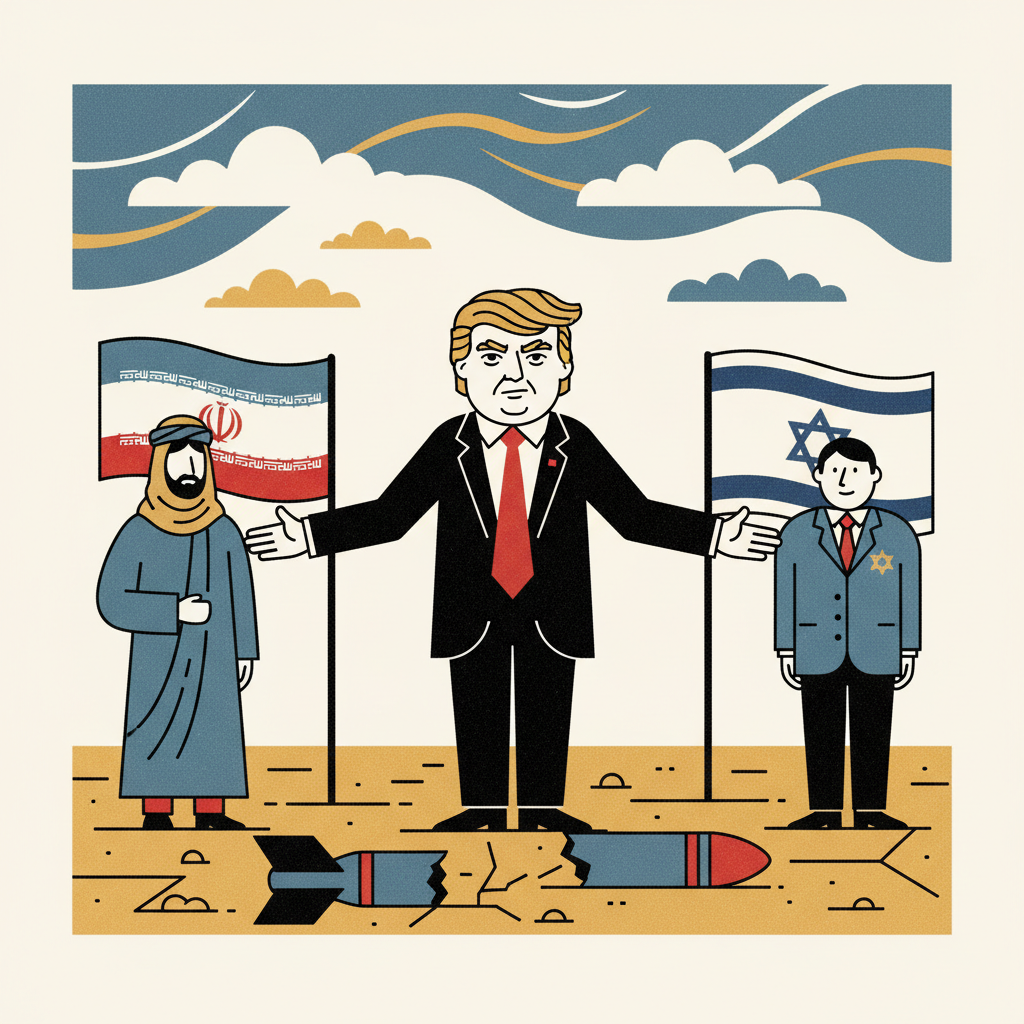
Middle East Conflict: A Fragile Peace Takes Hold
In a significant de-escalation of tensions, both Iran and Israel have announced a halt to their recent military hostilities. The development comes amidst reports that former U.S. President Donald Trump, who has been actively involved in mediating, believes both sides are seeking an "immediate ceasefire." Trump further suggested that "final peace negotiations" are currently underway, marking a crucial moment in the long-standing regional friction.
The current pause in military actions follows a period of intense exchanges. On Monday, June 8, 2026, Iran launched a series of attacks on Israel in retaliation for Israeli strikes earlier on southern Beirut. In response, Israel initiated strikes on targets in central and western Iran. Explosions were reported in the Iranian capital of Tehran, though there were no immediate reports of casualties from these incidents.
Leaders Confirm Stance Amidst Ongoing Tensions
Israeli Prime Minister Benjamin Netanyahu confirmed on Monday that he had ordered a stop to strikes on Iran. This announcement followed similar statements from Iranian leadership earlier in the day, indicating a mutual intent to de-escalate. Despite the pause, Netanyahu conveyed a strong warning, stating that Israel would respond with "full force" if subjected to further attacks, underscoring the delicate nature of the current cessation of hostilities. He is scheduled to convene a full security cabinet meeting at 9 PM local time to discuss the situation.
Former President Trump had previously urged both nations to "immediately stop shooting" after they conducted reciprocal attacks, marking the first time such an exchange occurred since a fragile ceasefire was established in April. The US did not intercept Iranian missiles fired at Israel, according to an official statement.
Humanitarian Concerns and Regional Implications
In a related development, the Israeli Ministry of Defense's Coordinator of Government Activities in the Territories (COGAT) announced that the Kerem Shalom crossing into Gaza would reopen on Tuesday to allow aid to be brought in "gradually." This follows Israel's decision on Sunday to close all crossings into Gaza and halt aid deliveries in response to the Iranian aggression, a move that drew criticism from humanitarian organizations, who labeled it an "illegal act of collective punishment." The Medical Aid for Palestinians (MAP) was among those who condemned the closure.
The broader regional context remains complex. A senior official from Hezbollah denied having any "direct contact" with former President Trump, despite the former president's suggestions to the contrary. The official speculated that Trump might be referring to communications between parliament speaker Nabih Berri's adviser and the U.S. ambassador. Additionally, Lebanon's defense minister reported that Israel has conducted nearly 3,500 airstrikes on Lebanon and hundreds of controlled explosions since the US-brokered ceasefire for Lebanon in mid-April, highlighting ongoing underlying tensions.
As the region navigates this precarious path, the calls for peace from international actors like Donald Trump, combined with the initial steps taken by Iran and Israel to halt direct military engagement, offer a glimmer of hope for a sustained de-escalation, even as the complex web of regional security concerns persists.