Gaza's Dental Crisis: Parents Face Agonizing Choice Between Treatment and Food
Skyrocketing dental costs and supply shortages linked to Israel's siege force Gaza residents to endure severe pain, pushing many to choose between essential care and feeding their families.
Gaza's Dental Crisis: A Stark Choice
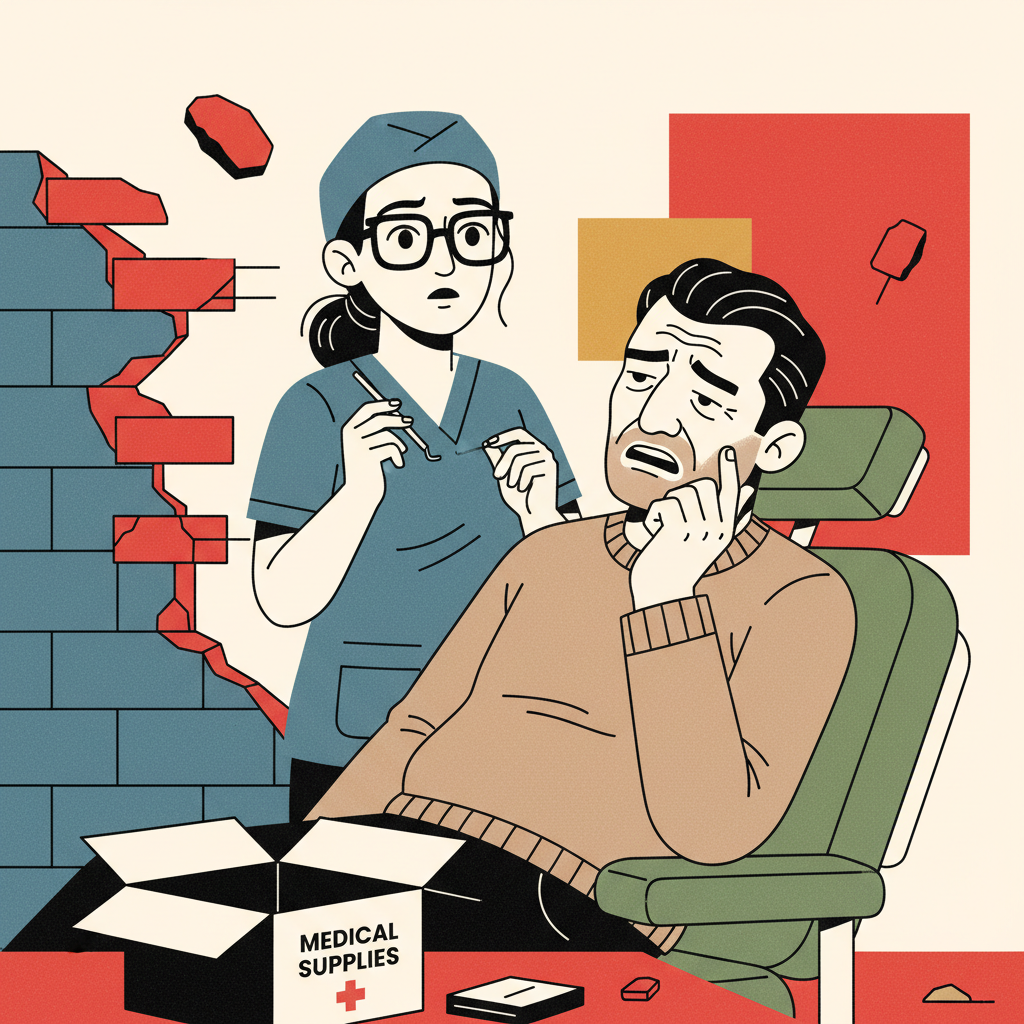
In the rubble-strewn landscape of Nuseirat refugee camp in Gaza, Murad Haji, 50, found himself in a dentist's chair, seeking respite from months of excruciating pain. The throbbing ache in his jaw had become unbearable, forcing him back to the clinic despite the daunting cost. His treatment was quoted at approximately 400 shekels ($142), an amount that, in Gaza's current economic climate, could sustain his children for four to five days due to rapidly escalating food prices. "I can no longer bear the pain… but I knew treatment was more expensive than I could afford," Haji lamented. "Four hundred shekels is a lot… My children need it more."
Haji's predicament is a stark reflection of the severe healthcare crisis gripping Gaza, particularly in the dental sector. Dr. Liza Hassouna, his dentist, explained that the protracted Israeli siege on Gaza has triggered critical shortages of dental materials, dramatically driving up treatment costs. This forces clinics to charge exorbitant prices, making even basic procedures unattainable for many.
Delayed Treatment Leads to Severer Conditions
Dr. Hassouna observes a grim pattern: "Many patients come to us only after the infection has significantly worsened because they could not afford treatment earlier." By this point, what could have been a simple, manageable procedure transforms into a far more complex, painful, and expensive intervention. Haji's case exemplifies this; what might have been a quick two-day fix escalated into a severe infection, characterized by a swollen face, inflamed tooth, and pus accumulation, necessitating antibiotics and painkillers before any dental work could commence—each step adding to his financial burden.
For many Palestinians in Gaza, like Haji, limited financial resources mean that the already arduous daily life is compounded by the persistent discomfort of toothaches. Prolonging treatment often paves the way for infections to spread, potentially requiring surgery. Yet, due to severe financial constraints, many are left with few options beyond enduring the pain or resorting to temporary pain relief until the suffering becomes intolerable.
Supply Restrictions and Soaring Costs
The core issue, according to Dr. Hassouna, stems from restrictive Israeli policies. Essential dental equipment and materials are frequently classified as "non-essential" or "cosmetic" by Israeli authorities, severely limiting their import into Gaza. This creates a low-supply, high-demand market where local suppliers dictate prices, impairing clinics' ability to offer consistent, affordable care.
Dr. Nidal al-Sindi, a clinic manager in Nuseirat, echoes these concerns, describing the daily struggle to balance professional obligations with the fundamental ability to keep his practice operational. Rising costs for rent, medical supplies, and essential equipment place immense financial pressure on clinics. The price of a box of anesthetic, for instance, has surged from approximately 150 shekels ($53) to about 500 shekels ($178). Similarly, "Zeta Plus," a material crucial for dental impressions, has jumped from around 150 shekels ($53) to an astonishing 5,000 to 6,000 shekels ($1,778-$2,133). Procedures once considered affordable are now luxuries; a simple tooth extraction, previously costing 30 to 150 shekels ($11-$53), and a surgical extraction, 100 to 300 shekels ($36-$107), have seen significant price hikes. The increased reliance on single-use instruments further inflates overheads.
The emotional toll on practitioners is also profound. "The hardest part is watching patients leave the clinic still in pain because they cannot afford treatment, while we ourselves are struggling with severe shortages and extremely high operating costs," Dr. al-Sindi sadly noted.
Gaza's Decimated Healthcare System
The dental crisis is but one facet of the broader collapse of Gaza's healthcare infrastructure. World Health Organization (WHO) data indicates that approximately 84 percent of Gaza's healthcare facilities have suffered damage or destruction since the start of Israel's war in October 2023. Over 1,800 facilities have been impacted by Israeli attacks and the ongoing siege. This widespread devastation has compelled many medical providers to operate out of temporary tent clinics or improvised spaces, often lacking proper sterilization and essential equipment. Despite these severe deficiencies, these minimal facilities frequently represent the only available option for most Palestinians in Gaza.
Murad Haji's struggle encapsulates the dire reality of Gaza's dental sector, where crucial procedures are constantly delayed or foregone due to financial impossibility. Across Gaza, dental clinics continue to receive patients, each bringing a unique narrative of pain, deferment, and difficult compromises in a context where options are scarce, even when long-term health consequences loom large.