Escalating Conflict: Israeli Strikes Persist in Southern Lebanon, West Bank Tensions Rise
Recent Israeli military operations have severely impacted southern Lebanon, with casualties and infrastructure damage reported, while the occupied West Bank faces continued settler violence and incursions.
Persistent Israeli military operations have once again brought conflict to southern Lebanon, with a series of strikes throughout the region. Tyre, a city in the south, awoke to a relative calm on a recent morning (05:30 GMT), following a night marred by significant Israeli airstrikes. According to Obaida Hitto, reporting from Tyre, Israel continued various strikes, particularly in the Naqoura region. At least one person was killed in a strike on the town of Ayta, while artillery strikes were reported in areas north of Naqoura and Hosh, as well as Mhaibib, south of Nabatieh.
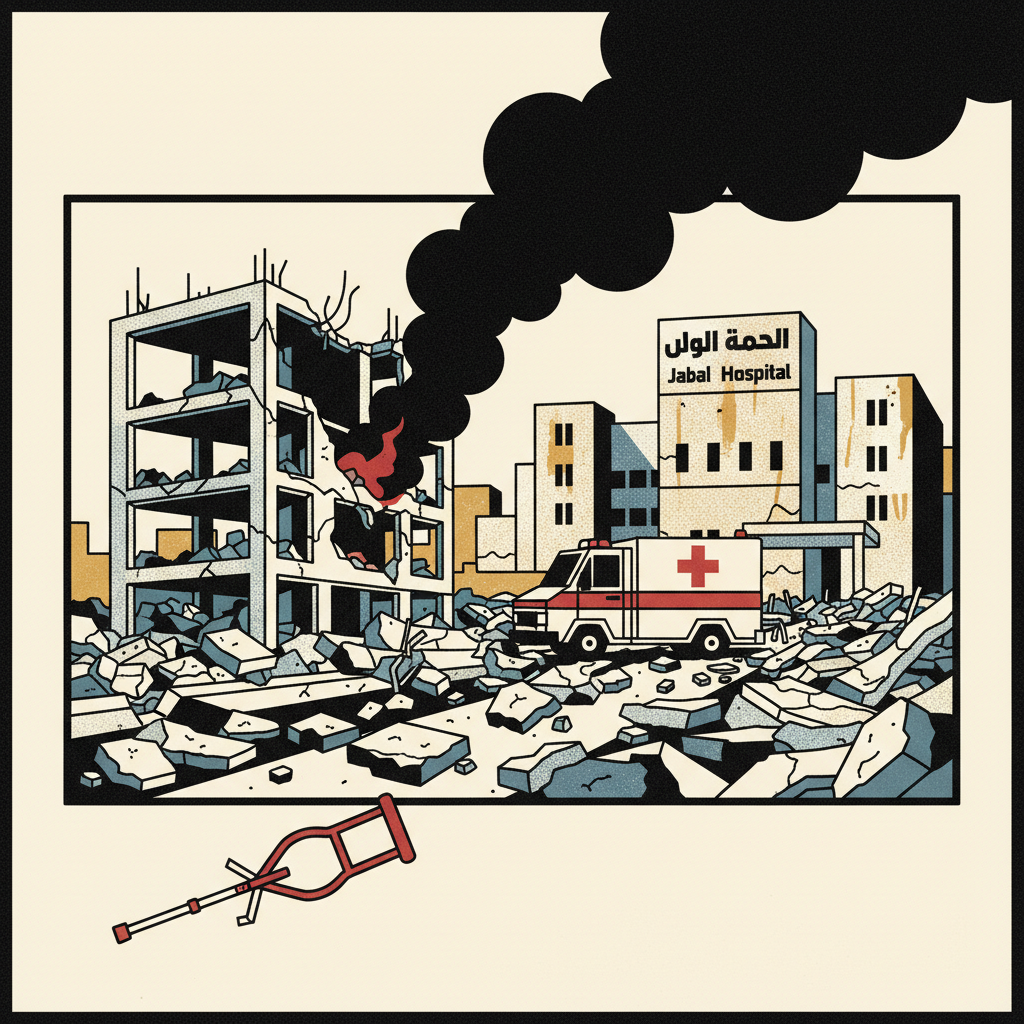
Overnight, loud explosions resonated across Tyre, including an airstrike on a building perilously close to Jabal Amel Hospital, one of the few operational medical facilities in the city. The targeted building sustained extensive damage, with some reports indicating its complete destruction, partially obstructing the road to the hospital. Medical officials, previously interviewed at Jabal Amel Hospital, expressed grave concerns that Israel's actions deliberately aim to intimidate healthcare workers and damage facilities without direct targeting, raising worries about further strikes near this crucial care center. Despite the overnight chaos, the morning brought a welcome absence of drones or jets, providing some respite to the residents of Tyre.
The Lebanese National News Agency (NNA) further corroborated reports of casualties, stating that an Israeli overnight airstrike on a building in Doueir, Nabatieh district, killed one person and injured another. Separately, an Israeli drone attack at dawn on a motorcycle on the Habboush road resulted in one injury.
Reports from the occupied West Bank describe a continuation of Israeli settler violence and military incursions. The Palestinian Wafa news agency documented several incidents: in Nablus and Salfit, settlers from illegal outposts attacked Palestinian-owned vehicles with rocks in Wadi al-Shaer; in Ramallah, a settler, protected by Israeli soldiers, attacked children and their coach, Youssef al-Nasri, during a sports academy training session in Shuqba, firing toxic gas bombs at residents. Israeli forces stormed a funeral ceremony in Anza, Jenin, using tear gas. In Bethlehem, troops entered Beit Fajjar. Near Jerusalem, settlers, guarded by Israeli troops, grazed livestock on Palestinian lands in Khan al-Ahmar, an area experiencing near-daily incursions. Additionally, four Palestinians, including two brothers, were arrested in a raid on the Fawwar refugee camp in Hebron.
Meanwhile, on the political front, US Democratic Congresswoman Rashida Tlaib from Michigan pushed for a Lebanon war powers resolution. Despite gaining support from 90 members of Congress, including her "sister-in-service" Delia Ramirez, the resolution received less than a quarter of the House members' votes. Tlaib expressed gratitude for the support but criticized many colleagues for their perceived failure "to recognise the humanity of the Lebanese people." She vowed to continue fighting to limit US support for what she termed "war crimes and mass atrocities" and US-funded bombs contributing to "violent forced displacement" and "illegal military occupation" in Lebanon. This vote followed a similar House resolution aimed at curbing the former US President's ability to wage war on Iran without congressional approval.
Earlier reports had indicated that Israeli warplanes launched four missiles near Jabal Amel Hospital in Tyre, leading to significant damage and injuries. The NNA confirmed that these strikes wounded at least 12 people and caused the destruction of a bank building. This ongoing violence underscores the severe humanitarian impact and escalating tensions across the region.