Dollar Strengthens as Middle East Peace Talks Falter Amid US-Iran Clashes
The U.S. dollar rebounded after a weekly dip as escalating tensions between the U.S. and Iran cast doubt on diplomatic efforts, pushing investors towards safer assets.
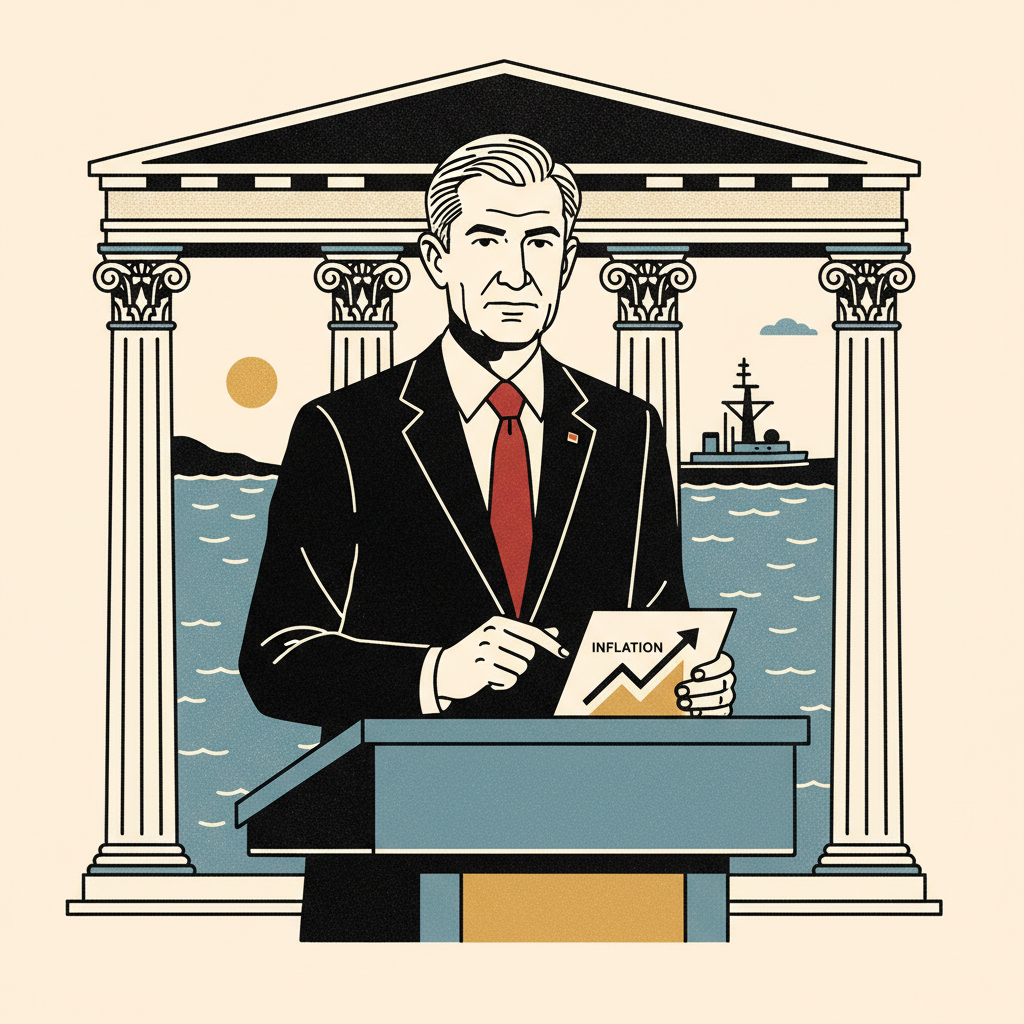
Dollar Gains as Geopolitical Tensions Rise
The U.S. dollar saw an uplift on Monday, June 1, reversing a slight loss from the previous week. This shift occurred as financial markets reacted to renewed hostilities between the United States and Iran, which have undermined fragile peace negotiations in the Middle East. The dollar index, a measure of the currency against six major counterparts, rose 0.36% to 99.368, following a 0.4% decline last week.
Last week's downturn in the dollar was attributed to expectations of a nearing deal between the U.S. and Iran to reopen the vital Strait of Hormuz. The strait's closure has inflated oil prices and exacerbated global inflation concerns, leading some analysts to anticipate a U.S. Federal Reserve interest rate hike this year.
However, the diplomatic climate soured over the weekend after the U.S. military reported striking Iranian air defenses, a ground control station, and two drones. These actions were in response to what the U.S. termed "aggressive Iranian actions," including the downing of a U.S. drone in international waters. Iran's Islamic Revolutionary Guard Corps subsequently announced on Monday that it had targeted a U.S. air base in retaliation for an attack on southern Iran. Compounding these developments, Iran's Tasnim news agency indicated that Tehran's negotiating team had ceased exchanging messages with the U.S. through mediators, citing attacks on Lebanon.
Impact on Global Currencies and Economic Outlook
The conflict, which began on February 28, initially saw the greenback rally due to safe-haven demand and the U.S. economy's relatively insulated position from energy-driven inflation. However, the currency had relinquished some gains amid uncertainty regarding the conflict's direction. On Monday, the euro depreciated by 0.44% against the dollar, trading at $1.1609, while the British pound decreased by 0.3% to $1.3412.
According to Tommy von Bromsen, an FX strategist at Handelsbanken, a potential reopening of the Strait of Hormuz and a subsequent dip in oil prices would likely weaken the dollar in the short term, boosting risk-sensitive currencies like the Swedish krona. Yet, currency markets are currently in a cautious "wait-and-see" mode.
Federal Reserve and Bank of Japan in Focus
Market observers are increasingly betting on the U.S. central bank raising its benchmark interest rate, a stark contrast to earlier expectations of a cut before the Iran conflict began. This shift is driven by rising energy costs, their inflationary impact, and a resilient U.S. jobs market. The upcoming monthly U.S. employment report, scheduled for release on Friday, is keenly awaited. Economists polled by Reuters anticipate an addition of 85,000 jobs in May, with the unemployment rate holding steady at 4.3%.
Meanwhile, former Federal Reserve Governor Jerome Powell, whose term as head concluded last month, cautioned on Sunday against the politicization of monetary policy. Powell remains on the Fed's Board of Governors due to perceived threats to the central bank's independence.
In Asia, all eyes are on Bank of Japan Governor Kazuo Ueda's speech on Wednesday, June 3. Traders are searching for signals regarding a potential rate hike the following week. While the BOJ lacks internal consensus, sources familiar with the deliberations suggest a pause in the central bank's tapering of government bond purchases is increasingly considered a viable option. The yen weakened 0.27% to 159.715 per dollar, nearing the psychologically significant 160 level, a point at which Japanese authorities have previously intervened to bolster the currency. Von Bromsen noted that intervention is likely if the yen approaches 160 again. Elsewhere, the Australian dollar fell 0.66% to $0.7135, and New Zealand's kiwi slid 1.31% to $0.5912.