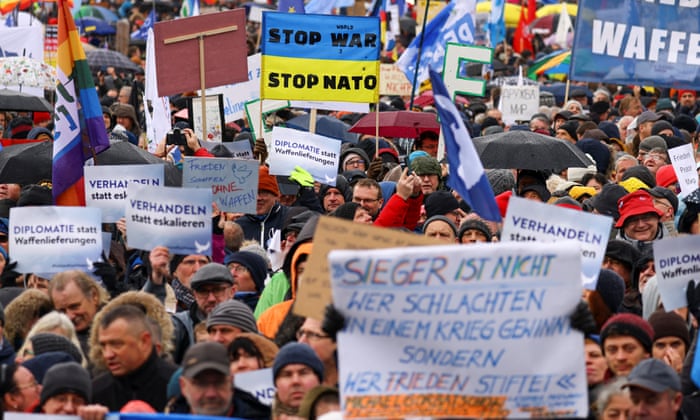
Europe’s far right has exploded at the polls. Now it is the turn of the far left to react with force.
Some left-wing parties that seemed moribund a few years ago are growing again in polls and in recent elections. The political center, which dominated the game, is now struggling to contain advances from both the right and the left.
According to the Wall Street Journal, the shift is more pronounced among younger voters and in large cities. The reasons include the expensive housing crisis, slow economic growth, growing anti-American sentiment, anger over Israel’s military actions in Gaza and Iran, as well as a loss of confidence in traditional parties to solve major day-to-day problems, according to analysts and research institutes.
In some countries, this wave has already turned into concrete electoral victories. In others, such as France and Italy, where the radical left is still smaller, growth has been accompanied by an increase in political violence by far-left groups.
In England, the Green Party reinvented itself as a populist movement: it wants to nationalize public services, legalize drugs and remove the country from NATO. In Germany, Die Linke, the successor to the former East German Communist Party, saw its popularity soar. The party currently appears in second place in general polls, with support above 10% — above the SPD and the Greens, and close to the result it could obtain in the 2025 elections.
The party presents itself as a bulwark against the far right and the AfD. But what really excites his voters, according to the report, are concrete economic issues: social justice, cost of living and the burden of sky-high rents.
In France, the loose union of left-wing parties surprised by finishing second in the 2024 legislative elections. Since then, however, the bloc has been losing steam amid accusations that it encourages violence.
In February, activists from an anti-fascist group founded by a former deputy were indicted for murder and complicity in the death of a 23-year-old far-right activist.
In Germany, violent far-left groups also returned to action. In January, the underground group Volcano claimed sabotage attacks on Berlin’s power grid that left more than 100,000 people without electricity and heating for days in the middle of winter.
German authorities have said they believe the group was behind the attacks, although there is no evidence of Russian involvement. “We are arming ourselves to fight left-wing extremism,” said Interior Minister Alexander Dobrindt after offering a reward of 1 million euros (about R$6.16 million) for information leading to those responsible.
In France, left-wing leader Jean-Luc Mélenchon and his New Popular Ecological and Social Union (NUPES) coalition have campaigned on lower rents, a wealth tax and retirement at age 60 for some workers.
Among voters aged 18 to 29, the radical left is today the most popular force in the polls, according to the Forsa institute. In Berlin, the party’s mayoral candidate has a real chance of winning.
What we are seeing, according to Manfred Güllner, founder of the Forsa institute, is “the rebirth of the classical left”. It fills the vacuum left by social democracy and the greens, and is growing especially among young people.
On the margins of parliament, the far left remains fragmented and without sufficient support to come to power in most countries. But the wind has changed — and the European center now needs to look both ways.
Source: https://www.ocafezinho.com/2026/03/11/sentimento-anti-guerra-faz-esquerda-radical-disparar-na-alemanha/