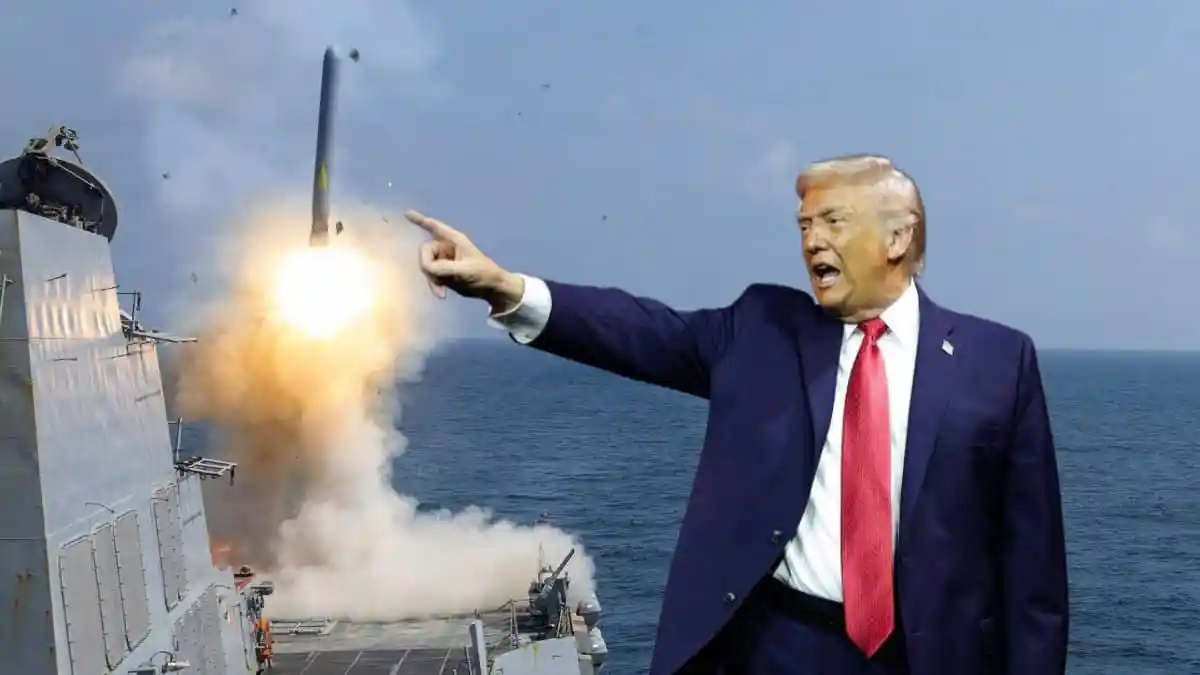
The Donald Trump government’s attempt to impose a military defeat on Iran is beginning to produce clear political effects within the United States itself. Data from recent surveys, released by international vehicles such as Reuters, show that the strategy not only failed to generate consensus, but also deepened the president’s weariness.
According to a Reuters/Ipsos survey, Trump’s approval dropped to 36%the lowest level of his current term. The data is accompanied by an even more significant indicator: rejection of war is growing consistently among North Americans.
The same research points out that 61% of respondents disapprove of attacks against Iranwhile only a minority support the offensive. In another cut, just about 27% directly support the attackshighlighting the isolation of military strategy within American society itself.
The impact is not just political — it is structural. The war caused a significant increase in energy prices, increasing the cost of living and putting even more pressure on the government’s assessment. Just 25% approve of Trump’s economic conductwhile 29% approve of his general management of the economyboth the worst indices of its history.
Faced with this scenario, the White House’s official discourse attempts to sustain a narrative of success, but encounters resistance outside institutional channels. While Trump claims advances and proximity to military objectives, the conflict remains active and without a clear resolution, increasing tensions in the Middle East and international criticism.
On the Iranian side, the response has been direct. Authorities reject the existence of negotiations and classify the United States’ statements as disconnected from reality. A military spokesman even stated that Washington is “negotiating with yourself”in open criticism of the American narrative.
Globally, isolation is also intensifying. The war affected markets, raised energy prices and increased the perception of instability generated by United States foreign policy. International analyzes already indicate that Trump’s stance has transformed the country from an actor of stability into a factor of disorder on the global stage.
The data as a whole reveals a clear picture: the attempt to pressure and weaken Iran did not produce the expected result. Instead, it generated regional resistance, international criticism and a loss of domestic support.
In the end, what was presented as a decisive offensive has translated, so far, into political wear and tear and growing isolation — both outside and inside the United States.
Source: https://www.ocafezinho.com/2026/03/25/aprovacao-de-trump-desaba-apos-guerra-contra-o-ira-e-revela-declinio-de-influencia-do-imperio/