European countries — especially Germany — have publicly rejected military pressure from US President Donald Trump, who demands the participation of his allies in a naval mission to protect the Strait of Hormuz, in Iran, with the aim of containing the possible energy crisis caused by a prolonged blockade of the corridor.
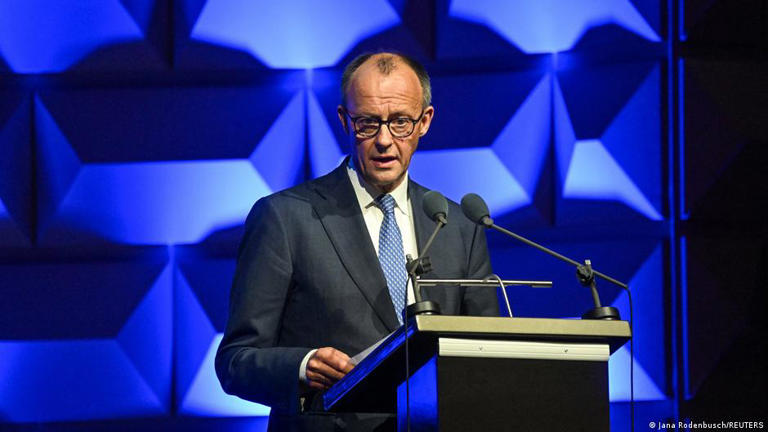
The German government reacted to Washington’s appeals by stating that the conflict does not involve the North Atlantic Treaty Organization (NATO). A spokesman for Chancellor Friedrich Merz’s office declared that the military alliance has no role in the current war scenario in the Persian Gulf. “This war has nothing to do with NATO. It is not a NATO war,” said the representative of the German government when commenting on the pressure from the United States in relation to the Strait.
The position was reiterated by German Foreign Minister Johann Wadephul, who stated that he did not see any role for alliance countries in the region. According to him, Berlin did not consider participating in operations in the Strait of Hormuz before the war and is not considering doing so now.
The statements represent a direct message to the White House after Trump insinuated that NATO could face a “very bad future” if allies do not support the United States in trying to reopen the maritime passage, which has become the focus of the crisis in the Middle East.
The strait, located between the Persian Gulf and the Gulf of Oman, is one of the most strategic maritime routes in the world. About 20% of global oil and much of liquefied natural gas pass through this ocean corridor, making any threat to navigation an immediate risk to the global economy.
In recent days, attacks and incidents involving commercial ships and oil tankers have increased tension in the region. American officials accuse Iran of trying to mine the route using smaller vessels. According to information released by Washington, US forces destroyed at least 16 Iranian boats used to install explosive devices in the area.
Tehran, in turn, claims that it is prepared to respond militarily to the American naval presence. The Iranian Revolutionary Guard has declared that its forces await the US fleet in the strait and that they consider attacks on vessels that ignore warnings from the country’s military authorities to be legitimate.
The increase in hostilities has already led to incidents with merchant ships. Regional authorities reported attacks on vessels transiting the region, including a Liberian-flagged container ship and a Thai bulk carrier. Part of the crew had to be rescued after the attack, while some crew members remained missing.
Amid the crisis, Trump has been pressuring allies to send warships to escort oil tankers crossing the strait. The American president stated that several countries had already promised help, although he did not reveal which nations would participate in the operation. According to him, some allies showed enthusiasm for the mission, while others were reticent.
“Some are countries that we have helped for many, many years. We protected them from terrible external threats, and they were not so enthusiastic,” Trump declared at an event at the White House when commenting on the international response to the American request.
The Republican described the possible naval operation as something “insignificant”, despite the growing risk to commercial shipping. He also once again criticized what he considers a lack of reciprocity on the part of allies who benefit from the United States’ military presence in their territories.
Other European NATO member countries such as France, Italy and the United Kingdom have indicated that they prefer to prioritize diplomatic initiatives to contain military escalation in the Gulf. European leaders also expressed concern about the lack of clarity about Washington and Israel’s strategic objectives in the conflict.
Source: https://www.ocafezinho.com/2026/03/16/alemanha-rejeita-pressao-de-trump-e-afirma-que-otan-nao-participara-de-missao-em-ormuz/