“For the moment, we must remain calm, but I would say that a reaction from the ECB could potentially be closer than many believe.” The words of the member of the governing council of the European Central Bank and governor of the Central Bank of Slovakia, Peter Kazimir, have resonated in the euro zone markets. The increase in oil and gas prices due to the conflict unleashed in the Middle East in response to the war waged by the United States and Israel against Iran has placed the hawks, the toughest ECB advisors and those prone to raising interest rates, as favorites to tilt the euro’s monetary policy.
On March 19 there will be a monetary policy meeting of the ECB to analyze the situation and define the steps to be taken. An increase in interest rates is not expected but the hawks are eating away at the doves within the Governing Council of the monetary institution. “I don’t want to speculate about April or June. But we will be ready to act if necessary,” Kazimir stressed.
Although the consensus of analysts was that in 2026 there would be two new drops in interest rates (up to 1.5%) to spur the lukewarm economy of the two great European powers, Germany and France, the inflationary crisis has transformed the forecasts and now the possibility of interest rate increases is being raised. The changes in strategy around the US objectives with the attack on Iran by President Donald Trump or the continuous exchange over the duration of the conflict have further stressed markets predisposed to nervousness.
“The important thing about Kazimir’s comment is that, despite the ECB’s calls for calm, the central bank could be more sensitive to risks. In addition, it represents the validation – by a ‘hawk’ – of market expectations, which currently range between one and two rate hikes this year,” argued Benoit Gerard, rates strategist at Natixis SA. The consensus now is a 60% chance of a rate hike by June and about a 35% chance of an increase before the end of the year.
Lagarde: “We will do everything necessary” to avoid repeating 2022
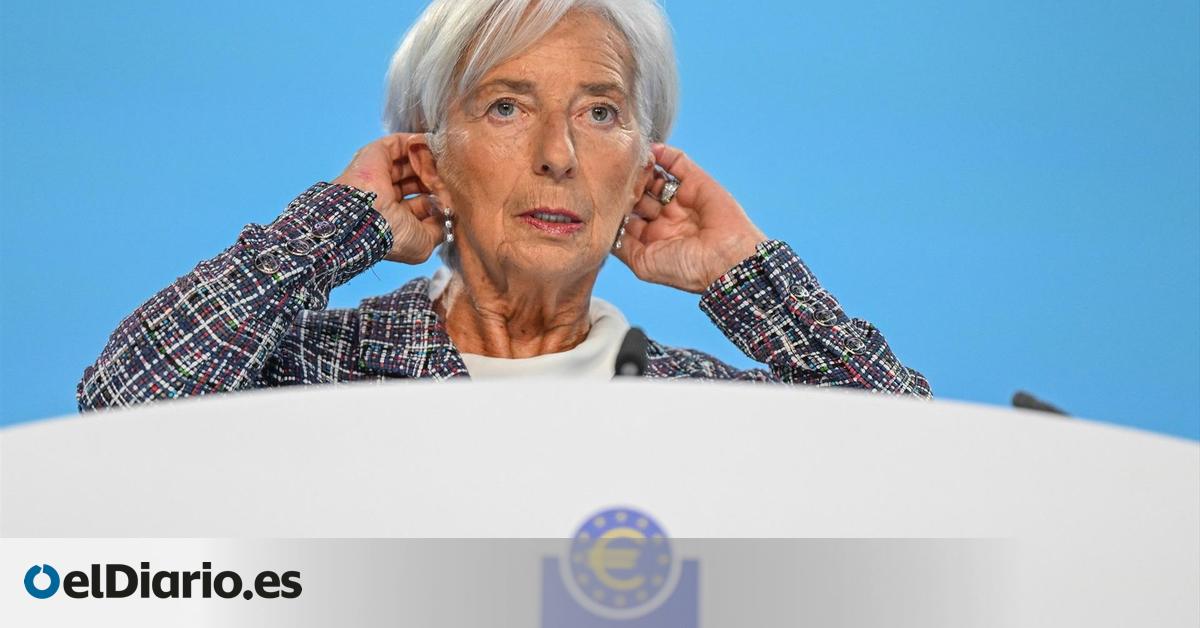
Expectations are based on memory and the last strong price shock occurred with Russia’s invasion of Ukraine. There are still analysts who remember that the ECB acted too late in the face of the price storm that caused this conflict. The president of the monetary institution, Christine Lagarde, tried to give a clear message that the same mistake will not be made: “We are in a different economic situation; we are in a better situation and we have a greater capacity to absorb shocks. We will do everything necessary to ensure that inflation is under control and that Europeans do not suffer the same price increases that we saw in 2022 and 2023.”
That “we will do whatever is necessary” has put the markets on guard. Carsten Brzeski, Global Macroeconomics Analyst at ING, points out: “What do the lessons of the past now mean for the ECB’s current reaction? We must not forget that the 2022 misjudgment has been etched in the ECB’s institutional memory ever since. Whether it is the right approach or not, the experience of 2022 will continue to shape current thinking.”
One of those designated to replace the president of the ECB, the Dutchman Klaas Knot commented that “the lessons (from 2021-2022) are that, although standard theory indicates that one should look beyond a supply shock, such as an energy shock, it is important to be very cautious with non-linearities and second-round effects,” according to Reuters.
One of the toughest hawks, Isabel Schnabel, member of the Governing Council on behalf of Germany, has insisted that the ECB remains “vigilant” in the face of changes. Schnabel warned that the forecasts for the year are no longer useful, “we will have a new one in March, which will at least partially reflect recent developments” in prices.
On the other hand, José Luis Escrivá, governor of the Bank of Spain, stated that temporary inflationary pressures caused by energy shocks should not automatically trigger monetary tightening, unless they are proven to be persistent. François Villeroy, president of the Bank of France, also stated that, at the moment, he sees no reason for the ECB to raise interest rates.
At the next ECB meeting, markets and analysts will be very attentive to the words of the president of the monetary institution. Lagarde is no longer expected to repeat the “good place” where the European economy is to maintain her “wait and see” strategy; now it is necessary for the president of the ECB to ensure more forcefully that she can act in the face of an inflation crisis. “We don’t expect Lagarde to repeat the phrase ‘good place’. There is still no reason for the ECB to panic, but installing a ‘panic room’ within that ‘good place’ might not seem like a bad idea for now,” concludes the ING analyst.
Source: www.eldiario.es