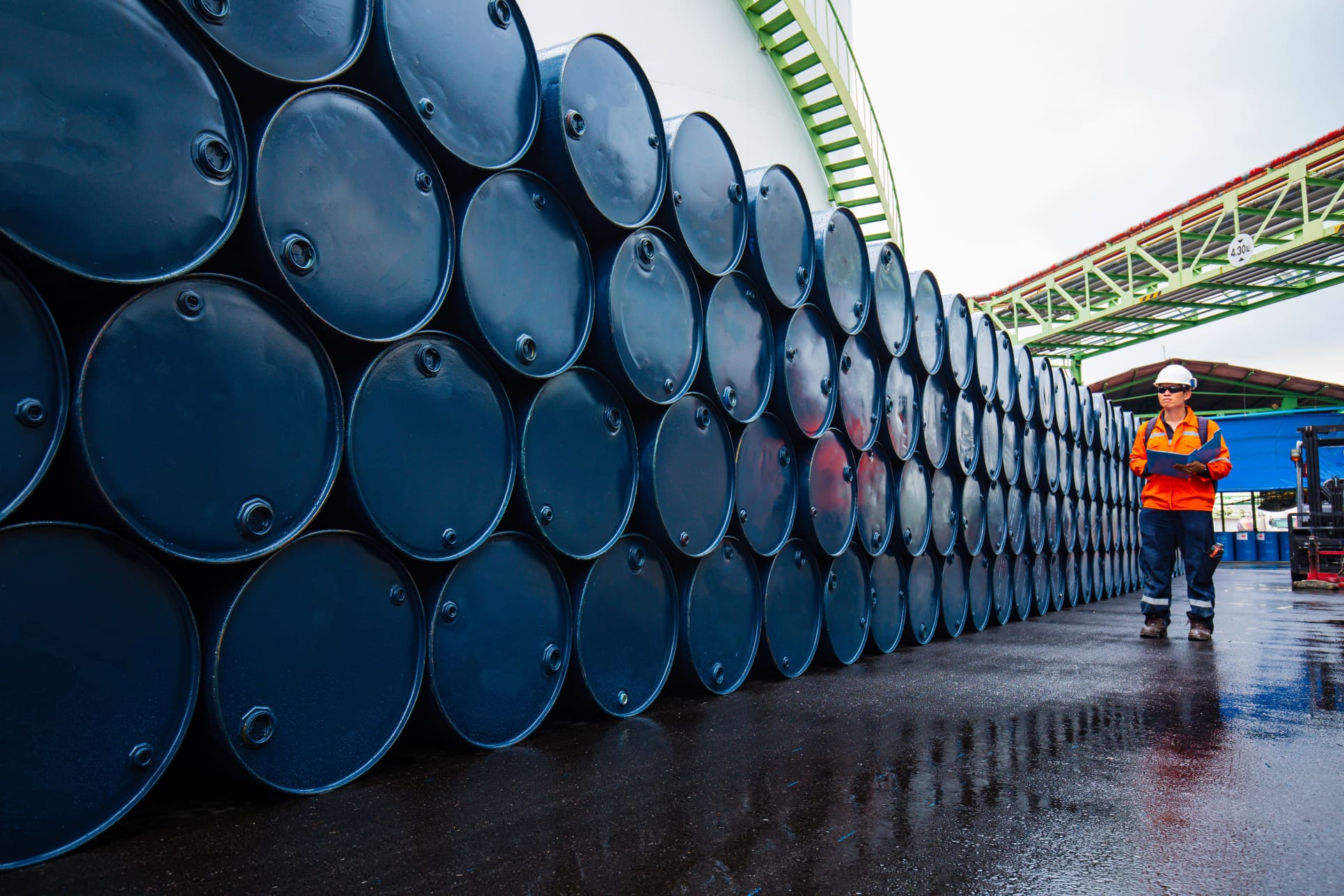
The International Energy Agency (IEA) wants to implement the largest release of strategic oil reserves in history. At an emergency meeting Tuesday, the agency presented a plan that surpasses the record 182 million barrels set in 2022, when reserves were deployed after Russia’s invasion of Ukraine.
The 32 member states will decide on Wednesday. But the plan is fragile: a single country that objects could delay the entire release.
Emergency meeting in Paris
The proposal was circulated among energy officials during an emergency meeting Tuesday evening, the Wall Street Journal reported. The G7 countries had already asked the IEA earlier this week to prepare scenarios. French Finance Minister Lescure confirmed that countries are ready to deploy reserves if necessary.
The 32 IEA member states jointly have at least 1.2 billion barrels of oil in emergency stockpiles. They will vote on the proposal on Wednesday. It will be adopted unless a country objects, but even one protest could delay the plan.
Why now?
The war over Iran has hit global oil supplies on several fronts. The Strait of Hormuz is virtually closed, leaving millions of barrels of oil and fuel stuck on tankers that cannot pass through the passage. Attacks on refineries in the region, including the largest in the Emirates, have further damaged production capacity.
The result is that about 6% of global oil production has disappeared. Prices of kerosene, petrol, diesel and gas have skyrocketed worldwide. Brent crude hit a high of $119 a barrel two days ago and is now trading around $88, partly on expectations of reserves being released.
Fifth time in history, but the biggest
The IEA has released strategic reserves five times in its history: during the run-up to the first Gulf War, after Hurricanes Rita and Katrina in 2005, at the outbreak of the civil war in Libya in 2011, and twice in 2022 after the invasion of Ukraine.
But previous releases did not always have the desired effect. In 2022, oil prices initially rose as markets interpreted the release as a signal that the crisis was more serious than expected. Only later did they help keep prices down.
The question is whether things will be different this time. As long as the Strait of Hormuz remains closed and the conflict continues, the cause of the shortage will not disappear. Reserves buy time, but they don’t solve the underlying problem.
Source: https://newsbit.nl/iea-overweegt-grootste-vrijgave-van-oliereserves-in-de-geschiedenis/