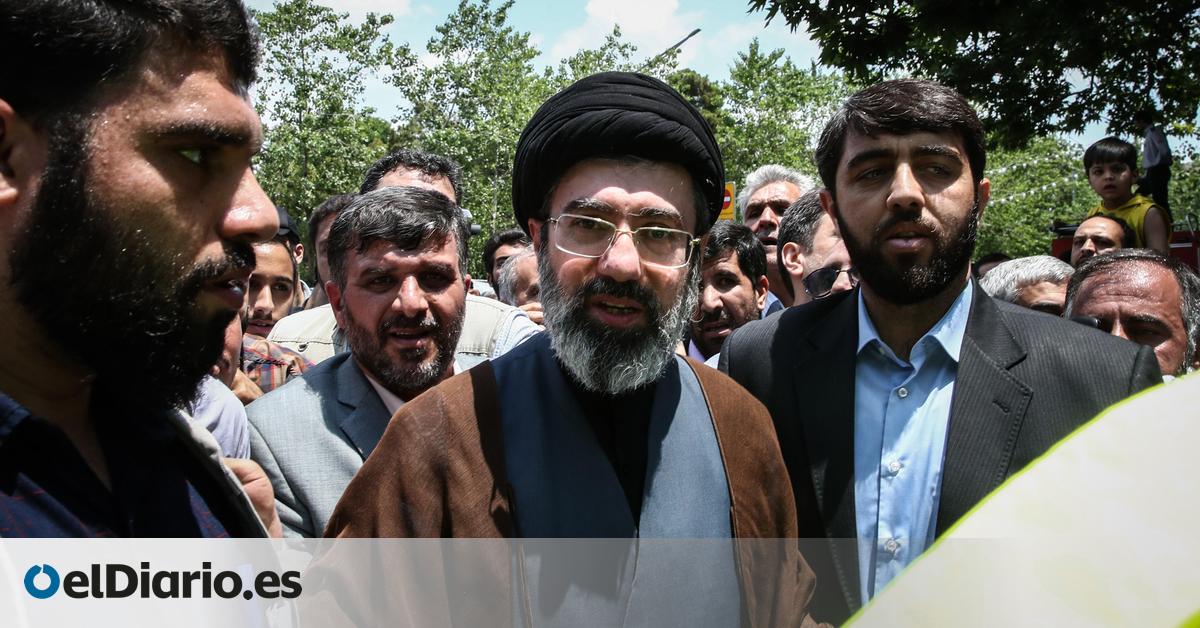
The new supreme leader of Iran, Mojtaba Khamenei, issued his first message this Thursday, after having been elected last Sunday following the assassination of his father, Ali Khamenei, in a selective bombing by the United States on the first day of its attack on Tehran.
Mojataba Khamenei has assured that the closure of the Strait of Hormuz should be used to exert pressure within the framework of the war launched by the US and Israel against his country and has warned that Iran is studying “opening other fronts where the enemy has little experience and will be extremely vulnerable”, according to excerpts of his message broadcast by official media.
The Iranian supreme leader has defended the drone and missile attacks against neighboring countries that host US military bases and has assured that they will continue, directed against “the aggressors of the homeland and the murderers of its people.” “I recommend that you close these bases as soon as possible; you must have already understood that the United States’ claim to establish security and peace was nothing more than a lie,” he stated.
Khamenei has denounced that the US “has been gradually building military and financial bases in some countries for many years to ensure its control over the region.” These bases have been used to attack Iran, he highlighted, so “naturally”, Iran has attacked the same bases, such as those in Qatar, Bahrain, Iraq or the United Arab Emirates.
The new leader has not appeared on state television, but his first message since his election has been read live.
Yesterday, Wednesday, an official Iranian source told the Reuters news agency that Iran’s new supreme leader, Mojtaba Khamenei, was slightly injured but is carrying out his duties.
According to Iran’s ambassador to Cyprus, Alireza Salarian, Mojtaba suffered injuries in the February 28 bombing of the supreme leader’s residential complex that killed his father, Ali Khamenei, and also killed his mother, his wife and a son, as well as other family members.
His election has been controversial because he inherited power from his father, something that had not happened to date in the ayatollah regime, established in 1979 by the Islamic Revolution.
According to The Guardian newspaper, Mojtaba had long been the favorite candidate of the Islamic Revolutionary Guard, the heart of Iran’s military-industrial complex, due to his knowledge of the ins and outs of power after two decades as deputy chief of staff in the supreme leader’s office.
Until his appointment on March 8, Mojtaba was unknown to the general public, the complete opposite of his father Ali, who held the presidency for eight years before the Assembly of Experts elected him to replace Khomeini, the day after his death in 1989.
Source: www.eldiario.es