Events continue to surprise Donald Trump. Even the most foreseeable ones, such as the blockade of the Strait of Hormuz and the subsequent increase in oil prices and, automatically, gasoline prices for all Americans. And after saying, without evidence, that gasoline was less than two dollars per gallon – 3.8 liters – he is now heading towards four. But not alone. The war in Iran unleashed by the US and Israel is causing a global disruption due to the closure of the Strait of Hormuz by Tehran, with the barrel of oil and great costs for the pockets of Americans: according to the Pentagon, the US Army has spent 11.3 billion dollars in the first week of bombing Iran.
Until this Wednesday, countries had been reluctant to draw on their reserves. Over the weekend, Trump downplayed the idea of tapping into the U.S. strategic stockpile, maintaining that supplies were plentiful and prices would fall soon.
But that has changed. This Wednesday, the US president told WKRC Local 12 in Cincinnati that his Administration would use the Strategic Petroleum Reserve (SPR) – “a little bit” – in order to reduce prices. Energy Secretary Chris Wright later confirmed that the US would release 172 million barrels as part of the IEA decision.
The price of a barrel of Brent crude oil – the international reference – has exceeded $100 early on Thursday, just a few days after having shot up close to $120, amid the latest shocks that have affected the financial markets and the world economy as a whole.
“We’re going to do it very quickly,” Trump said this Wednesday night, “and then we’ll fill our reserves. They don’t have a navy, they don’t have an air force. They don’t have anti-aircraft defense, or anything like that. They lack control systems, which allows us to operate with total freedom over that country. And now we’re going to pay close attention to the straits. We’ve neutralized all of their vessels.” They have some missiles, but not too many. I think we are in a very good situation. We are in a very solid position. The bottom line is that we have to win this; win it quickly, but win it after all. And there are a lot of people… I just saw some news… Most people say that victory is already assured. It’s just a matter of time. When will we stop? We don’t want to allow them to re-emerge, and ideally we’d like to see someone in charge there who knows what they’re doing. In other words: someone capable of rebuilding the country.”
Trump improvises to such an extent that the drop in the price of oil is being produced by the announcement of the International Energy Agency (IEA), whose members agreed this Wednesday to liberalize the largest volume of strategic oil reserves in history. Specifically, they are going to release 400 million barrels of these reserves to the market to compensate for supply losses due to the interruption of maritime traffic through the Strait of Hormuz, the focus of tensions and attacks in the war in Iran.
“I have been today [por el martes] in a two-hour briefing on the war in Iran [con la Administración Trump] and this is what I can share,” Democratic Senator from Connecticut, Chris Murphy, said this Tuesday: “The question that left them unanswered was: what happens when they stop bombing and they restart production? They hinted that there would be more bombings. Which is, of course, an endless war. And about the Strait of Hormuz, they had NO PLAN. I can’t go into more detail about how Iran can block the strait, but suffice it to say that, at this point, they don’t know how to safely reopen it. Which is unforgivable, because this part of the disaster was 100% foreseeable.”
Meanwhile, the US Army has sunk 16 ships in Hormuz, supposedly dedicated to laying mines in the strait. Of course, he has not shown any evidence that this was the case.
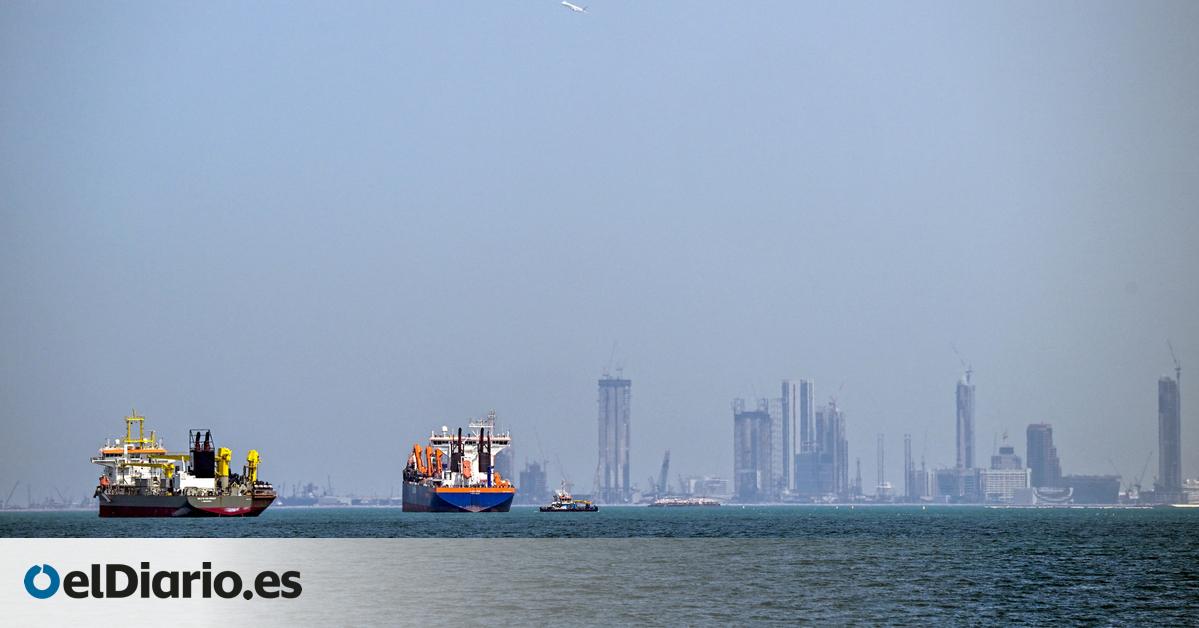
According to CNN, Iran has begun laying mines in the Strait of Hormuz, the world’s most important energy choke point, through which approximately one-fifth of all oil transits. Iran had warned that any ship transiting the strait would be attacked; in fact, the canal has remained closed since the start of the war. The situation in the strait has been described to CNN as a “valley of death”, given the risks that its transit entails.
The Trump Administration stated this Tuesday that the US Navy has not yet escorted any vessels through the strait, although the US president stated on Monday that his team was evaluating options to do so.
Freighters attacked
Iran seems willing to do everything possible to maintain control over the Strait of Hormuz – through which approximately 20% of the world’s oil passes –, its main weapon in this war to put pressure on global energy markets, in the hope that it will be the stock markets that will finally force the US and Israel to stop the bombing campaign they began more than ten days ago.
The commander of the Iranian Revolutionary Guard Navy has stated on the social network X that any vessel that wants to cross the strait has to obtain approval from Tehran. Otherwise, it will have to face the consequences, like the two ships that were attacked this Wednesday by Iranian naval forces in the waters of the Persian Gulf.
The Iranian Revolutionary Guard has assumed responsibility for both attacks and said in a statement released by the official IRNA agency that it shot and detained the two boats because they ignored orders from its forces. One of the vessels is the ship ‘Expres Room’, owned by the “Zionist regime” (Israel) and flying the flag of Liberia; The other is the container ship ‘Mayuree Naree’, flying the Thai flag, which was attacked and had to be evacuated after “insisting on illegally crossing the Strait of Hormuz.”
In that statement, he added that the Strait of Hormuz is “under the intelligent management of the brave maritime forces” of the Iranian Revolutionary Guard and that “American aggressors and their partners have no right to transit” through this sea route, which has always had strategic importance, but which these days has become one of Iran’s main assets.
The military has made it clear that it will not allow oil to pass through Hormuz without its consent. The spokesman for the headquarters that coordinates the regular Army with the Revolutionary Guard has stated that Iran will not allow “not even a liter of oil” to pass through to the United States and its partners, at the same time that he has considered the measures adopted at the international level to contain the price of energy useless. Ebrahim Zolfaqari has assured that oil can reach $200 a barrel due to instability in the area, for which he has blamed the US.
Tehran has shown itself more defiant this Wednesday after what it described as “false promises” by Donald Trump to escort oil tankers through the waters of the Persian Gulf to guarantee their safe transit. Sources familiar with the matter have revealed to the Reuters news agency that the US Navy has rejected the requests it has received practically daily from shipping companies to escort ships through Hormuz since the beginning of the illegal military campaign against Iran.
Since the start of that campaign on the morning of February 28, at least 14 commercial vessels have been attacked in the Strait of Hormuz, according to a Reuters count, which has verified those attacks.
“In the current context, sending warships or civilian ships to the Strait of Hormuz would be suicide,” retired French Navy Vice Admiral Pascal Ausseur told the Associated Press agency. According to the expert, only after a ceasefire agreement with Iran, military vessels could be deployed and possible “escort operations” through the strait could begin, although the situation would remain “dangerous.”
Source: www.eldiario.es