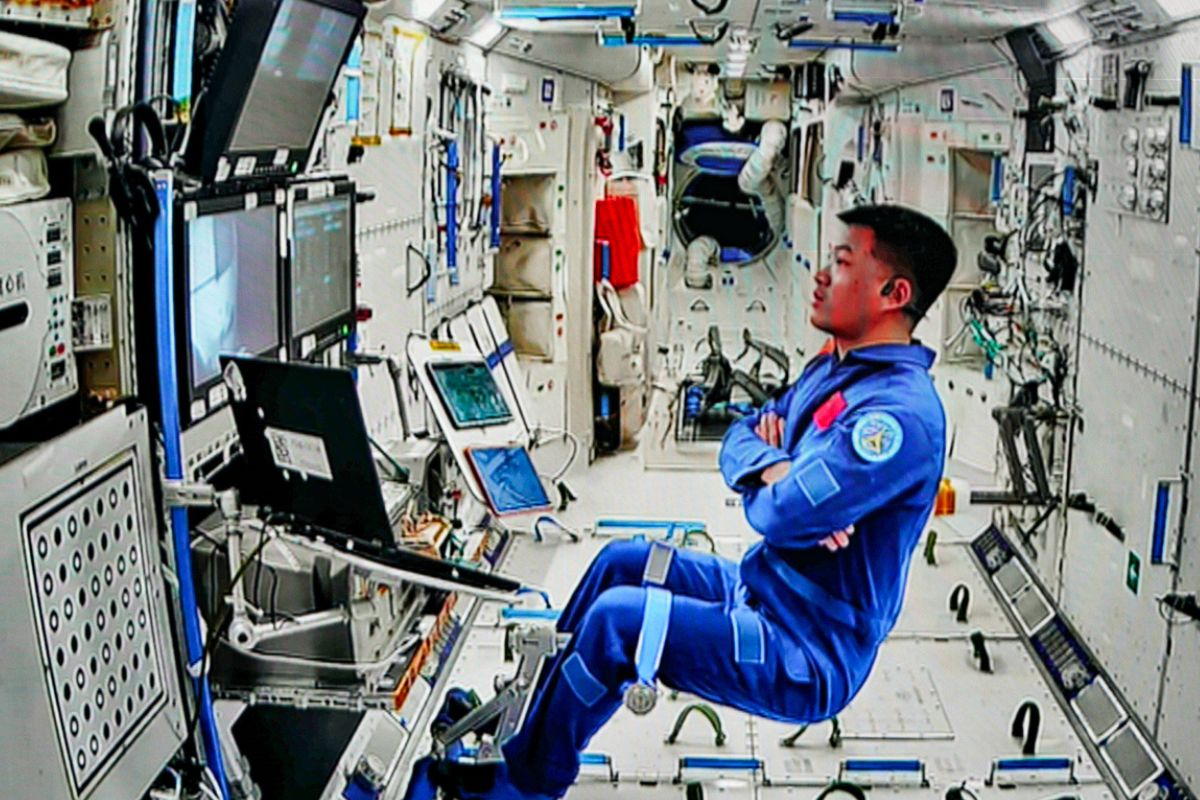
Understand how China is challenging the US to become the next great space power
China emerges as a transformative force on the global space stage. In 2025, the Asian country broke national records by carrying out more than 90 orbital launches in just one year. This achievement highlights Beijing’s commitment to challenging US dominance. Furthermore, Chinese investments in the commercial space sector have jumped from US$340 million in 2015 to around US$3.81 billion in 2025. Therefore, analysts warn that the nation could soon surpass the US, promoting a more balanced era in space.
President Xi Jinping promotes the Chinese “space dream”. It integrates the sector into the “One Belt, One Road” initiative, launched in 2013 to expand China’s economic influence. However, experts like Dave Cavossa, president of the Commercial Space Federation, note this ambition. “We have seen several statements from President Xi [Jinping] about what he calls China’s space dream,” Cavossa said. “They see space and AI as two of those industries that will help lead and catapult China into becoming a global leader.”
Also read
Persian Gulf blocks routes and oil reacts strongly
US plan tries to unlock oil in Hormuz
China has made impressive achievements in recent years. For example, Chinese scientists brought back samples from the far side of the Moon. They also completed a space station in low Earth orbit. Additionally, a rover has landed on Mars, demonstrating advanced technical capabilities. These advances come as total investment exceeds US$104 billion over the last decade, covering civil, military and commercial projects.
Jonathan Roll, an analyst at Arizona State University’s NewSpace initiative, highlights this growth. “The first question they will probably ask me is: how much did the US spend in the same period? The estimates we had pointed to spending five times as much”, explained Roll. However, he emphasizes that China is accelerating its spending. Therefore, the country progresses towards leadership in space science, promoting innovations that benefit developing nations.
Since 2014, China has transformed its space ecosystem. A regulatory entity published “Document 60”, which opened the sector to private investment. As a result, exponential growth emerged. Now, local governments, universities, state-owned and private companies form a robust network. These space hubs house rocket factories, satellites, launch sites and academic centers across the country.
Additionally, more than a dozen private manufacturers develop reusable rockets. They are inspired by models such as those from SpaceX, by Elon Musk. This innovation boosts Chinese competitiveness. On the other hand, satellite infrastructure is advancing rapidly. In 2020, China completed BeiDou, a global navigation system that rivals American GPS.
Thousands of Chinese internet satellites are under development. Although most have not yet been launched, they will compete directly with SpaceX’s Starlink. This expansion strengthens global connectivity, especially in underdeveloped regions. However, the “One Belt, One Road” initiative integrates space with diplomacy. Xi Jinping launched the program to promote international infrastructure.
China has been building satellites for other countries for years. It now builds ground stations and complete facilities in Egypt and Pakistan. “But they also kind of integrated countries into the Sinocentric world through standards, technology and services that they receive from BeiDou… So, it’s soft power. It’s indirect power, as they say in diplomacy,” Roll analyzed. Therefore, this approach promotes equitable partnerships, contrasting with more dominant models.
ASU’s Commercial Space Federation and NewSpace published a recent report. He warns that the US could lose space supremacy. Cavossa commented to CNBC: “The United States is still, by far, the global leader in the space sector.” He added: “You know, we still have the strongest commercial space industry. We still have the largest launch capacity on the planet. But what we see is that China is moving very quickly to catch up to us. And if we don’t do anything, they will overtake us in the next five years.”
Despite this, the US maintains advantages. However, China closes the gap with increasing investments. Roll notes that Beijing aims to not just match but lead. This dynamic encourages a more inclusive space race, benefiting humanity.
Experts suggest actions for the USA. They recommend investing in spaceports and streamlining licenses for commercial launches. Additionally, allocating enough spectrum to satellites would help. Cavossa emphasizes: “This current space race is not just about flags and footprints.” He concludes: “This space race will define which country builds the strongest commercial space industrial base.”
Therefore, the Chinese rise challenges the status quo. It promotes technological advances that democratize access to space. However, the US needs to act to preserve its position. This competition can drive global innovation, creating a more collaborative space future.
With information from CNBC*
Source: https://www.ocafezinho.com/2026/03/07/avanco-espacial-da-china-pressiona-dominio-americano/