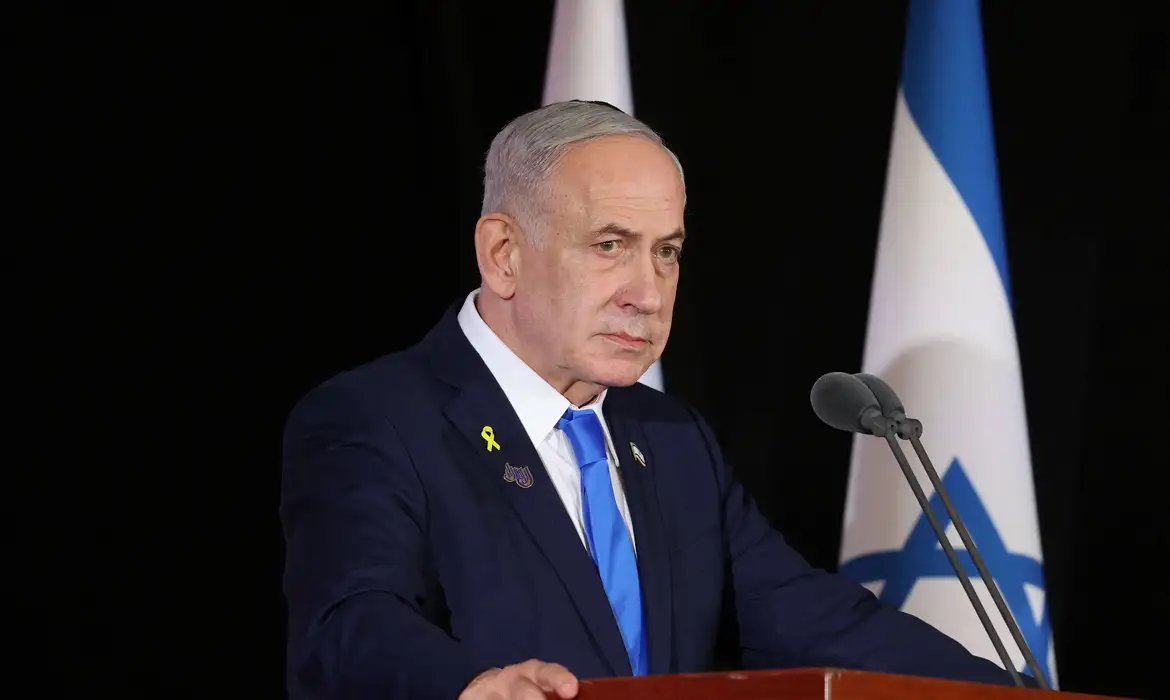
The Iranian government announced that it carried out an attack on the office of Israeli Prime Minister Benjamin Netanyahu, expanding the military escalation in the Middle East after bombings carried out by Israeli and United States forces against Iranian targets. The information was released by the international agency AFP. Until the last update, Israeli authorities had not officially confirmed the alleged attack.
The declaration occurs in a context of direct confrontations and exchange of public threats between Tehran, Tel Aviv and Washington, increasing the level of regional instability and intensifying the risk of expanding the conflict.
Iran rejects resumption of negotiations
Iranian Security Chief Ali Larijani stated this Monday (2) that the country does not intend to resume negotiations with the United States. In a post on social media, he declared: “We will not negotiate with the United States.”
Larijani also criticized US President Donald Trump, stating that he had “plunged the region into chaos” and holding American foreign policy responsible for the military escalation. In another message, he said that Trump’s actions transformed the slogan “America First” into “Israel First”, adding that Iran considers it to be merely defending itself and that its armed forces “did not initiate aggression”.
The public denial contrasts with recent diplomatic signals. Iranian Foreign Minister Abbas Araqchi had indicated to Omani Foreign Minister Badr Albusaidi that Tehran would be open to “serious efforts” at mediation, including the possibility of a ceasefire and resumption of dialogue, according to a report from the Omani government.
Trump promises to continue the offensive
On Sunday (1st), Donald Trump stated that the military campaign will continue until the strategic objectives defined by Washington are achieved. In a public statement, he said that the country would retaliate for the deaths of three American soldiers hit in Iranian attacks.
The American president issued an ultimatum to Iranian forces: “Give up your weapons and receive full immunity, or face certain death.” In an interview with the British newspaper Daily Mailstated that the conflict could last around four weeks, an estimate based, according to him, on strategic assessments by the government.
When commenting on the possibility of negotiation, Trump declared that he agreed to talk with Iran, but criticized the moment chosen by Tehran. According to him, the Iranian authorities “waited too long” to offer proposals considered viable.
The president also stated that some of the Iranian negotiators involved in previous negotiations had died in the recent attacks, describing the offensive as “a big blow”. Furthermore, he mentioned reports of internal demonstrations in Iran and classified the country as a “very dangerous place right now”.
Military escalation and regional impact
The joint military offensive between the United States and Israel against Iran began on Saturday (28). According to the Iranian press, citing data from the humanitarian organization Red Crescent, the bombings left 201 dead and 747 injured, in addition to damage in several cities, including the capital, Tehran.
In response, Iran launched missiles into Israeli territory and attacked American bases in the Middle East. The United States Army reported no military injuries and classified damage to facilities as minimal.
Iranian authorities also announced the closure of the Strait of Hormuz for security reasons. The maritime passage is considered strategic for global oil trade, and any prolonged disruption could affect international energy markets.
Benjamin Netanyahu declared that the military operation eliminated commanders of the Revolutionary Guard and authorities linked to the Iranian nuclear program, stating that “thousands of targets” could still be hit in the coming days. The prime minister also addressed a message to the Iranian population, saying that the moment would represent a historic opportunity.
Uncertain mediation
Despite diplomatic efforts led by Oman, there is no indication of immediate progress in negotiations. Public statements by political and military leaders indicate a hardening of positions and a reduction in space for dialogue in the short term.
With ongoing attacks, mutual threats and increasing military mobilization, the confrontation increases the risk of regional destabilization and keeps the Middle East on alert, while governments and international organizations monitor the evolution of the scenario.
Source: https://www.ocafezinho.com/2026/03/02/ira-afirma-ter-atacado-gabinete-de-netanyahu-e-tensao-cresce-com-troca-de-ameacas-entre-teera-washington-e-tel-aviv/