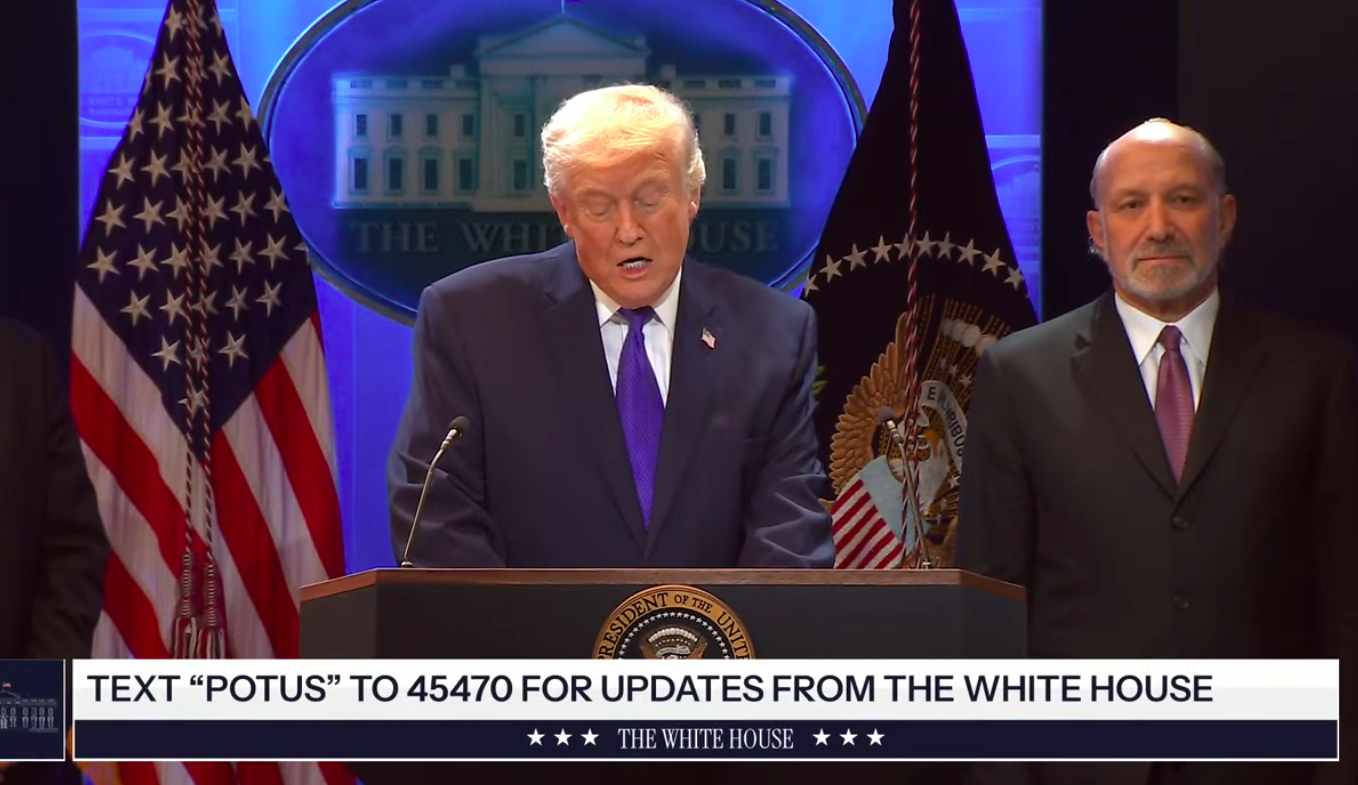
An analysis published by Bloomberg Opinion assesses that the President of the United States, Donald Trump, may face significant political attrition with the military offensive against Iran. The text is signed by political analyst Ronald Brownstein, who maintains that the conflict began with limited public support and tends to generate electoral costs if it produces negative consequences for the American population.
Restricted public support and distrust in leadership
According to research cited in the analysis, although the majority of Americans see the Iranian nuclear program as a threat, the majority rejects military intervention. A survey indicates that 70% of respondents — and 80% of independents — oppose military actionand similar proportions argue that the president should obtain authorization from Congress before initiating hostilities.
Another study, by AP/NORC, points out that around 55% have little or no confidence on Trump’s ability to decide on the use of force abroad or to conduct international relations. For the writer, this puts the president in a politically vulnerable position at the beginning of the conflict.
Military strategy seen as political calculation
The option for air strikes, without a land invasion, is interpreted as a sign of political caution. The analysis suggests that a ground operation could increase the risk of military casualties — a historically sensitive factor for American public opinion.
The text recalls Trump’s previous statement to New York Times:
“I consider my ‘own morality’ and my ‘own mind’ to be the only limit.”
Even with this stance, Brownstein argues that the president avoids broader actions for fear of the electoral impact if the conflict results in the deaths of soldiers, attacks or an increase in the price of oil.
Three possible scenarios and their political effects
The columnist describes three plausible outcomes:
- Quick victory and overthrow of the Iranian regime — could generate temporary but possibly fleeting political momentum.
- Prolonged air campaign without regime change — scenario considered more likely and potentially politically damaging, as it reinforces criticism that the president is neglecting internal priorities.
- Protracted and costly conflict — hypothesis with greater electoral risk, due to accumulated wear and tear.
A CNN/SRSS poll cited indicates that more than two-thirds of adults say Trump has not paid enough attention to the most important domestic issues. Among independents, young people and people of color, the perception would be even more pronounced.
Lack of institutional consensus
The analysis also criticizes the lack of internal political mobilization before the offensive. According to the text, Trump would have explained little to the public why he considers the war necessary, did not present clear criteria for success and showed little interest in consulting Congress.
A former senior national security official, quoted anonymously, sums up the criticism:
“When you go to war, you can’t go to war with just your base; you have to go to war with the entire country.”
Potential electoral impact
The conclusion of the article is that, by starting the conflict with limited public justification and without broad political support, Trump alone assumes the risks. With elections scheduled for November, any worsening — whether military, economic or diplomatic — could translate directly into electoral costs.
For Brownstein, except in the case of a quick victory or total collapse of the strategy, the most likely scenario is that the offensive increase the president’s political vulnerability rather than strengthening him.
Source: https://www.ocafezinho.com/2026/03/02/bloomberg-aponta-colapso-eleitoral-de-trump-apos-ofensiva-contra-o-ira/