Spontaneous celebrations erupted in cities across the country following the announcement of the supreme leader’s death, followed by huge demonstrations of mourning and loyalty
As soon as news of Ayatollah Ali Khamenei’s death broke on Saturday night, the streets of Tehran and cities across Iran echoed with screams and cheers.
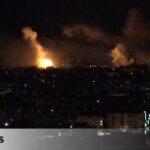
Some Iranians celebrated the death of their former ruler at the hands of US and Israeli bombings.
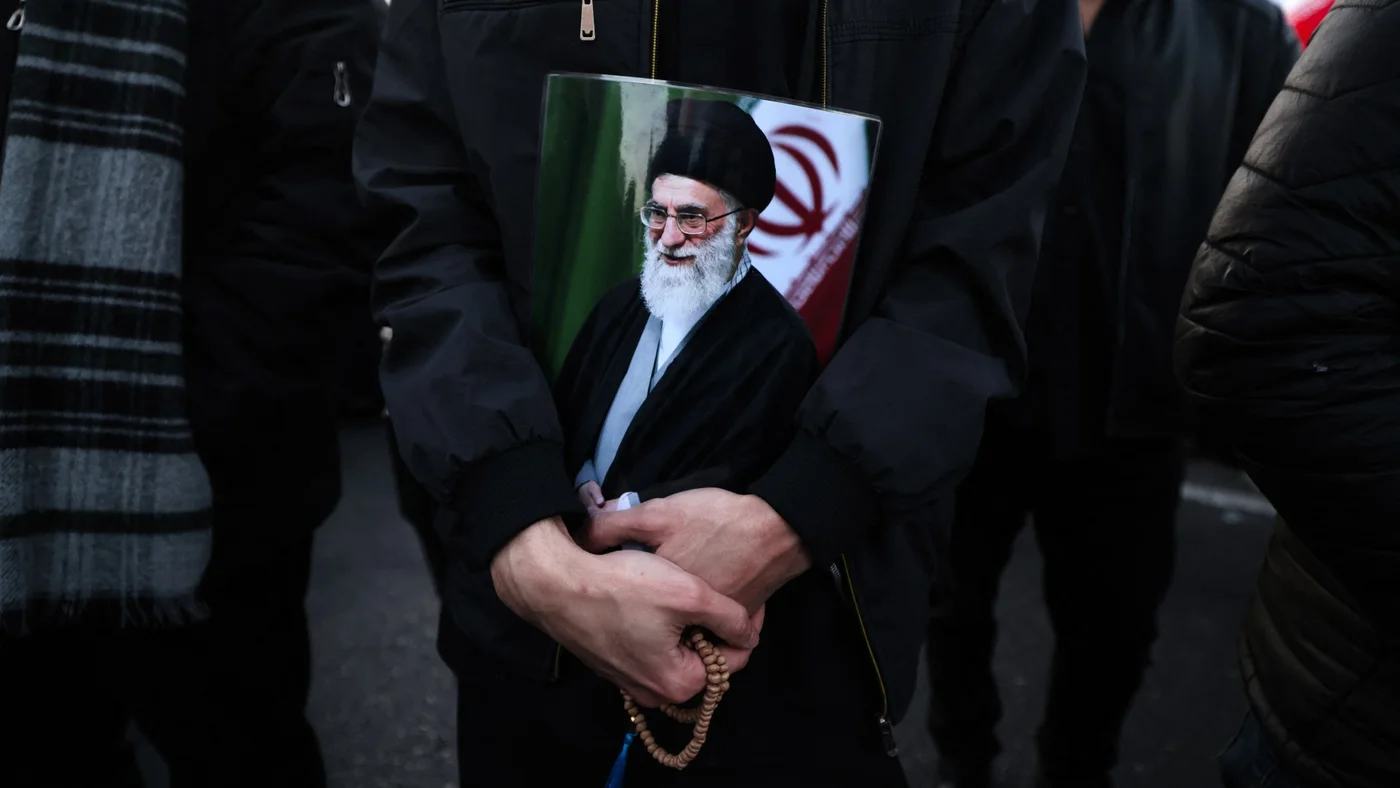
Others were overcome with sadness at the loss of a spiritual leader and national figure who had been omnipresent in the lives of Iranians for 37 years.
There were also many people who feared whatever came next.
Maryam, 52, lives in Ekbatan, in the west of Tehran. She said that moments after Reuters reported the news, her neighbors appeared at their windows.
“Suddenly, people leaned out of the windows and you could hear screams and cheers,” she said.
She describes it as a spontaneous reaction: “It was as if people were celebrating the death of their dictator.”
Ekbatan was one of the neighborhoods that witnessed large anti-government protests during the 2022 “Woman, Life, Freedom” movement.
In recent years, security forces have repeatedly entered the district and arrested many protesters. On Saturday night, the news of Khamenei’s death turned years of revolt against authorities into celebrations.
In other parts of the capital, Khamenei’s murder was mourned.
Ali, 36, said he was deeply saddened and outraged by the death of the supreme leader.
“Those who rejoice in the death of our leader do not understand the dark future that awaits us,” he told Middle East Eye.
“Khamenei was someone who managed to hold this nation together. He has many supporters in Iran. The future will show what a great loss his absence will represent for the country.”
People gather to celebrate after reports of the death of Iranian Supreme Leader Ali Khamenei on the streets of Karaj, Alborz province, Iran | Social media via Reuters
On Sunday morning, the atmosphere in Tehran was largely controlled by government supporters.
Supporters of Khamenei and the Islamic Republic appeared on the streets in an organized manner.
In the central neighborhoods of the capital, it was possible to see groups of men on motorcycles carrying identical flags and posters that appeared to have been distributed in a coordinated manner.
They called for “harsh revenge” and chanted slogans against the US and Israel.
Large pro-government demonstrations were held in Tehran, Isfahan, Qom and other major cities.
The crowds seemed to be both outraged by the loss of their political and religious leader and ready, at least in their words, for war and even sacrifice.
Dancing in Mashhad
Hours before the pro-government protests, Iranians across the country took advantage of the darkness of night to commemorate Khamenei’s death.
Behnam, 24, who lives in Saadat Abad, northwest of Tehran, said he was overjoyed to hear the news.
“We were driving through the streets,” he said. “We were honking our horns and celebrating. The music in our cars was loud and we were smiling at the other drivers.”
“People were congratulating each other,” he adds. “The end of this nightmare seems unbelievable.”
Similar scenes were reported in Mashhad, a deeply religious city in northeastern Iran.
Mashhad, home to the shrine of the eighth Shiite imam, is often seen as a stronghold of conservative and radical religious forces.
Rules regarding Islamic dress are often more strictly enforced in this region than in other parts of the country.
Fereshteh, 47, describes what she saw in Mashhad’s Ahmadabad neighborhood: “On Saturday night, people distributed sweets in the streets. Some got out of their cars amid heavy traffic and danced to the music coming from inside the vehicles. Young men and women celebrated together, without wearing the mandatory hijab.”
She adds that Ahmad Alamolhoda, the city’s main Friday prayer leader, would be furious if he saw such scenes.
Alamolhoda is known as an influential conservative cleric and is the father-in-law of the late President Ebrahim Raisi.
Over the years, he has supported strict religious rules and greater restrictions, especially for young people and women.
The celebrations in Mashhad are also significant because the city is Khamenei’s birthplace. He traveled there every year to deliver a speech on the first day of the Persian New Year.
Fears of a new Libya
However, not everyone shares this optimism.
Mohammad, 31, from the city of Arak, said he was deeply worried about what would happen next.
A food industrial engineer who works in a factory said: “Khamenei’s crimes over the years are clear to everyone. But I am almost certain that after him, nothing will be left of Iran.”
Referring to recent US and Israeli attacks, he adds: “In just one day, they leveled a girls’ primary school and killed many children. Do you really expect countries that turned Gaza into ruins to bring you democracy?”
Mohammad says he can’t be as optimistic as others. “We have entered a dark period,” he said. “A period like what we saw in Syria, Libya and even Iraq after Saddam Hussein – a time of instability, civil war and even more bloodshed.”
In recent months, many in Iran have warned of the risk of repeating the experiences of Syria or Libya. Advocates of regime change accuse them of spreading fear or repeating the government narrative.
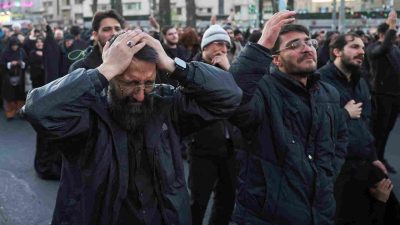 People mourn in Enghelab Square after the assassination of Iranian Supreme Leader Ali Khamenei in Israeli and American attacks in Tehran on March 1, 2026 | Majid Asgarip/Wana via Reuters
Some take a more cautious view.
Bahareh, 40, a political science graduate and now a homemaker, said she wishes she felt as hopeful as others.
“I would love to celebrate and talk about a bright future,” she said. “But what I see makes it difficult to be so optimistic.”
It highlights the strong influence of the military within the country.
“Do you really think Khamenei’s death will end the Islamic Republic?” she asks. “When in history has a regime collapsed solely because of foreign airstrikes, without ground troops?”
Bahareh believes it is possible for the system to become even more authoritarian.
“In my opinion, someone from within the system, loyal to the same ideology and anti-Western stance, will take power. At the same time, protests will increase,” she said.
“The government may not have the same strength as before, but, like Bashar al-Assad’s government, it can survive large-scale violence, at least in some parts of the country.”
Bahareh fears a future of continued conflict between society and the state, growing instability and constant foreign attacks.
“In the end,” she said, “Israel and the United States may continue their attacks, and what Iran will be left with may be a failed state.”
Dead protesters
For 36 years, Khamenei held power in Iran, gradually becoming an increasingly authoritarian and absolute leader.
Over the decades, he has resisted all pressure for reform from within the system and responded to internal dissent with force.
Each wave of protests grew larger than the previous one, and each repression became more violent.
Videos shared on social media show groups of Iranians gathered in front of the homes of those who were killed by security forces during last month’s protests.
Mina, 22, who lives in eastern Tehran, said these houses have become epicenters for Khamenei’s critics to gather.
“People brought flowers and candy for the families,” she said.
“They stood in front of the homes of those who were killed, dancing, celebrating and congratulating their families.”
Mina said the 19-year-old mother of one of the victims spoke to them with a bitter smile.
“She told us, ‘I’m glad my son’s blood was not shed in vain.’”
Originally published by Middle East Eye on 03/01/2026
Source: https://www.ocafezinho.com/2026/03/01/como-o-ira-reagiu-quando-a-noticia-da-morte-de-khamenei-chegou-as-ruas/