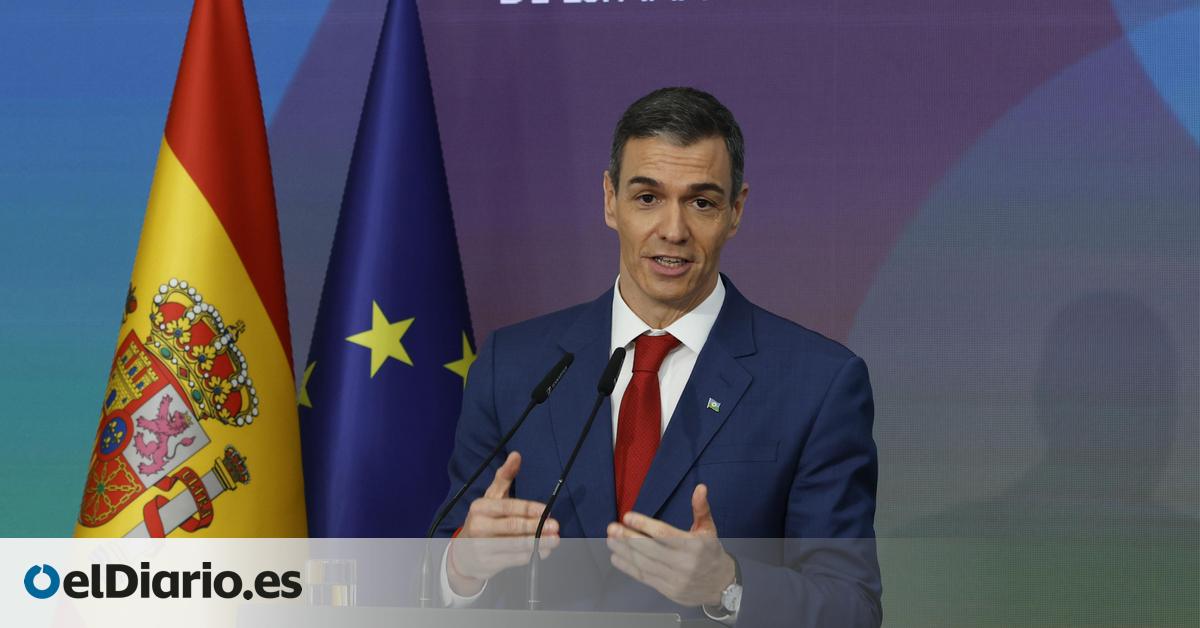
The Government has decided to declassify the secret documents of the 23F coup attempt, 45 years after the assault by Antonio Tejero and his followers on the Congress of Deputies. As Pedro Sánchez himself has announced, it will be this Tuesday when the Council of Ministers adopts this initiative “thus settling a historic debt with the citizens.”
Government sources have explained that the declassification “will become effective next Wednesday the 25th, with its publication in the Official State Gazette.” “From that moment on, the documents will be available to all interested parties on the official Moncloa website: https://www.lamoncloa.gob.es/.
The minister spokesperson, Elma Saiz, will offer tomorrow “all the information in this regard at the usual press conference after the Executive meeting,” as explained by those same sources.
With this initiative the Government goes beyond the new official secrets law that the Executive sent to Congress in July and that only affected documents reserved until 1980. Until now, for any important and sensitive folder to be known it had to depend on the will of the Government itself, the request of Congress or the order of a judge, since a Franco law from 1968 governs that considers that everything is secret by default and forever, if not stated otherwise.
With the new regulations, the paradigm would be the opposite: the automatic declassification of all documents when 45 years pass. That is, as of today, those dated until 1980, except when it affects national security, in which case the Government reserves the ability to continue maintaining secrecy, although it will not be able to do so if it affects human rights violations.
The request for the declassification of the documents on 23F has been a constant by parties such as the PNV or Podemos in recent legislatures, but until now the parliamentary initiatives presented by different allies of the Government had fallen on deaf ears, precisely because of the resistance of the PSOE to their publication.
Cercas, to Sánchez: “Declassify everything there is”
Just a few months ago, during the presentation of the series Anatomy of a moment In the Congress of Deputies, Javier Cercas, the author of the book on which the audiovisual production is based, said the following to Sánchez himself, present at the event: “I am going to ask you one thing: please, as far as you can, declassify everything there is. The interpretation of the coup d’état is not going to change anything because we know the truth and those of the hoaxes and nonsense are going to continue telling them, but at least they will have one less element to cling to for their lies.” Sánchez agreed and this Monday, to announce the declassification, the head of the Executive tweeted the video of that intervention by Cercas.
One of the great unknowns is what was the role of the then King Juan Carlos I during the coup. “I have nothing to hide,” says the emeritus when recounting his particular version of what happened during the coup attempt on February 23, 1981 (on 23F) in his memoirs. Reconciliation.
When remembering how Lieutenant Colonel of the Civil Guard Antonio Tejero burst into the chamber armed, ordered all the parliamentarians to sit down and his collaborators shot at the ceiling, Juan Carlos I claims to have reacted in the following way: “I was stupefied. What is this madness?”
“Soldiers had rebelled and challenged the constitutional order,” recalls Juan Carlos I. “In addition, the coup had been carried out in my name. It was outrageous. I was terrified,” he adds. The thesis that the king did not know anything about what was going to happen that afternoon in Congress has been questioned by numerous historians who now trust that the declassification announced by the Government can shed light on the role of the monarch.
Source: www.eldiario.es