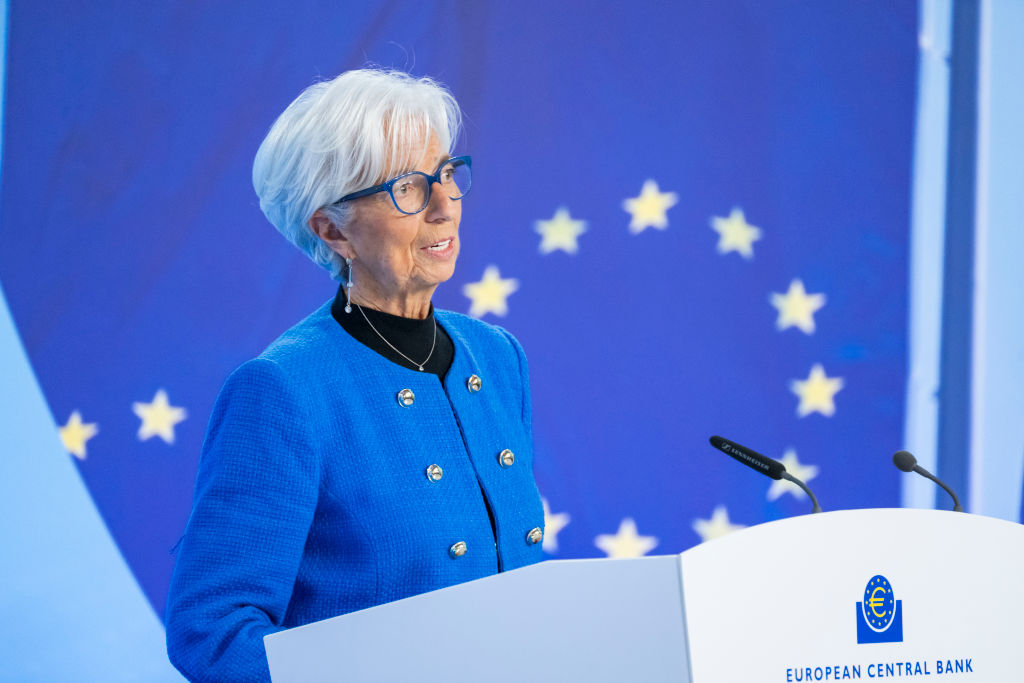
The European Central Bank (ECB) is looking for ways to keep money in Europe and make the euro more important worldwide. ECB President Christine Lagarde warns that additional taxes on capital could actually be counterproductive. At the same time, the ECB announces that central banks outside Europe will soon be able to borrow euros more easily, to prevent shortages of euro liquidity.
Lagarde: incentives rather than taxes against capital flight
During the Munich security conference, Lagarde said that Europe should not use taxes to prevent capital outflows to other regions. According to her, it is smarter to make investments in Europe more attractive.
Lagarde pointed out that market dynamics actually show that investors are becoming more interested in Europe. “I’m more in favor of incentives than taxes,” she said. According to her, the mood is positive because “the money is coming in”.
The discussion is taking place more widely in Europe. ECB officials, governments and companies have long been calling for strengthening the competitiveness of the European Union. This is also related to the trade policy of the United States. In that debate, the idea sometimes arises of taxing people or companies when they move capital out of the EU, in order to force investments in Europe.
ECB opens the door to worldwide access to euros
In addition to her warning about tax measures, Lagarde took another striking step this weekend. The ECB will give central banks worldwide easier access to euros. This should prevent parties outside the euro area from getting into trouble if there is a temporary shortage of euros in trade or financial payments.
Economist Han de Jong calls this a “historic step” to strengthen the international role of the euro. The ECB is introducing a credit facility that allows central banks to borrow euros if necessary. Previously, this option mainly applied to central banks close to the euro area, such as in Denmark, Sweden or Poland. Now the reach is becoming global.
According to De Jong, this makes using the euro outside Europe less risky. This could lead to companies and countries opting for the euro more often, similar to how the United States has been offering dollar facilities through the Federal Reserve for some time.
In the Netherlands, the discussion about capital and taxes also touches on Box 3. Savings and investments, and therefore also crypto, fall under this. That is precisely why plans that aim to direct capital flows are being closely examined, whether they come from Brussels or The Hague.
Why this affects Box 3 in the Netherlands
Lagarde’s statement is not a direct criticism of the new Dutch Box 3. She responds to the broader European idea of combating capital flight with additional levies. Yet her message sounds extra recognizable in the Netherlands, because here there is a fierce debate about tax on wealth and the question of what such a tax does to behavior.
The House of Representatives recently approved the Real Return Act. From 2028, this must replace the current system, which was based on a fictitious return and collapsed in 2021. In essence, Box 3 shifts towards tax on what someone really earns on savings and investments. In practice, according to critics, it is a capital growth tax. This means that unrealized profits, i.e. paper profits on shares or cryptocurrencies, for example, can also be taxed annually.
Opponents warn that this could force people to sell investments to pay the tax, especially if the value falls again after the reference date. Losses can also be offset to a limited extent and inflation is not corrected. Exactly that risk, policies that sound good but can slow down investments or chase away capital, is what Lagarde warns in Munich about at European level.
Source: https://newsbit.nl/lagarde-wil-kapitaalvlucht-stoppen-zonder-extra-belasting-wat-betekent-dat-voor-euro-en-crypto/