Gaza is not a natural disaster. He is a victim of genocide facilitated by global inaction. Treating the beleaguered and devastated enclave as a “humanitarian crisis” only serves to shield Israel from accountability
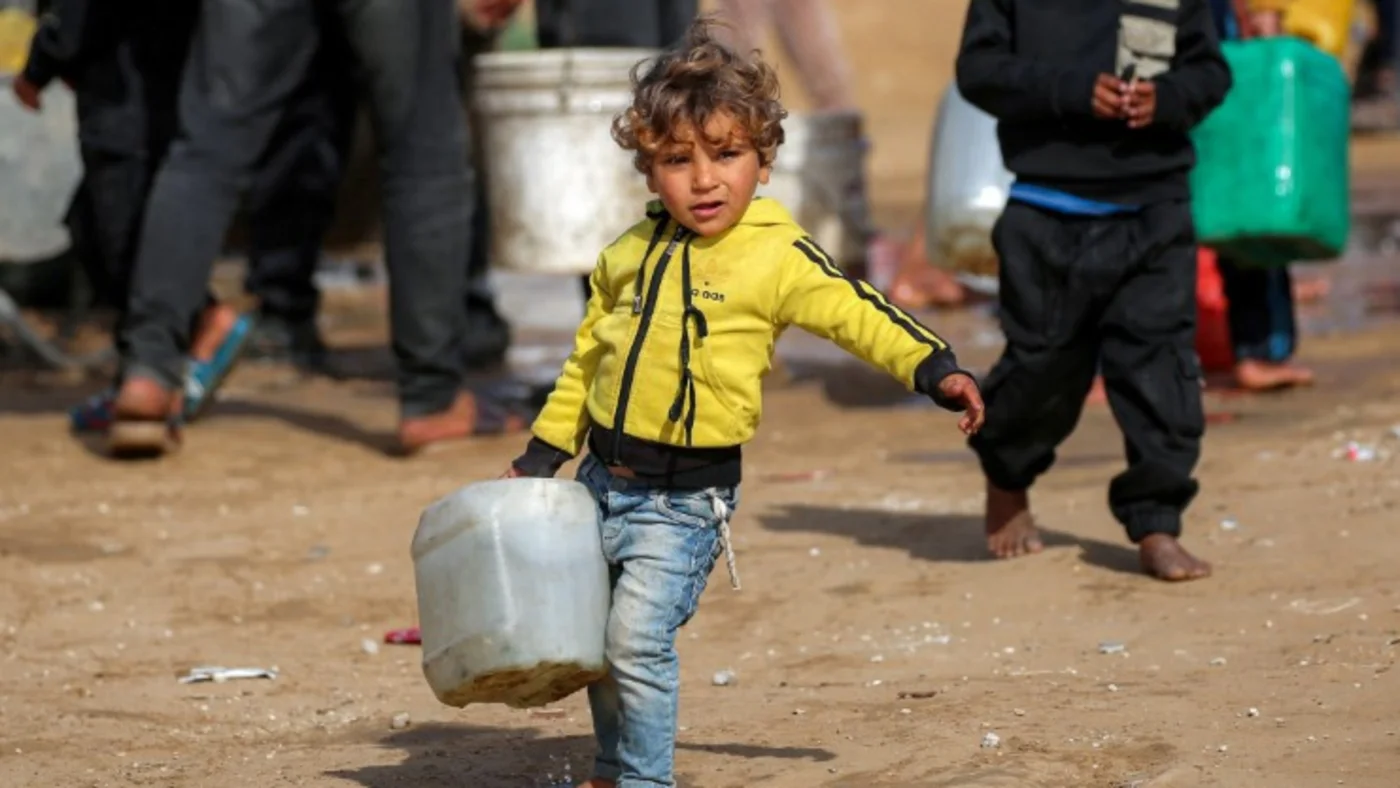
After two years of genocide, Gaza has been almost completely recast by the world as a humanitarian emergency. Images of hungry children, tents flapping in the wind, queues for water and aid trucks parked at intersections dominate news coverage.
These images are real. The suffering is real. But the way they are presented is deeply misleading.
Gaza is not a natural disaster area. It is not a drought-stricken land waiting for rain, nor a city devastated by an earthquake that struck without warning or accountability.
What is happening in Gaza is the deliberate result of political decisions, military strategies and a long-standing system of domination. Treating it primarily as a humanitarian crisis is not only inaccurate, but a form of erasure.
This approach is neither accidental nor innocent. It obscures responsibility, ignores history and shields Israel from accountability, turning a political crime into a technical problem of humanitarian aid and logistics.
Gaza is being destroyed through a systematic Israeli campaign of military violence, siege and collective punishment, carried out with full knowledge of its consequences. Treating this reality as a humanitarian issue rather than a political crime distorts both the cause and the solution.
Humanitarian language, when dissociated from political responsibility, becomes a tool of depoliticization. It diverts attention from perpetrators to symptoms, from causes to consequences, from justice to logistics.
Food packages replace entitlements. Tents replace houses. Humanitarian aid trains replace freedom. From this perspective, Palestinians are reduced to passive recipients of charity rather than subjects of a political struggle that has spanned more than a century.
Planned famine
Such humanitarian language becomes dangerous when it replaces political truth. When Gaza is framed as a place of “need” rather than a place of oppression, Israel disappears from the narrative. Hunger becomes an unfortunate condition rather than a weapon. Destruction becomes “infrastructure damage” rather than deliberate attacks. Palestinians are transformed from a people resisting colonization into a population waiting for assistance.
Hunger in Gaza is often presented as a result of scarcity or adverse circumstances. But the famine in Gaza is orchestrated. To describe this as a humanitarian emergency without mentioning that it is a weapon is to participate in a dangerous lie.
Israel has imposed a comprehensive blockade, restricted food intake, destroyed agricultural land, attacked bakeries, limited fuel supplies and dismantled food supply chains. International organizations have repeatedly warned of the possibility of famine, but Israel continues to regulate calories, border crossings and access to humanitarian aid as instruments of control.
Calling this a humanitarian crisis without naming Israel as the perpetrator is hiding intentions. The famine in Gaza is not just a failure to distribute aid; It is a policy imposed by Israel.
Aid must be understood as a moral minimum, not as a solution. It must be accompanied by political action, legal accountability and structural change.
The same applies to destruction. Entire neighborhoods were erased not by chance, but by continuous Israeli bombings. Hospitals, universities, water wells, sewage systems and municipal facilities were systematically targeted.
Israel’s military doctrine openly embraces the destruction of civilian infrastructure as a means of pressure. Describing this as “urban collapse” or “post-war damage” lacks responsibility for the violence. Infrastructure does not collapse by itself. She is destroyed.
The humanitarian approach also creates a false sense of transience. It suggests that the suffering in Gaza is an exceptional moment that can be stabilized until normal life resumes. But Israel has guaranteed that there will be no “after”.
The siege predates this genocide, and Israel has made clear its intention to prevent meaningful reconstruction, political autonomy or recovery. Aid under these conditions does not resolve a crisis; it perpetuates a state of destruction.
This is why calls for more help, while morally understandable, are politically insufficient. Aid can keep people alive; it cannot give them lives worth living. It cannot restore dignity, sovereignty or security. It cannot rebuild a society under permanent siege.
Worse still, when humanitarian aid replaces political action, it can normalize injustice, making it tolerable. When humanitarian assistance becomes the main international response, it allows Israel and its allies to present themselves as concerned actors rather than perpetrators and accomplices.
Moral distortion
There is a profound moral distortion going on. Palestinians are expected to be grateful for the aid provided under Israeli control, while Israel continues to bomb, starve and displace them. Their resistance is recast as ingratitude or extremism. The question changes from “Why is Israel doing this?” to “Why can’t Palestinians just survive?” This change is not neutral; It’s politics.
This distortion reaches an almost absurd level when Palestinian demands are caricatured as purely material — as if the people of Gaza have endured dispossession, exile, bombing, and erasure for generations simply to secure three meals a day and a better quality tent. Such framing strips the Palestinian struggle of its ethical core.
There is also epistemic violence in exclusively humanitarian narratives, which restrict the scope of what is considered “relevant knowledge”. Legal frameworks, historical accountability, colonial continuity, and power asymmetry are set aside in favor of metrics: calories delivered, trucks allowed in, shelters erected.
These metrics are important, but they are not neutral. They shape policy, funding, and public opinion in ways that ultimately protect the status quo. These numbers matter, but they do not explain why Gaza is starving. Only politics can explain it – and politics leads directly to Israel.
But accountability is noticeably absent. Genocide does not occur in a vacuum. It requires weapons, diplomatic cover, vetoes, silence and complicity. The humanitarian frame allows those responsible—directly and indirectly—to appear as benefactors rather than accomplices. The same states that arm and protect Israel can thus reinvent themselves as donors and mediators. Help becomes a form of moral whitewashing, masking complicity rather than confronting it.
What Gaza demands is not charity, but justice. This means ending the occupation, lifting the siege, dismantling apartheid systems, recognizing Palestinian self-determination, and holding perpetrators accountable under international law. Without these measures, humanitarian efforts, however well-intentioned, are like bandages applied while the wound continues to open.
This does not mean rejecting humanitarian aid. People in Gaza need food, water, shelter and medical care now. But aid must be understood as a moral minimum, not as a solution. It must be accompanied by political action, legal accountability and structural changes. Otherwise, it becomes a mechanism for sustaining Israeli violence rather than preventing it.
After more than two years of genocide, Gaza is a mirror that reflects to the world not only the brutality of Israel’s crimes, but also the inadequacy of global responses. Gaza does not ask the world to pity it. It asks the world to recognize Israel’s actions for what they are and to act accordingly.
Originally published by Middle East Eye
For the Holy Spirit
Asem Alnabih is an engineer and doctoral researcher currently based in Gaza City. He works as a correspondent for Alaraby TV and was a spokesperson for Gaza City Hall.
The views expressed in this article are those of the author and do not necessarily reflect the editorial policy of Middle East Eye.
Source: https://www.ocafezinho.com/2026/02/15/gaza-exige-justica-nao-caridade/