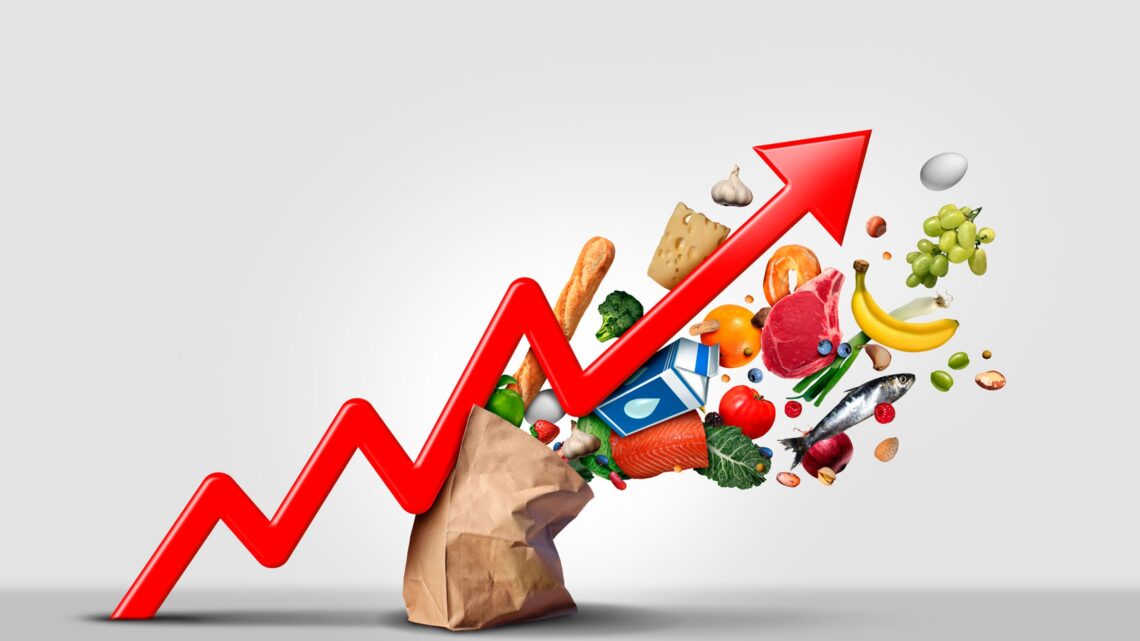
In the midst of the controversy over Caputo’s intervention in Indec and the failure to update the price measurement, private consultants warn of an escalation in food prices in the first 2 weeks, mainly driven by the increase in meat. In addition, transport and fare increases put pressure on the rise of the consumer price index (CPI) for February.
Food is the item with the greatest impact on the cost of living. In January, the data in “Food and non-alcoholic beverages” was above the general level by 4.7% compared to the 2.9% CPI in January. In Greater Buenos Aires, the increase was noticeably greater, standing at 5.5%.
For February, the most optimistic consulting firms predict that inflation will be between 2.3% and 2.5%, while those that project greater increases estimate 2.8% and 2.9%. Consulting companies like EcoGo estimate 2.7% for February; Balance, 2.3%; Analytica, between 2.8% and 2.9%; and Orlando Ferreres & Asociados, 2.5%.
Meanwhile, for food and beverages, the consulting firm LCG – which measures prices in supermarkets – recorded weekly inflation of 1% during the second week of February, after 2.5% in the first. “70% of the weekly inflation was explained by the significant increase in Meat (+2.3% s/s). Vegetables partially offset the effect (-0.3 pp),” they noted.
The rise in meat prices occurs despite a drop in demand. According to the Chamber of Meat Industry and Commerce (Ciccra), apparent consumption fell 13% between January 2025 and January 2026, to 47.9 kilos per inhabitant per year, the lowest level in two decades.
Supply was also reduced, however exports remained constant. In the new trade agreement signed with the United States, Milei expanded the export quota to this country from 20,000 to 100,000 tons. An upward pressure on the internal price of meat and against food sovereignty, “the pain is ours, the cows are someone else’s.”
Tariffs and freezing of economic activity
As for services, underestimated in the current inflation index, the consulting firm Equilibra estimated an increase in the electricity and gas category would be around 12% in February, driven by the increase in gas. “This would have a 0.5 percentage point (pp) impact on the current CPI estimate,” they indicated.
At the beginning of February, the Government applied a strong increase in energy rates that will impact inflation. From the consulting firm Eco Go, they specified the increases announced for February in regulated rates and services: gas (16%), electricity (4%), basic services for housing (12%), bus fares in the AMBA (4%) and subway (4.8%).
January saw the 9th consecutive month of rising inflation. In a context of practically freezing economic activity with a fall in October (0.4%) and November (0.3%). Prices rise despite the crisis. The Government is also promoting rate increases.
A combo of rising prices and stagnation of the economy that has serious consequences in terms of labor: fall in employment and loss of wages.
In the first two years of the Libertarian government, 270,852 formal employees lost their jobs. In October 2025 alone, 33,100 registered positions were destroyed, a monthly drop of 0.3%. In the private sector, the decline was 17,900 workers in a single month.
In terms of salaries, according to the Mirador de la Actualidad, el Trabajo y la Economía (MATE), with Milei, private workers lost 1 million pesos and state workers almost 3 million.
The Government wants to approve this Thursday a slave labor reform that attacks labor rights and facilitates dismissals for employers. After the mobilization last Wednesday with the mobilization and resistance to repression of large sectors of workers and young people, the CGT had to call for a strike when it comes to deputies, although without mobilization.
They want to avoid a massive combative mobilization as the day of 11F suggested. We have to take the strike into our hands, with all the unions and sectors that want to defeat Milei. Make it active, organizing it from below, with assemblies and committees in places of work and study.
Source: www.laizquierdadiario.com