Complaints made by current and former employees of the Committee to Protect Journalists (CPJ) indicate that the organization had ended the annual publication of the “Impunity Index” after realizing that Israel would occupy first place in the ranking. The allegations were collectively forwarded to the website The Electronic Intifada, which made the content public.
The index, published since 2008, classified countries based on the number of unsolved murders of journalists as a proportion of the population, considering a moving period of ten years. The report is regularly cited in UN documents and, according to whistleblowers, its data is widely used by organizations such as the Office of the United Nations High Commissioner for Human Rights and UNESCO.
According to reports, CPJ executive director Jodie Ginsberg decided to cancel the 2025 edition of the survey in August last year. In a message sent to staff, seen by The Electronic Intifada, Ginsberg stated that the index had “many methodological flaws” and that it “did not accurately reflect the level of failure to obtain justice” in the cases of dead journalists. She cited as examples situations in which CPJ was unable to determine with certainty whether deaths were intentional homicides, specifically citing cases involving Israel.
The Impunity Index methodology included only deaths classified by CPJ as deliberate killings, excluding deaths occurring in circumstances considered inherently dangerous. According to the complainants, this already limited the number of cases recorded in contexts such as the Gaza Strip. Even so, they argue that, if the criteria were maintained, Israel would appear at the top of the list for several years, considering the ten-year period analyzed.
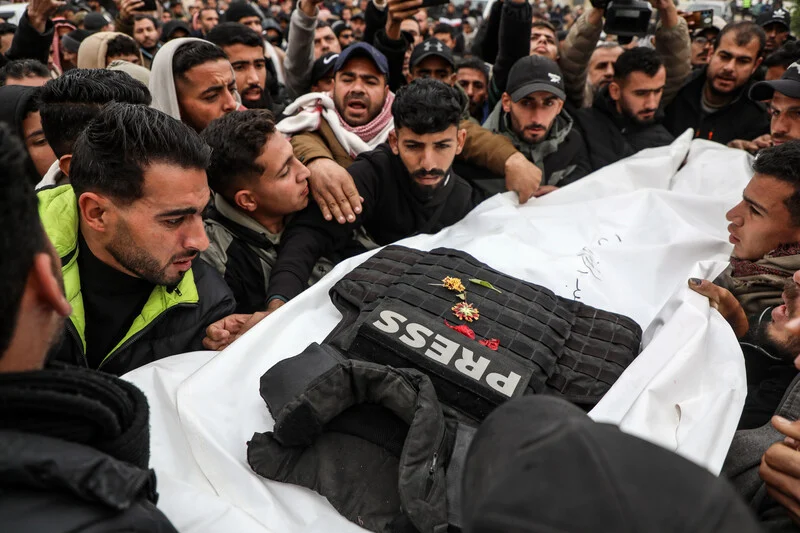
The last edition published, in 2024, placed Israel in second place, behind only Haiti, based on data until 2023. According to CPJ’s own database cited in the report, 64 journalists would have been deliberately killed by Israel in 2023, 76 in 2024, 51 in 2025 and three in 2026 so far. The Gaza government’s Media Office claims that 260 press professionals have been killed since the start of the Israeli offensive, a number that, according to the organization, exceeds the total number of journalists killed in the two world wars, the Vietnam War, the conflicts in the former Yugoslavia and the War in Afghanistan combined.
The whistleblowers also maintain that the decision to close the index was motivated by fear of reactions from the organization’s board, pro-Israel donors and the Israeli government itself and its allies. CPJ, for its part, denied that considerations related to funders influence its decisions about Israel or any other country. The organization stated that the suspension of the ranking was not related to Israel’s possible position, but to the need to “radically change” the way of promoting accountability for crimes against journalists.
Among CPJ’s financiers, according to The Electronic Intifada, are vehicles belonging to businessman Rupert Murdoch and the company Ariel Investments, based in Chicago, which invests in companies such as the Israeli Check Point Technologies. The entity’s board of directors includes members linked to major media outlets, including at least five associated with The New York Times.
In place of the index, CPJ published a shorter statement in December highlighting five cases considered emblematic to illustrate difficulties in the search for justice. Among them are that of Al Jazeera journalist Shireen Abu Akleh, killed by an Israeli soldier in 2022, and that of Filipino journalist Gerry Ortega, murdered in 2011. Cases were also cited in Slovakia, Cameroon and Mexico.
According to the complainants, the old index generated wide international press coverage, while the new statement had limited repercussions. They report “deep disappointment, anger and resentment” among CPJ staff over the decision. The organization stated that it remains committed to promoting accountability for crimes against journalists, but did not detail what new measures replace the annual report.
Before this episode, Omar Shakir left his position as director of Human Rights Watch after the organization suppressed a report that classified Israel’s denial of the right of return to Palestinian refugees as a “crime against humanity”. In his resignation letter, Shakir wrote that he had lost faith in the integrity of the work and the commitment to fact-based enforcement and the law.
Source: https://www.ocafezinho.com/2026/02/13/cpj-encerrou-indice-de-assassinanatos-de-jornalistas-apos-israel-despontar-no-topo/