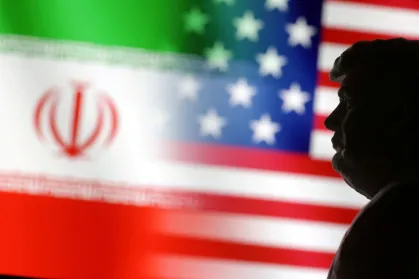
Talks in Muscat rekindle diplomatic bet after months of military escalation
Abbas Araghchi left the palace with a serious face, but with a phrase that sounded like restrained relief. Iran’s foreign minister called the indirect negotiations with the United States “a great start.” He made the comment live, still in Muscat, for state television. However, Araghchi quickly added: negotiators need to go home and talk to their leaders before moving forward.
The 63-year-old diplomat said there were several rounds. He said the focus was on putting together a structure for future conversations. Thus, Tehran shows that it wants to dialogue, but does not give up caution.
Oman has once again proven its usefulness. The sultanate opened the doors of a discreet palace, near Muscat airport. Iranian authorities arrived first. Then, when they left, the American convoy entered. Each side spoke separately to Badr al-Busaidi, the Omani foreign minister.
Journalists saw everything up close. The Iranian vehicles left the scene. Then an SUV with a US flag entered and stayed for about ninety minutes. Finally, the palace emptied. No one confirmed whether the day ended there or whether there would be more meetings.
The two countries returned to Oman after months of silence. Everything stopped after the short but brutal June war. Israel attacked Iran. The United States bombed nuclear facilities. Many centrifuges that enriched uranium were probably destroyed. Israel even knocked out air defenses and hit Iranian ballistic missiles.
Inside the country, protests took to the streets. The government responded with a heavy hand. Thousands died. Tens of thousands were arrested. This repression has left Ali Khamenei’s regime more fragile than at any time since 1979.
Oman’s statement was surprising. In addition to Araghchi and Steve Witkoff, the American envoy, Jared Kushner, Donald Trump’s son-in-law, and Admiral Brad Cooper, head of US Central Command, were there. Never had a soldier of such high rank participated in these rounds.
Oman said the consultations prepared the ground for resuming diplomatic and technical negotiations. The text spoke of “sustainable security and stability”. Despite this, neither Washington nor Tehran released their own details.
Araghchi wrote in X soon after: “Iran enters diplomacy with open eyes and a solid memory of the past year.” He continued: “Commitments need to be honored. Equal conditions, mutual respect and mutual interest are not rhetoric — they are essential and the pillars of a lasting agreement.”
Ali Shamkhani, a close advisor to Khamenei, reinforced his support. He said Araghchi is “a skilled, strategic and reliable negotiator.” Furthermore, he assured that soldiers and diplomats will protect national interests under orders from the supreme leader.
Marco Rubio has made it clear what Washington wants. He stated that conversations need to address several topics. “I’m not sure you’ll be able to reach an agreement with these guys, but we’ll try to find out,” the secretary of state said.
Informal proposals arrived from Egypt, Türkiye and Qatar. They suggested stopping enrichment for three years, sending uranium out and limiting missiles. Tehran rejected it outright. Shamkhani warned: closing the program or handing over material is out of the question. So the path remains narrow.
Gulf Arab countries watch tensely. A new attack could set the entire region on fire. There have already been warnings: Americans shot down an Iranian drone near the USS Abraham Lincoln. Iran attempted to intercept an American ship in the Strait of Hormuz. Therefore, the risk of greater war has not disappeared.
Last month’s protests showed how tired the Iranian people are. Ordinary citizens took to the streets in several cities. They asked for changes. The government responded with violence. Thousands lost their lives. Entire families suffered arrests. This internal pain cannot be ignored. It also makes external dialogue difficult, because the world sees how Tehran treats its own citizens.
After so much destruction, the simple fact of sitting at the table is already a step forward. Oman created space for talk instead of bombs. Thus, both sides chose words over missiles. This decision benefits not only Iran and the United States, but an entire region that wants to live in peace.
It is not yet known when the talks will continue. Araghchi needs to consult Tehran. Witkoff and Kushner continue their journey. Despite this, this Friday’s meeting left a gap open. Now it’s up to leaders in Washington and Tehran to decide whether they will walk through that door in good faith. Only in this way can an agreement be born and bring relief to millions who have already suffered too much.
With information from AP*
Source: https://www.ocafezinho.com/2026/02/08/negociacoes-discretas-sinalizam-distensao-entre-ira-e-eua/