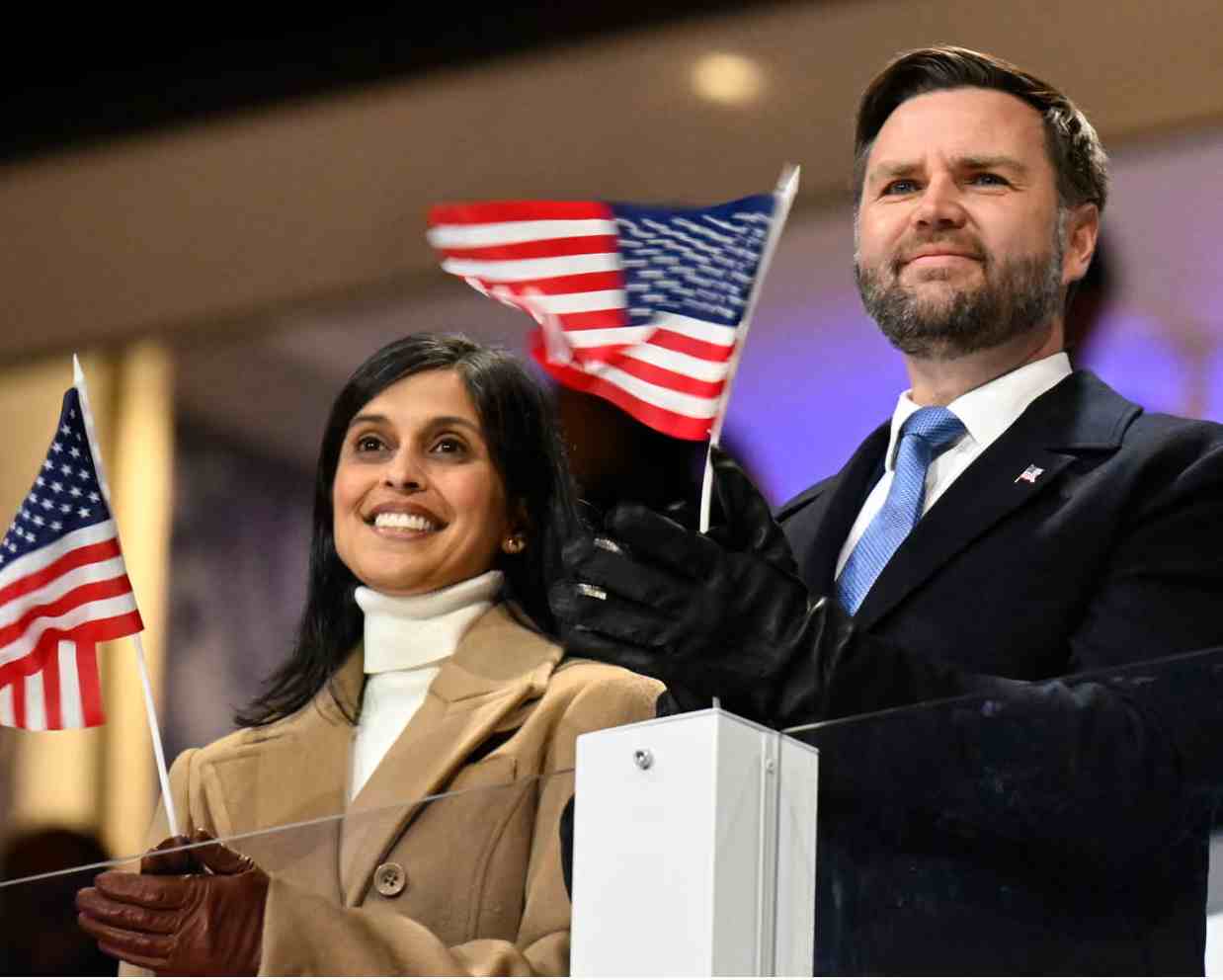
The booing of JD Vance in Milan exposed the end of the single narrative at the Olympics
The central promise of the modern Olympic Games — the entire world sharing a single moment in unison — disintegrated in real time at the opening ceremony at Milan-Cortina 2026.
The episode revealed a new and uncomfortable reality for global sports broadcasts, especially for the United States, which is preparing to host mega-competitions such as the 2026 World Cup and the 2028 LA Olympics.
When the American delegation entered the San Siro stadium, skater Erin Jackson was greeted with a warm ovation. Minutes later, cameras focused on Vice President JD Vance and Second Lady Usha Vance. The immediate response from a large part of the public present was a clear and prolonged chorus of boos.
This sound was perfectly audible to the audience present in the stadium, to viewers of the Canadian CBC broadcast and to journalists in the stands, including North American reporters.
However, for millions of viewers in the United States watching on NBC, the moment passed in silence. The boos just weren’t there.
New media ecosystem
NBC denied purposely editing the audio.
But, in the current media ecosystem, no broadcaster has a monopoly at the moment. While the American broadcast showed one version, CBC aired another, the BBC updated its live blog, and fans in the stadium posted home videos on social media.
Within minutes, multiple versions of the same fact were circulating online, transforming a production decision into a case study in information asymmetry.
The Inevitable Question for the American Future
The incident raises a critical question for upcoming events in the US: If a political figure is booed during the 2028 Los Angeles Games or a 2026 World Cup game, will US national broadcasts mute the sound?
And if they do, what happens when the international broadcast shows the actual audio? What if a foreign broadcaster covers it? And the coverage of tens of thousands of cell phones in the stadium documenting the moment in real time?
The risk is not just the exposure of the fact, but the accelerated erosion of credibility. Modern audiences assume there is always another perspective. Attempts to control the narrative, when easily debunked, make broadcasters appear less trustworthy, not more.
Fine line
There is undeniable contextual pressure. Broadcasters operate in a polarized political climate, where hostility toward the media can influence corporate calculations.
However, there is a fundamental difference between editorial sensitivity and the visible distortion of reality. When the world can compare broadcasts side by side, the practice looks less like a journalistic judgment and more like narrative state management — a comparison that, once considered exaggerated, now sounds plausible.
The 2028 scenario
The irony is that the Olympic Games recognize political tension. The principle that athletes should not be punished for the actions of their governments implies that governments are part of the spectacle.
The night in Milan encapsulated this: American athletes were cheered; their political representatives, booed. Both reactions are legitimate expressions in an open society. Trying to erase one of them is to flatten reality into something artificial.
The 2028 Los Angeles Games will take this to an unprecedented level. There will be no hiding the moment when the Head of State (who, in a potential scenario, could be Donald Trump) declares the games open, in front of a stadium in California and 200 global broadcasters. There will be applause and, almost certainly, boos. And there will be no way to make them disappear.
The greatest danger for American broadcasters is not that dissent will be seen, but that the public will automatically assume that everything that is not shown is being hidden. In an era of fragile institutional trust, operating from this position is unsustainable.
Milan can be remembered as a microepisode. But it serves as an inevitable preview of the future of sports broadcasting: a future where control of the narrative is collective, contested and instantly verifiable. The world is not just watching. It is recording, comparing and judging in real time. The illusion of the single moment is over.
With information from The Guardian on 02/08/2026
Source: https://www.ocafezinho.com/2026/02/08/o-mundo-inteiro-ouviu-jd-vance-sendo-vaiado-nas-olimpiadas-menos-os-eua/