After Nicolás Maduro comes Cuba. Or, perhaps, Cuba was always the last station, and the kidnapping of the Venezuelan president after militarily attacking the country was a fundamental step in that strategy. The Cuban revolution has been a declared objective of Washington since 1959, to the point of attempting the invasion of Playa Girón – or Bay of Pigs – in 1961, repelled by the Cuban army. Since then, there have been embargoes, blockades, an open-door policy for people leaving the island, financing of the opposition, boycotts in international organizations and one of the most tense episodes of the Cold War with the missile crisis of 1962, in which it seemed that the US and the USSR would clash militarily directly, which in the end did not happen.
And this year, on the 67th anniversary of the Cuban revolution, the Trump Administration has set the goal of overthrowing the Castro government, a symbol of the Latin American revolutions of the second half of the 20th century that challenged US interference in what the White House calls its “backyard.”
To overthrow the Cuban Government, the kidnapping of Nicolás Maduro represents an essential phase: Venezuela and Mexico have been the major suppliers of oil to Cuba since the fall of the USSR. Although the alliance with Moscow continues, nothing has been the same since 1991. And the Chavista revolution was a boost for Cuba due to access to cheap oil, just like for other like-minded governments in the region.
But that’s over. The US attack on Venezuela has meant a takeover of decisions by the Delcy Rodríguez Government, from the prisoner policy to the liberalization of the oil sector and the closing of the tap to Cuba.
Furthermore, this Friday the Trump Administration has taken a further turn in the strangulation of the Cuban economy, with the decree signed by the US president, which declares a “national emergency”, stating that the Cuban government represents “a threat to the national security of the United States” and threatens the imposition of secondary tariffs, under the International Emergency Economic Powers Act (IEEPA), on products coming from countries that sell or supply oil to Cuba.
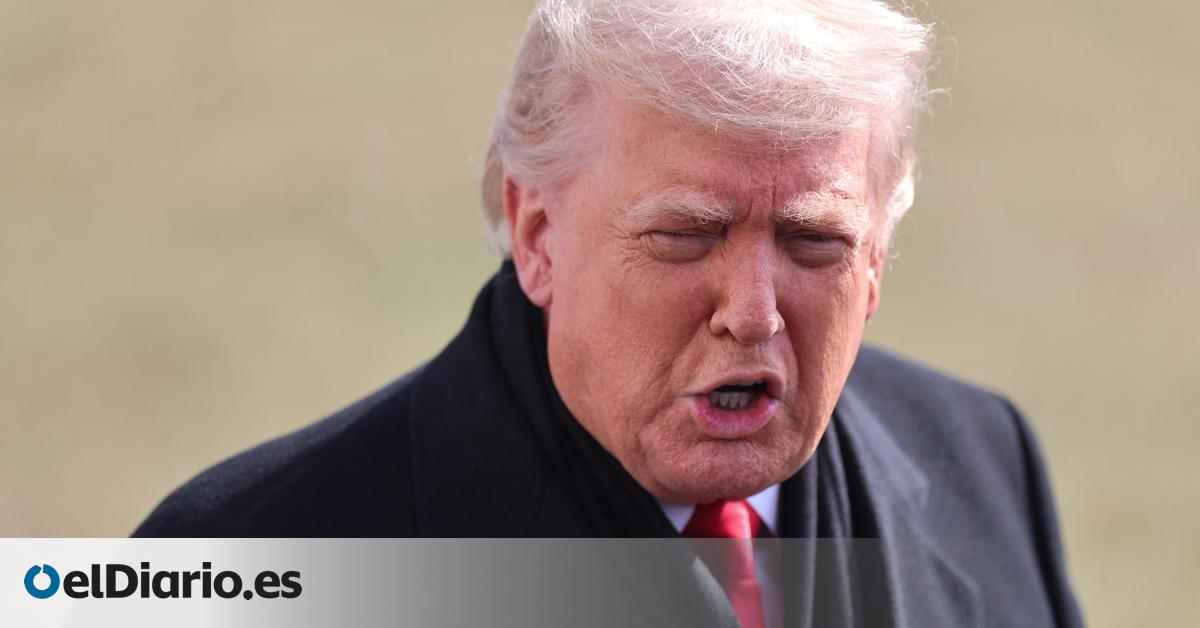
“Cuba will fall very soon. Cuba is a nation that is very close to collapse,” Trump told reporters last Tuesday: “They got their money from Venezuela. They got their oil from Venezuela, but not anymore.” According to Trump’s decree, furthermore, all aid to the island “constitutes an unusual and extraordinary threat to the national security and foreign policy of the United States.”
And this Saturday night he suggested an outcome similar to Nicolás Maduro’s Venezuela: “I think we are going to reach an agreement with Cuba. They have no money, they have no oil.”
This message is a clear warning for Mexico, which has provided around 20% of the crude oil that the island needs, in the midst of the negotiations between Trump and the Mexican president, Claudia Sheinbaum, for the free trade agreement, as well as the border policy and the fight against drug trafficking with the tariff war always as a threat.
Different independent calculations cited by Efe estimate that Cuba requires about 110,000 barrels of oil per day. Of them, just over 40,000 a day are obtained from wells on the north coast of the island. Cuba must import the remaining 70,000, although the lack of foreign currency means that this figure is not reached, causing blackouts and fuel shortages.
There are experts who express legal doubts about the use of the IEEPA to promote a change of Government in Cuba. It is the same resource that Trump used to impose tariffs on the entire planet, a case that is now on the table of the US Supreme Court.
According to The Financial Times, Cuba currently only has fuel for 15 to 20 days at the current rate of consumption, putting the population at imminent risk of a serious humanitarian crisis.
In recent months, Cuba has suffered from blackouts due to its problems meeting its fuel needs, in part due to the embargo decreed by Washington.
Venezuela supplied about 30%-35% of the oil Cuba needs, but shipments have not arrived since Maduro’s kidnapping and are not expected to resume.
Mexico was another important supplier, but Sheinbaum has recently announced that his government has suspended some oil shipments to Cuba; and Trump’s threat of tariffs leaves the Mexican president in a difficult position, as well as the Brazilian president, Lula da Silva, who before Trump’s decree had offered to help Cuba.
The Mexican president said on Friday, after Trump’s decree: “Mexico will look for different alternatives, obviously also in defense of Mexico, obviously, to help in a humanitarian way the Cuban people who are going through a difficult time.” And he also warned that the new tariffs announced by Trump could “trigger a far-reaching humanitarian crisis, directly affecting hospitals, food and other basic services of the Cuban people.”
The Cuban president, Miguel Díaz-Canel, stated for his part during a PCC meeting: “The aggression (on Venezuela) was preceded by an intense campaign of economic, political and propaganda pressure that intensified starting in September 2025 and the largest military deployment of the United States in the Caribbean area in more than 20 years. These are the same pretexts that are already being built against us to justify an aggression against Cuba, to justify the coercive measures, to continue increasing the pressure. In the way in which the aggression against Venezuela was structured there are also the elements of the war that we are facing, because this is also an ideological war, it is a cultural war and it is a media, communication war.”
Humanitarian crisis
Venezuela sent about 27,000 barrels per day to Cuba in 2025, according to the Reuters specialized service; while Russia contributed about 6,000 daily and Mexico, between 6,000 and 12,000, depending on estimates, reports Efe.
According to figures from the National Office of Statistics and Information (ONEI) of Cuba consulted by the Energy Institute of the University of Texas, 65% of the fuel the country needs is to power thermoelectric plants, obsolete with more than four decades of operation.
According to a study provided to Efe by Cuban economist Miguel Alejandro Hayes, a 30% drop in fuel availability on the island (which represents the void left by Caracas) would be reflected in a 27% drop in gross domestic product (GDP), a 60% rise in food prices and a 75% rise in transportation prices, and a 30% drop in household consumption.
“We will look for a way, without putting Mexico at risk, to seek solidarity with the Cuban people,” Sheinbaum said on Friday afternoon: “The application of tariffs could trigger a far-reaching crisis, affecting hospitals, food, a situation that must be avoided with respect to international law.”
According to the consulting firm Kpler, cited by FT, Cuba has received only 84,900 barrels this year from a single Mexican shipment on January 9. This is equivalent to just over 3,000 barrels per day, a figure well below the average of 37,000 from all suppliers in 2025.
“We can affirm that Cuba has reserves for between 15 and 20 days” if the January shipment is added to the approximately 460,000 barrels that were estimated to be in inventory at the beginning of the year, said Victoria Grabenwöger, crude oil research analyst at Kpler.
Source: www.eldiario.es