The Spanish Gross Domestic Product (GDP) has just received the IMF certificate as an economy with more than 2 trillion dollars of annual productive capacity. Measured in euros, today it represents around 1.6 trillion euros. In just over two decades, it has doubled its value, measured in dollars, at current market prices (taking into account inflation), the scale used by the International Monetary Fund to calibrate the composition of its ranking each year. In 2003, the annual production of the Spanish economy was one trillion dollars.
The Monetary Fund estimates the size of the Spanish GDP at 2.04 trillion dollars at the beginning of 2026, after registering the increase of the last year and after a long two-year period in which the WEO – the institution’s economic report – has been pointing out Spain as the most dynamic high-income power. In this cycle it has exchanged this role with the US and Canada. With this recognition, the euro’s fourth economy recovers two places compared to 2025 – three since the Great Pandemic was overcome – and stands as the twelfth world GDP, as collected by the Worldometer portal, which offers data in real time and compiles those from the IMF. Spain is at a certain distance – although feasible to surpass – from the productive capacity of Brazil (2.29 billion dollars), Canada (2.29 billion) and Russia (2.42), which precede it between the eleventh and ninth places in the ranking, although with an even smaller difference from those of Mexico, Australia and South Korea, which are close behind with 2.03; 1.95 and 1.94 billion respectively.
The Fund’s calculations simultaneously push the Spanish GDP per capita above $40,000 and certify a rise of three tenths, up to 2.3%, by 2026 and another two, up to 1.9%, by 2027, in their updated predictions from their last meeting (in October), at the Davos summit, which adds more fuel to the reduction of the gap with its main euro partners and the powers that They come first in the IMF world ranking.
The Spanish GDP per capita is, however, in 42nd place in the Fund’s ranking, between Puerto Rico, which precedes it, and the Bahamas, but just 5,000 dollars behind Italy. Because? Essentially, because tax havens register billions in income from large fortunes and multinationals that move to their low-tax territories and – in most of them – banking secrecy with its low demographic pressures. And, at the same time and in the opposite direction, the GDP increases in the large emerging markets that, in the individual distribution of their national wealth, have to serve huge masses of populations.
This is the only way to explain why the top 6 places (Monaco, Liechtenstein, Luxembourg, Bermuda, Ireland and Switzerland) are enclaves considered centers off-shore or “tax harmful”, as the OECD identifies them, although they are not on official lists of tax havens due to their supposed progress in the exchange of tax information with judicial authorities of countries that have taken actions against individuals or tax evasion companies. That the Cayman Islands, in the ninth step, precede two positions to the United States, which, in turn, precedes the Isle of Man – a tax haven in the Irish Sea, under British sovereignty. That the Nordic European nations are among the top 26 in the ranking with their high incomes and small populations. Or, on the contrary, the large emerging markets will be relegated to places that are too low.
Change of model: digitalization and renewables
Much of this renewed leap in Spanish prosperity is due to the intense diversification of the growth pattern of the last five years. As a result of receiving the Next Generation funds, Spain has added to its two traditional drivers – tourism and the construction industry and the real estate sector – two other driving forces – digitalization and sustainability – towards which European resources have been preferably directed.
The push for new technologies has emerged at a crucial moment, “when AI begins to behave as a catapult of productivity,” says the Global AI Vibrancy Tool 2025, prepared by the Stanford Institute for Human-Centered AI (HAI), a report that places Spain in seventh place among the economies that have managed to integrate innovation into their growth model. According to this study, “the competitive advantage of AI is not measured only in leading laboratories or technological unicorns, but in incorporating it into their companies and economic agents.”
This reconstruction of the Hispanic productive pattern has not gone unnoticed among national studies services either. Judit Montoriol, economist at CaixaBank Research, says it in these terms: “advanced services – finance, insurance, commerce, logistics and tourism – concentrate most of the effective use of AI because they are data-intensive activities, with relatively standardizable processes and that are subject to competitive pressure that accelerates innovation.”
His colleague at CaixaBank Research, Àlex Ruiz, points out another determining factor: “technological adoption arrives sooner where processes are information-intensive, which favors services, in the Spanish case, compared to an industry whose integration costs are more expensive.” The result, he adds, is a less showy technological growth model than that exhibited by large platforms, but potentially more integrative and expansive.
Alba Taboada Villamarín, researcher at Funcas, emphasizes another vector that has emerged in this period: the implementation of AI tools in healthcare, the public sector and energy, which have accelerated in the heat of European funds, and a uniform regulatory framework, which has allowed the insertion of an intangible but decisive element, trust in digitalization that, in her opinion, “is facilitating the deployment of AI in sensitive areas”, a phenomenon that “is not occurring with the same intensity in other countries.”
This Spanish technological advance has been transferred to areas such as engineering, renewable energies, digitalization of networks or advanced infrastructure management, strategic axes of this economic diversification. A study by the consulting firm Roland Berger, unveiled in Davos, highlights this roadmap.
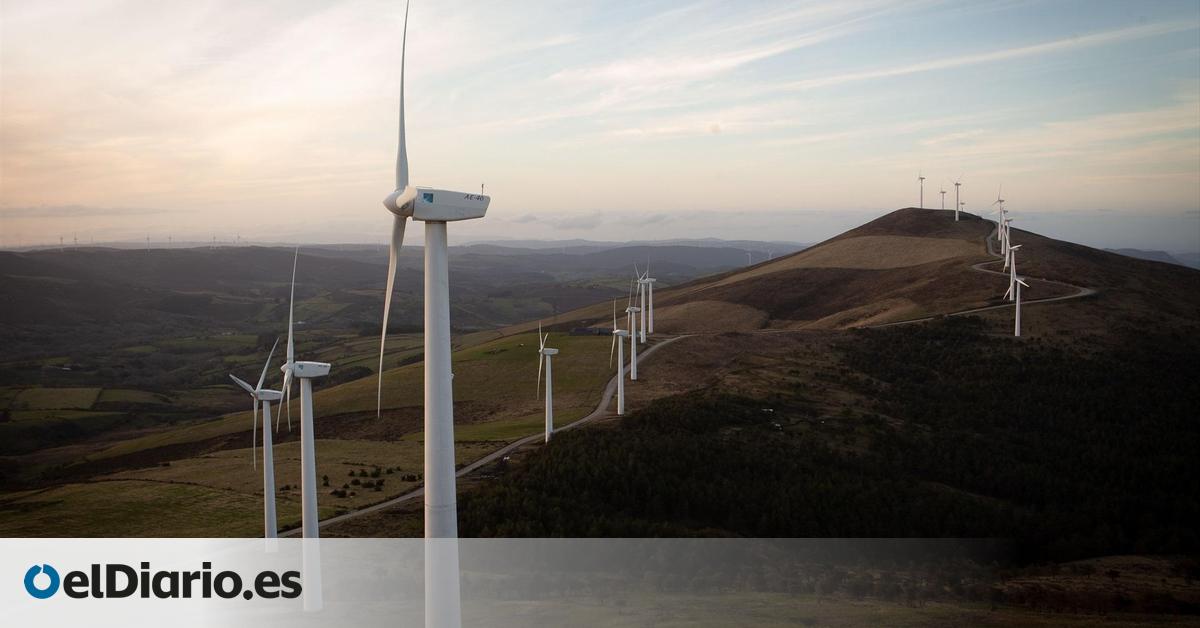
The latest annual report of the Economic and Social Council (ESUC) is eloquent in this regard. It ensures that the expansion of renewables has not only allowed clean generation to exceed 55% of the national electricity mix, but also acts as a powerful generator of employment and activity in knowledge- and technology-intensive sectors, among which it mentions specialized construction, engineering, equipment manufacturing or installation and maintenance services. This transition towards sustainability with structural improvement in competitiveness due to the reduction of external energy dependence has configured a dynamic labor market with job creation above the European average.
Source: www.eldiario.es