Maduro’s first hearing in New York goes beyond the legal field and reopens the debate on intervention, sovereignty and limits of global jurisdiction
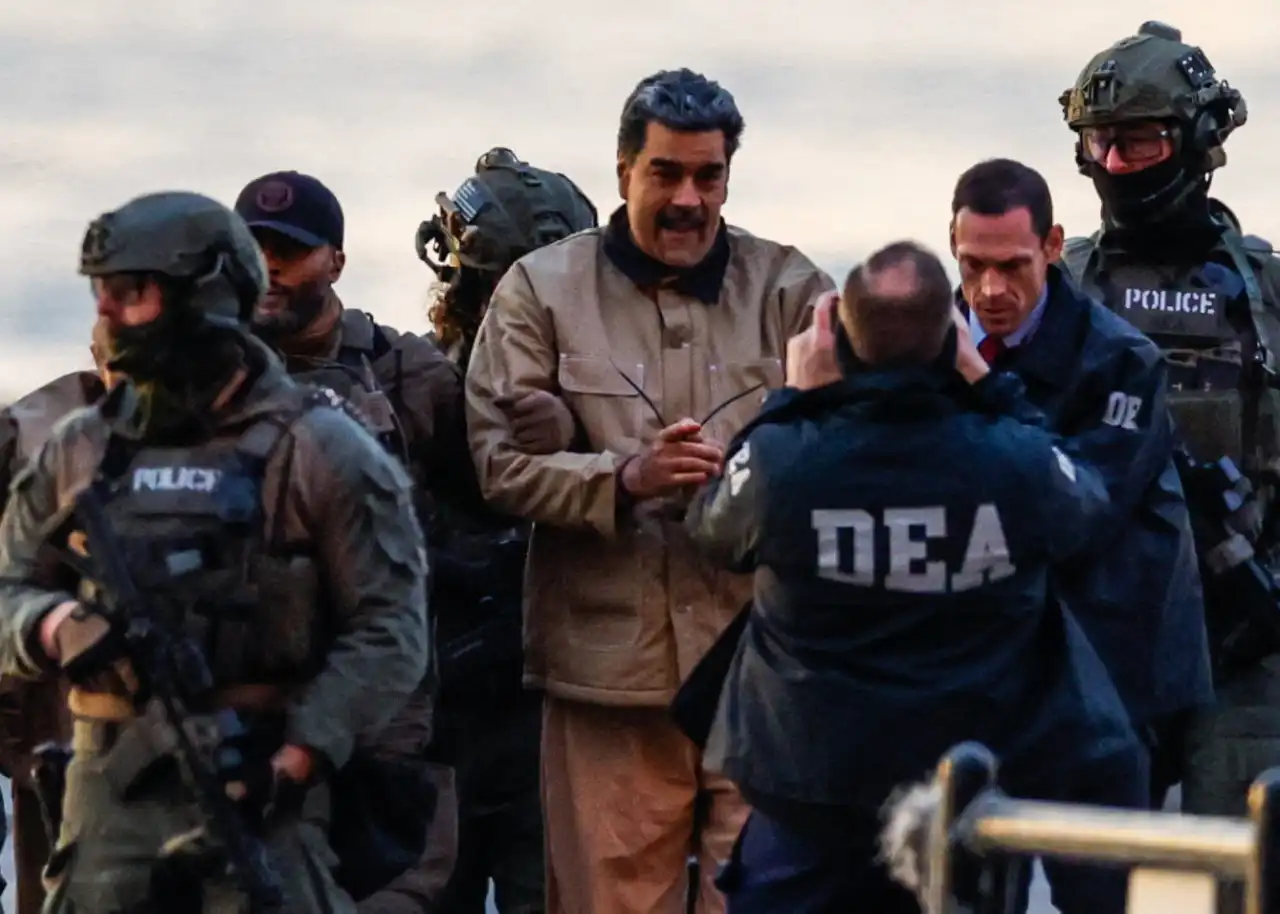
Venezuelan President Nicolás Maduro’s first court hearing in a United States federal court marks more than the beginning of a criminal case. In fact, this event represents a turning point in hemispheric relations. Consequently, it reignites a fundamental debate about the limits of international jurisdiction and the right to self-determination of peoples. The scene, under maximum security, symbolizes a historical tension: that of a global power unilaterally applying its laws to a foreign leader, under the serious accusation of narco-terrorism.
Before judge Alvin Hellerstein, Maduro adopted a stance of political defiance. He not only pleaded innocence, but also reaffirmed his status as the legitimate president of Venezuela. His statement, “I am a decent man,” echoes beyond the courtroom. Thus, it resonates with those who see the process as a criminalization of dissident political projects. Therefore, the case quickly transcends specific legal issues. In this way, it becomes a stage for a broader ideological conflict.
Read also: US court tried Maduro and provoked continental tension
Maduro supporters and some geopolitical analysts see a classic strategy. They argue that the “narco-terrorist” label serves to delegitimize governments that challenge United States economic and political hegemony in the region. On the other hand, the American prosecutor presents a narrative of international criminal justice. However, the abrupt nature of the capture, through a military operation on Venezuelan soil, casts a long shadow over the stated reasons.
A revealing moment of the hearing occurred during the explanation of procedural rights. Maduro told the judge that he was completely unaware of such guarantees until that moment. This claim, yet to be verified, raises serious ethical questions. If confirmed, it would point to a detention that ignored basic human rights protocols from the outset.
Furthermore, the offer of a defense paid for by the court sounds like a paradox given the extraordinary circumstances of the capture. The judge also mentioned the remote possibility of provisional release. However, in a case with such a political charge, this option seems practically unfeasible. In this way, the defendant remains isolated, in a strange judicial system, while he prepares a defense that is, above all, deeply political.
The formal charges are severe. They include conspiracy to commit narcoterrorism and import cocaine, alleging an alliance between the Venezuelan state and guerrilla groups. However, it is crucial to deconstruct the term “narcoterrorism”. Historically, this legal category has been a flexible instrument in the hands of American foreign policy. Thus, it often serves to merge, in the public imagination, political opposition with the most abject transnational criminality.
Maduro’s defense maintains that the evidence is fabricated. More importantly, they claim that the process seeks regime change through judicial means. This is not an unprecedented argument. Previously, other Latin American nations have witnessed how drug trafficking allegations can be used to pressure and destabilize governments. Therefore, judgment does not occur in a vacuum. It is analyzed in light of a long history of interventions in Latin America.
What is on trial in New York goes far beyond the individual culpability of Nicolás Maduro. Ultimately, what is being debated is a fundamental principle of the international order: national sovereignty. The US action sets an alarming precedent. It suggests that a power can, based on its own laws, capture and prosecute leaders of other countries.
Social movements and progressive jurists around the world are raising their voices against this doctrine. They warn that it can be used against any government that deviates from the interests considered vital by Washington. Consequently, the case threatens to replace diplomatic dialogue and international law with a system of selective and unilateral justice.
The legal road ahead will be long and complex. Meanwhile, Maduro’s detention deepens political fractures on the continent. Furthermore, it serves as a warning to other nations. Finally, the episode reinforces a worldview in which justice can itself be a geopolitical weapon. It is up to the international community and democratic forces to question whether this is the path to conflict resolution or, in fact, a recipe for endless cycles of resentment and confrontation.
Source: https://www.ocafezinho.com/2026/01/08/os-eua-no-centro-de-uma-controversia-diplomatica-historica/