Support for the attack varies drastically between parties, while fears of a prolonged occupation and new conflicts in Latin America grow.
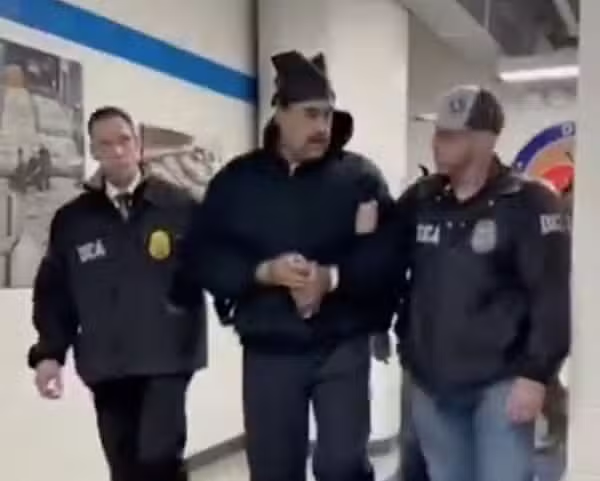
The recent military assault ordered by the White House against Venezuelan territory did not win the hearts of public opinion in the United States. Although the government presents the capture of Nicolás Maduro as a diplomatic and legal triumph, the streets of Washington and the interior of the country demonstrate deep skepticism. A new survey conducted by Reuters/Ipsos reveals, in fact, that only 33% of the population approves of the operation.
This scenario exposes an open wound in American society regarding the role of imperial powers in sovereign nations. While the government justifies the action with the fight against drug trafficking, the majority of citizens seem to see echoes of past interventions. Often, such incursions resulted in instability and irreparable human losses. Therefore, the survey reflects a clear resistance to the return of a foreign policy based on brute force.
The ideological gulf between Democrats and Republicans
The numbers reveal that political polarization continues to dictate the pace of social acceptance of modern wars. Consequently, support for the military incursion is drastically fragmented between parties. Among Republicans, who make up the president’s loyal base, approval reaches 65%. However, the scenario changes completely when we look at the progressive camp and human rights defenders.
On the Democratic side, rejection is almost absolute, with just 11% supporting direct action. Furthermore, independent voters, often the balance of votes, are cautious. Only 23% of these voters agree with the attack carried out. This disparity suggests that the narrative of “liberation” or “justice” does not convince those who defend the self-determination of peoples and multilateral dialogue.
Read also: Military onslaught in Venezuela divides and worries the US
The fear of a new never-ending military adventure
The memory of prolonged and costly conflicts still haunts the minds of the American working class. According to the survey, 72% of respondents express fear that the United States will become deeply involved in the South American country. This fear crosses partisan lines in surprising ways. It unites people who do not want to see trillions of dollars invested in foreign occupations while domestic infrastructure and public health lack basic resources.
The raid carried out in Caracas last Saturday, which culminated in Maduro’s arrest, evokes ghosts of historical invasions in Latin America. Therefore, the promise to “govern” Venezuela sends shivers down the spine of those who prioritize peace. The public clearly demonstrates that it prefers internal security to military glory in distant lands. Furthermore, the risk of a Venezuelan civil war appears imminent in the eyes of the population.
The hidden interest in oil reserves
One of the most sensitive points of the new government strategy lies in the management of Venezuela’s natural resources. On Sunday, the president declared that the country needs “full access” to Venezuelan oil fields. However, public opinion does not fully endorse this energy ambition through military means. The American people seem to identify the extractive bias behind the official discourse.
Only 30% of citizens openly support sending ground troops to the region. On the other hand, the Republican base appears to be more eager for resources, with 59% defending control of oil production. This position generates severe criticism from various social sectors. Many experts see the action as an attempt at economic plunder disguised as a humanitarian mission, violating international ethics.
Human and financial risks worry the allied base
Even among those who support the government, there is genuine apprehension about the human cost of the operation. About 64% of Republicans fear the incursion will put the lives of deployed military personnel at risk. Furthermore, 54% of government supporters express concern about the financial impacts of a possible prolonged occupation. Thus, the economic weight of the war scares even the most conservative sectors.
The government tries to assuage these fears by suggesting that Venezuela’s administration would occur via political pressure. However, the aggressive rhetoric remains firm and frightening. In a threatening tone, the president declared: “If they don’t behave, we will launch a second attack.” This belligerent stance keeps the country on high alert about the White House’s next steps in the Western Hemisphere.
Methodology and the future of the political scenario
The Reuters/Ipsos survey interviewed 1,248 adults across the country. The data indicates that the president’s overall approval rating rose to 42%. Although support for the war is low, the use of force appears to have mobilized some of the short-term electoral base. However, this gain in popularity may be ephemeral if the conflict drags on.
The survey’s margin of error is three percentage points, which confirms the solidity of popular rejection. It remains to be seen whether the government will ignore the popular outcry for caution and diplomacy. The fate of the neighboring nation and regional stability depend on this decision. If the plan for total domination proceeds, Washington will openly defy the will of the majority of its own people.
Source: https://www.ocafezinho.com/2026/01/08/prisao-de-maduro-nao-acalma-opiniao-publica-americana/