The war that no one asked for: when Washington looks at Caracas and the American turns away
There are decisions that cannot only be made in the halls of power. Some knock directly on the door, in the pocket and in the collective consciousness. The most recent military assault ordered by the White House against Venezuela is one of them. Officially sold as a diplomatic and legal victory, the capture of Nicolás Maduro did not go down well with the Americans themselves. On the contrary.
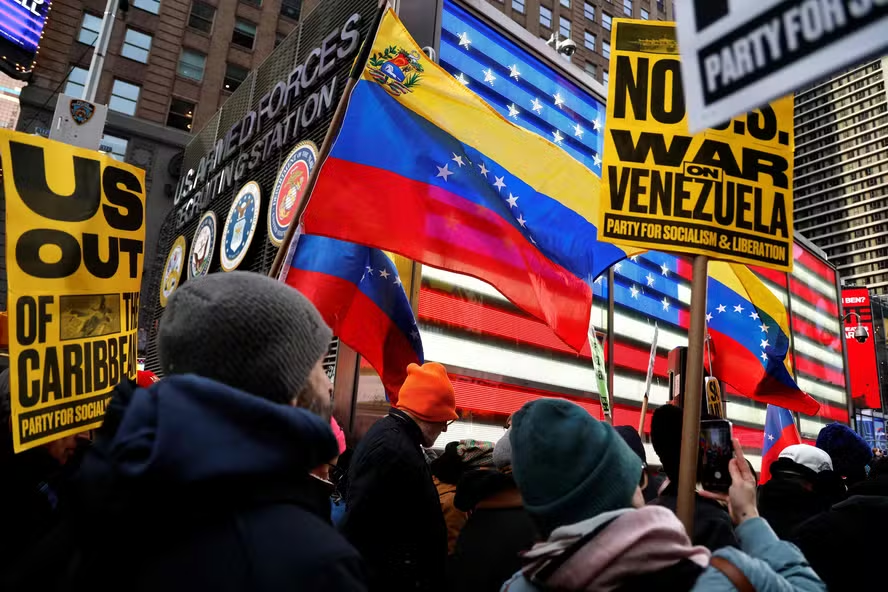
According to a Reuters/Ipsos survey, only 33% of the United States population approves of the operation. The number is low. And it says a lot. While the government celebrates, the country sighs, suspiciously. The streets of Washington, like the cities in the interior, seem to repeat the same uncomfortable question: why?
An old trauma called intervention
The United States knows well the price of military adventures. Iraq, Afghanistan, Libya. The names change, but the script is usually the same. Promises of liberation, moral discourses and, in the end, instability, deaths and billions burned.
Therefore, it is not surprising that a large part of the population sees this action as another chapter in a foreign policy based on force. Although the official discourse talks about combating drug trafficking, many citizens recognize the echoes of a past that still hurts. The survey does not show apathy. Shows resistance.
Read also: Military onslaught in Venezuela divides and worries the US
Furthermore, the perception is growing that the role of “world police” is no longer as convincing as it used to be. In times of crowded hospitals, crumbling roads and growing inequality, spending energy — and money — on external conflicts feels disconnected from reality.
The polarization that turns war into a platform
Like almost everything in current American politics, the war also became an ideological dispute. The data reveals a gulf between Republicans and Democrats. Among voters from the president’s party, 65% approve of the offensive. In the Democratic field, support plummets to just 11%.
Independents, always decisive, remain cautious. Only 23% agree with military action. This group, in particular, seems to reject the narrative of “justice” imposed from the top down. For them, self-determination and diplomacy still matter.
Thus, war ceases to be a question of international security and starts to function as an electoral tool. A known risk. And dangerous.
The fear of yet another endless war
There is a feeling that crosses parties and social classes: fear. According to the survey, 72% of respondents fear that the US will become deeply involved in Venezuela. This is not about ideological solidarity with Caracas. This is about political and economic survival.
The working class knows who pays the bill. They are his sons sent to the front. It’s your taxes paying for long-term occupations. Meanwhile, schools close and the health system asks for help.
Maduro’s arrest, held in Caracas last Saturday, rekindled familiar ghosts in Latin America. External interventions rarely end as planned. And the risk of a Venezuelan civil war further increases collective fear.
Oil: the elephant in the room
No analysis is complete without talking about oil. On Sunday, the president stated that the United States needs “full access” to Venezuelan reserves. The phrase fell like gasoline on the fire of public debate.
Only 30% of the population supports sending ground troops. Still, among Republicans, 59% support the US taking control of oil production. For many critics, the humanitarian discourse collapses in the face of this explicit economic interest.
It’s not difficult to understand the distrust. Latin American history is full of interventions justified by universal values and concluded with the exploitation of resources. The collective memory does not forget so easily.
Not even allies sleep peacefully
Even among government supporters, concern is growing. About 64% of Republicans fear for the lives of the military personnel involved. Furthermore, 54% are concerned about the financial impact of a possible prolonged occupation.
The White House is trying to calm tempers. Talk about political pressure, not permanent occupation. However, the belligerent tone insists on appearing. The president declared: “If they don’t behave, we will launch a second attack.”
The phrase is not reassuring. On the contrary. It keeps the country on alert and reinforces the feeling that the conflict could escalate at any moment.
The data that bothers power
The survey interviewed 1,248 adults across the country. The margin of error is three percentage points. Still, the message is clear. Although the president’s overall approval rating has risen to 42%, support for the war remains low.
Acting forcefully can mobilize the base in the short term. But it ignores a growing call for caution. It remains to be seen whether the government will listen to this silent majority or whether it will insist on exercising dominance over a sovereign nation, defying not only Venezuela, but the will of the American people themselves.
Because, in the end, every war starts far away. But it always ends at home.
Source: https://www.ocafezinho.com/2026/01/09/pesquisa-expoe-rejeicao-popular-a-ofensiva-contra-a-venezuela/