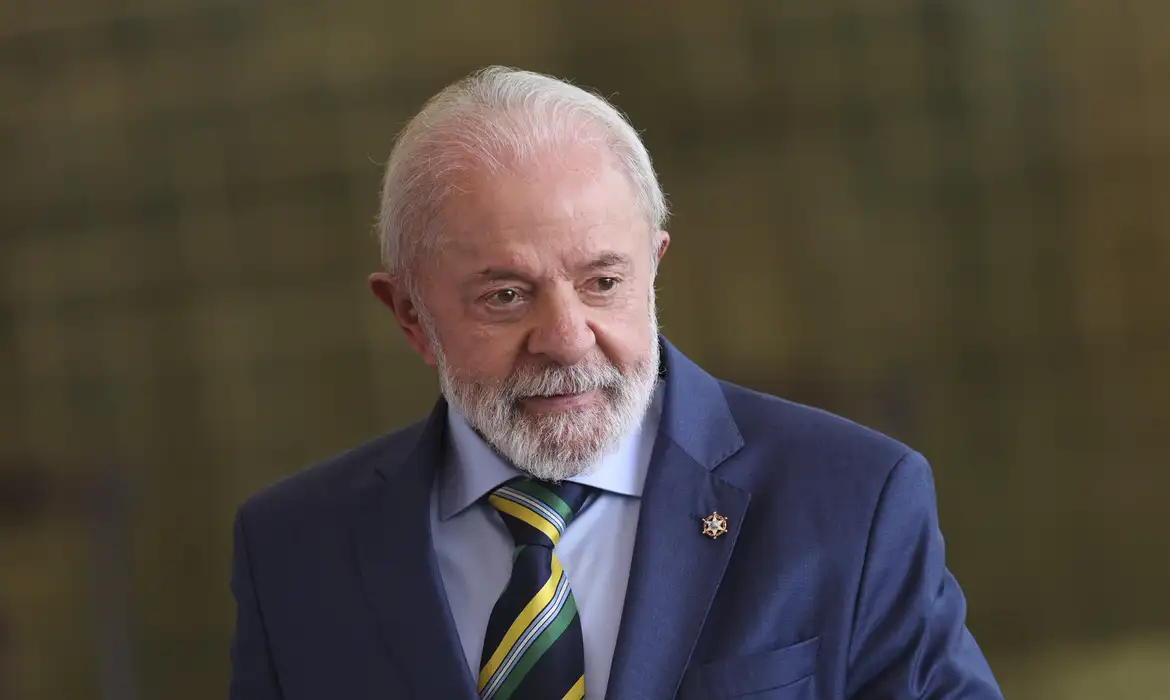
The British magazine The Economist published an editorial in which he argued that the president Luiz Inácio Lula da Silva do not run for re-election in 2026. The text, released this week, inserts Brazil into the international debate on political succession and causes repercussions by pointing out the age of the head of the Executive as one of the main arguments to question his permanence in the position.
In the editorial, the publication states that Lula, currently 80 years old, would be exposed to risks associated with age if he serves a possible fourth presidential term. The magazine argues that candidates above this age group would represent uncertainty for the conduct of the government, citing as a comparative reference the recent debate in the United States involving the then president Joe Biden.
Despite the criticism, the text recognizes that Lula appears in a competitive position in the Brazilian electoral scenario and admits that the president remains one of the strongest names for the 2026 dispute, in a political context that the magazine describes as unstable and marked by strong polarization.
Assessment of the political and institutional scenario
When analyzing the Brazilian political environment, the The Economist mentions the conviction and imprisonment of the former president Jair Bolsonarohighlighting that the episode had internal and international repercussions. The editorial also quotes the former president of the United States Donald Trumpstating that he had made accusations of political persecution in Brazil and adopted commercial measures against the country, which were later revised.
According to the magazine, the Lula government managed to preserve institutional stability in the face of this scenario and maintain channels of international dialogue, including with the United States. Still, the editorial maintains that the country should seek political alternatives for the next electoral cycle.
Economic criticisms and mentions of social policies
The text also addresses the Brazilian economy, classifying the current government’s policies as having moderate performance. The magazine recognizes that Brazil has shown growth above expectations in recent years, but criticizes the orientation of public policies, which, according to the editorial, would prioritize social programs and income redistribution mechanisms.
The publication assesses that part of the measures adopted by the government would be seen as unfavorable to the business environment, although it recognizes advances such as the Executive’s support for tax reform aimed at simplifying the tax system. Still, the editorial states that concerns persist in the business sector regarding the predictability and cost of fiscal policies.
Debate about succession in the progressive field
Another point highlighted by The Economist it is the absence of a clearly defined name as Lula’s successor within the progressive field. The editorial mentions the Minister of Finance, Fernando Haddadremembering his presidential candidacy in 2018 and assessing that he would not have consolidated himself as an electoral alternative until now.
The magazine also notes that regional leaders and younger mayors from the center-left have limited visibility on the national scene and do not, for now, have enough strength to replace Lula as the main political reference in the progressive field.
Based on this analysis, the editorial suggests that the president could choose not to run for reelection and open space for a renewal of leadership, allowing for a broader dispute within the political spectrum.
Approach to the right and possible candidacies
When dealing with the conservative field, the The Economist states that Jair Bolsonaro, despite the conviction, still maintains influence over part of the electorate, especially among religious groups. The text mentions the possibility of members of his family trying to occupy this political space, but assesses that these names would face electoral resistance.
The editorial highlights the governor of São Paulo, Tarcísio de Freitasas one of the main names on the center-right for the presidential race. According to the magazine, he brings together characteristics that could attract voters outside the Bolsonarist core, being described as a politician with a technical profile and with less rejection compared to other names in the conservative camp.
The publication states that a possible candidacy by Tarcísio could contribute to reducing the polarization between Lulism and Bolsonarism, pointing to research that would indicate competitive performance in simulated scenarios.
Repercussion and debate about external interference
The editorial reignited the debate about the role of the foreign press in analyzing national electoral processes. The position of The Economist was interpreted by analysts as a political assessment with an opinionated bias, common in international editorials, but which can influence the perception of investors, governments and opinion makers about Brazil.
The text has no direct effects on the Brazilian electoral process, which remains governed by national legislation and the decisions of the electorate. Even so, the publication shows that the 2026 presidential succession is already attracting attention outside the country and should continue to be at the center of political and economic debate in the coming months.
Source: https://www.ocafezinho.com/2025/12/31/midia-estrangeira-lanca-a-foice-contra-a-reeleicao-de-lula-em-2026/