The word extractivism jumps from mouth to mouth to describe decades of looting and destruction of natural commons in the country. Everyone knows that what agribusiness does with native forests and fields, or fumigated populations, what fracking does, leaving pollution and earthquakes, and mega-mining that lowers mountains, pollutes rivers and threatens glaciers, serves to criticize. Even the lithium fever, which threatens the water and the communities that inhabit the salt flats. Even to criticize the dispossession of the country’s indigenous communities.
Today we see the Mendoza communities mobilized like an unstoppable tide in the streets and routes of Mendoza in the face of a San Jorge mining project that threatens the water of the province at the hands of Governor Cornejo and the complicity of deputies from all the employers’ parties. “Enough of extractivism”, is heard in every corner. The same in that same province in 2019 and in Chubut in 2021, when the mobilization stopped similar projects in their tracks.
But the word is much more than that: it is a scientific concept that describes a very specific mode of capitalist appropriation of nature. One marked by relations of economic, social and neocolonial political oppression, whose origins are key to knowing if we want to develop strategies to confront this looting… and triumph. How to move from resistance to the conquest of another type of relationship with our natural commons? This question runs through each class.
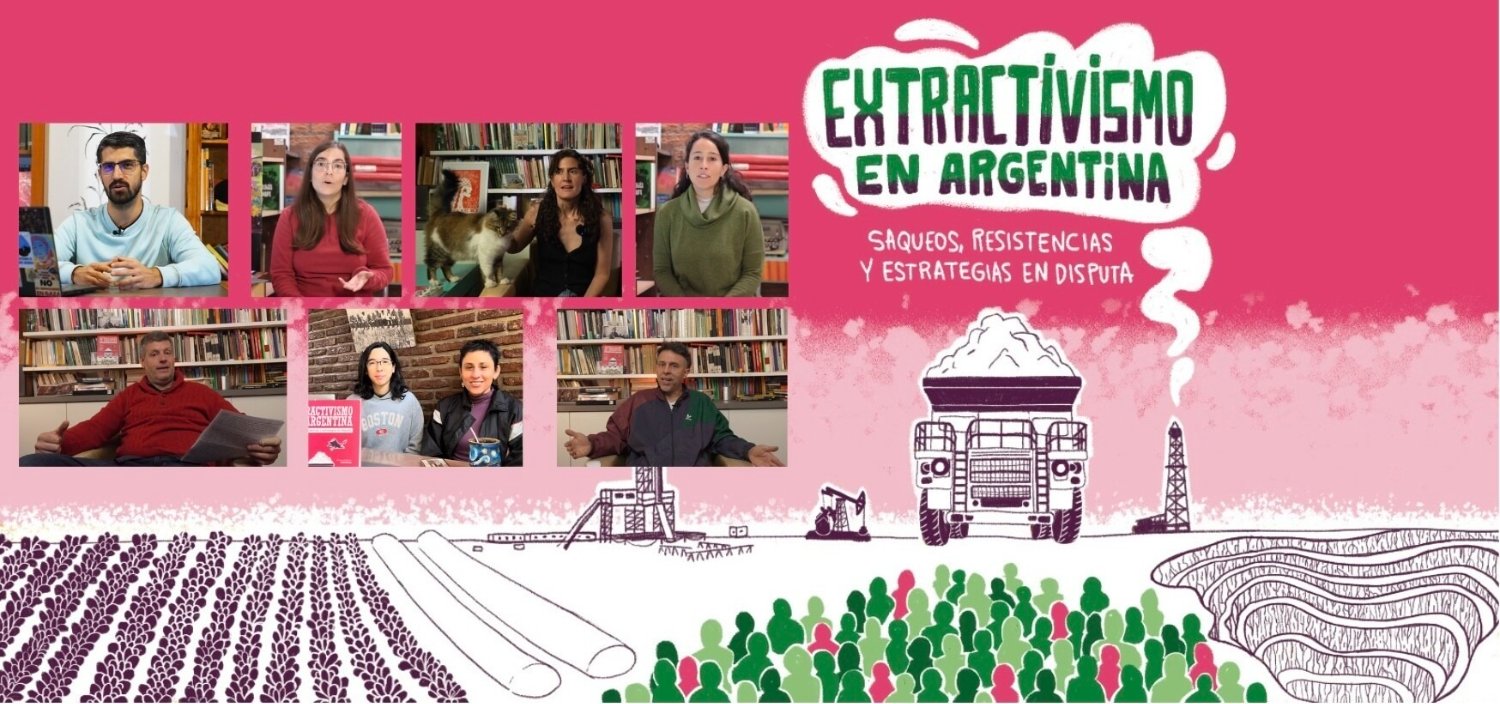
This course is designed to provide a first introduction to the topicby the authors of the book Extractivism in Argentinapublished by IPS Editions. The central objective is to strengthen socio-environmental militancy throughout the country by providing deep but accessible analyzes that enable exchanges and strategic reflection.
It has video introductions by the book’s authors, question guides, exchange forums and extensive bibliography. Is Open to all interested audiences, no prior knowledge is required, just the desire to participate. And, like all Socialist Campus courses, it is completely free (obviously, if you want to collaborate The Daily Left and join their community, you are more than welcome).
Class 1. Restoring the concept of extractivism in a Marxist strategic perspective

In the first class, Juan Duarte and Esteban Mercatante, editors of the book, trace the origins of extractivism from colonialism to the contemporary international division of labor, with the different generations of extractivism from the first generation, characterized by the use of human or animal force and with a very limited application of technologies, to the fourth generation, with enormous volumes of capital, very little human force and an enormous degree of ecological amputation. Along the way they dispel several myths about extractivism, such as the false promises of development with which different governments justify it. Finally, they address strategic debates on extractivist transitions, with authors such as Maristella Svampa and Enrique Viale, Eduardo Gudinas and Alvaro García Linera.
Class 2. Vaca Muerta: the looting and the “energy” transitions in dispute
From Neuquén, Esteban Martiné locates the eldoradistic promise cherished by Cristina Fernandez de Kirchner and Axel Kicillof, Vaca Muerta, from its opprobrious beginnings with a secret pact with Chevrón to the redoubled push by Milei’s extreme right. What were and are the environmental and social impacts of looting linked to fracking in that province? How to place the question of another type of access to energy beyond the fracking disaster? These are some of the questions that are covered in this class.

Class 3. Development or scorched earth? Promises and realities of megamining in Argentina
In the third meeting, Martha Bernabeu and Giulia Pigliónico, from Mendoza, authors of two chapters on megamining together with Ariel Iglesias, from the province of Chubut, address the development of megamining from different angles. They analyze what megamining implies as a form of imperialist plunder and the subordinate role that a dependent country like Argentina occupies, its impacts on the territories, the forms of resistance it has aroused to confront it and what fundamental lessons can be rescued to think about fundamental alternatives.

“The idea,” says Giulia Pigliónico, “is to invite people to think. Is megamining really a path to development? Who benefits and who pays the consequences? Are there other paths?” “We do it,” he continues, “because it is an attempt to reformat Argentina and carry out to the end the plan to ‘Peruvianize’ the social and political structure of the country.”

Class 4. Lithium fever
Lihuen Antonelli, also known as Ecozurda, and Natalia Morales, provincial deputy in the province of Jujuy, where she is part of the fight for the rights of indigenous movements against liturgical looting, introduce precisely the contours of this extractivism in the country.

Class 4 introduces the geopolitics of lithium under the umbrella of the energy transition in the hands of capitalist corporations in Latin America, specifically in the ELithium TriangleE: Argentina, Chile, Bolivia. The predominant positions regarding the exploitation of lithium and the different struggles around the question of how to move from territorial resistance to the fight for an alternative society that contemplates a true energy transition under a government of workers and oppressed sectors are analyzed.
Class 5. Agribusiness: strategies of capital to devour the living

Cecilia Gárgano, historian and researcher at CONICET specialized in agribusiness, explores the nodal lines that make up agrarian extractivism, focusing on two key mechanisms to understand the dynamics of production and accumulation of agroextractivism: fragmenting and homogenizing. The territories, their landscapes and natural common goods, but also the legal-regulatory order, the associated knowledge and imaginaries, as well as the experiences of and struggle of the populations, are standardized (homogenized) and encapsulated (fragmented). It also analyzes different experiences of struggle in agriculture, different resistances to agro-extractive logic, pointing to the structural transformation of the social relations of production.
From this link you can access the course. We invite you to join!
Source: www.laizquierdadiario.com