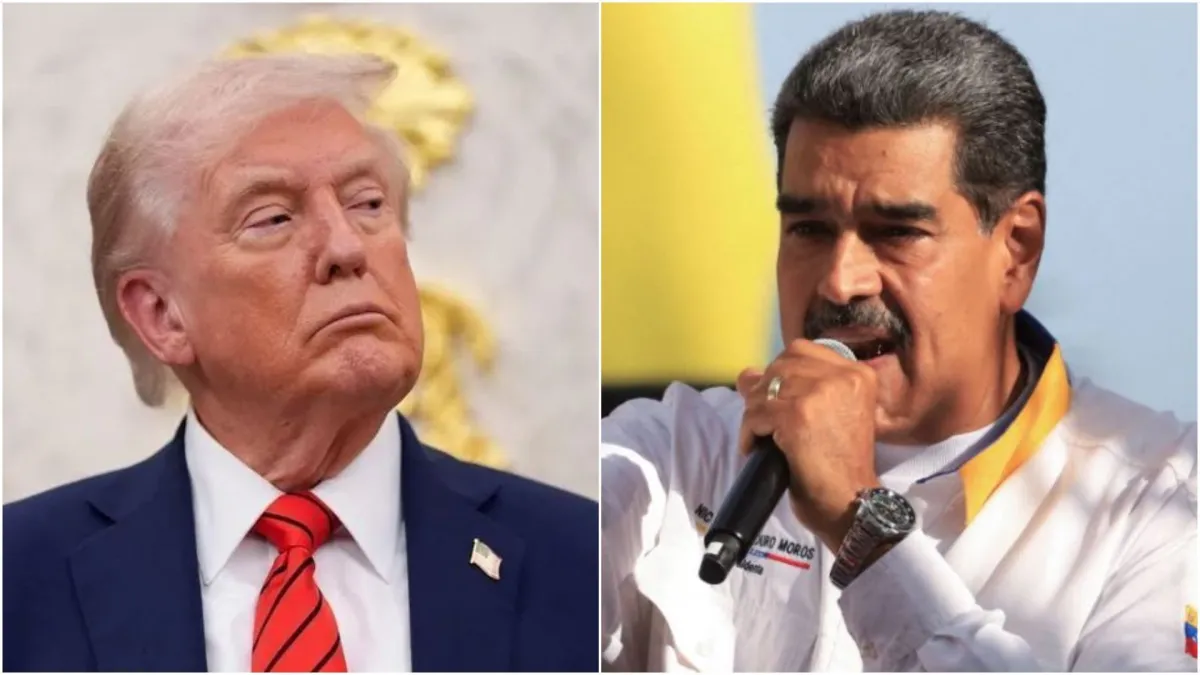
In recent days, Democratic and Republican parliamentarians in the United States have intensified their efforts to block any initiative by the president Donald Trump to proceed with military action against the Venezuela. The movement gained strength in the face of escalating tensions in the Caribbean, marked by increased operations by the US Armed Forces and threats from the president himself about possible land offensives.
According to information from Telesur, congressmen from both parties presented resolutions in the Legislature to force a vote that restricts any act of war not authorized by Congress, in direct response to the advancement of the call Operation South Spear.
Operation Southern Spear intensifies fears about conflict in the Caribbean
The articulation in Congress occurs in a context of growing concern. Since September, the United States has recorded at least 22 attacks conducted by US troops in the Caribbean sea and no Eastern Pacificaccording to sources cited by the international press. Operations are led by naval forces that include the aircraft carrier USS Gerald Fordone of the most modern in the US arsenal.
The military offensive has also been accompanied by complaints from more than 80 extrajudicial executionsunder the argument of combating drug trafficking in the region, which increased internal and external questions about the strategy adopted by Washington.
It is in this scenario that congressmen sought to formalize actions capable of limiting the president’s actions and demanding transparency about the objectives of the military campaign.
Democrats and Republicans unite to prevent military escalation
Among the main names involved in opposing the measures announced by Trump are the Democrats Tim Kaine, Chuck Schumer e Adam Schiffin addition to the republican Rand Paul. The group stated that military intervention in Venezuela would represent “a colossal and costly error that would unnecessarily put the lives of our soldiers at risk.”
The statement highlights internal divisions within the Republican Party itself, as well as growing discomfort with the tone adopted by the White House. Legislators from the Senate and the Chamber have been warning that increased tensions in the Caribbean could trigger a major conflict, with direct impacts on regional stability.
In the House of Representatives, Democrats Jim McGovern e Joaquin Castronext to the republican Thomas Massiepresented a parallel resolution reinforcing that “there cannot be any act of war without prior authorization from Congress”, reaffirming the constitutional role of the Legislature in decisions on the use of force.
Parliamentarians activate the War Powers Law to force debate and voting
Faced with the possibility of new offensives, congressmen announced that they will resort to Resolution on War Powerslegislation that allows Congress to require troop withdrawals and limit unauthorized military actions. The objective is to open a formal debate and bring the issue to a vote, creating institutional barriers to prevent US forces from being sent against Venezuela without legal support.
The resource is considered one of the strongest instruments available to the Legislature to restrict the Executive’s military initiatives. However, experts point out that its use tends to generate intense political disputes and may not be enough to completely prevent unilateral actions by the president.
Trump’s military escalation increases diplomatic tensions and international criticism
Trump’s recent statements about possible ground attacks on Latin American cartels and his rhetoric about what he calls “narcoterrorism” have amplified the concerns of foreign governments and multilateral organizations. The escalation reinforces debates about the limits of North American foreign policy and the risks that the Venezuelan crisis will evolve into an armed confrontation.
Diplomatic sources consulted by international vehicles warn that the overt presence of troops and military equipment around Venezuela could put even more pressure on the Venezuelan government. Nicolas Madurowhile increasing the risk of incidents.
Senator Chuck Schumer publishes message warning of risks of intervention
The internal tension in Congress became more explicit after a public demonstration by the Democratic leader in the Senate, Chuck Schumer. In a message on the X network, he stated:
“If the Trump administration moves forward with its plans to launch military strikes against Venezuela, we will introduce a War Powers Resolution to block the deployment of U.S. forces in Venezuela. The safety of our troops and our national security are at stake.”
The declaration reinforces the climate of urgency and mobilization in both Houses of Congress.
Approval depends on a simple majority, but presidential veto is likely
To be approved, the resolution needs simple majority in the Senate and the Chamber. However, even if it reaches this support, the text could be vetoed by Trump. In this case, a vote of two thirds of both Houses to overturn the veto, a scenario considered unlikely given the correlation of forces in the Legislature.
Still, the bipartisan offensive represents an institutional brake on military escalation and a clear sign that Congress seeks to regain a leading role in defining North American foreign policy.
Venezuela remains at the center of the geopolitical dispute
With the advancement of military operations and the increase in diplomatic pressure, Venezuela remains the focus of international discussions. Countries in the Caribbean and South America are following with concern the possibility of a conflict that goes beyond Venezuelan borders and causes humanitarian and economic impacts in the region.
The coordination in the North American Congress seeks to avoid this scenario, but the dispute between the Executive and Legislative branches is expected to intensify in the coming weeks, as new military movements are announced.
Source: https://www.ocafezinho.com/2025/12/03/congresso-dos-eua-articula-freio-bipartidario-para-impedir-acao-militar-de-trump-na-venezuela/