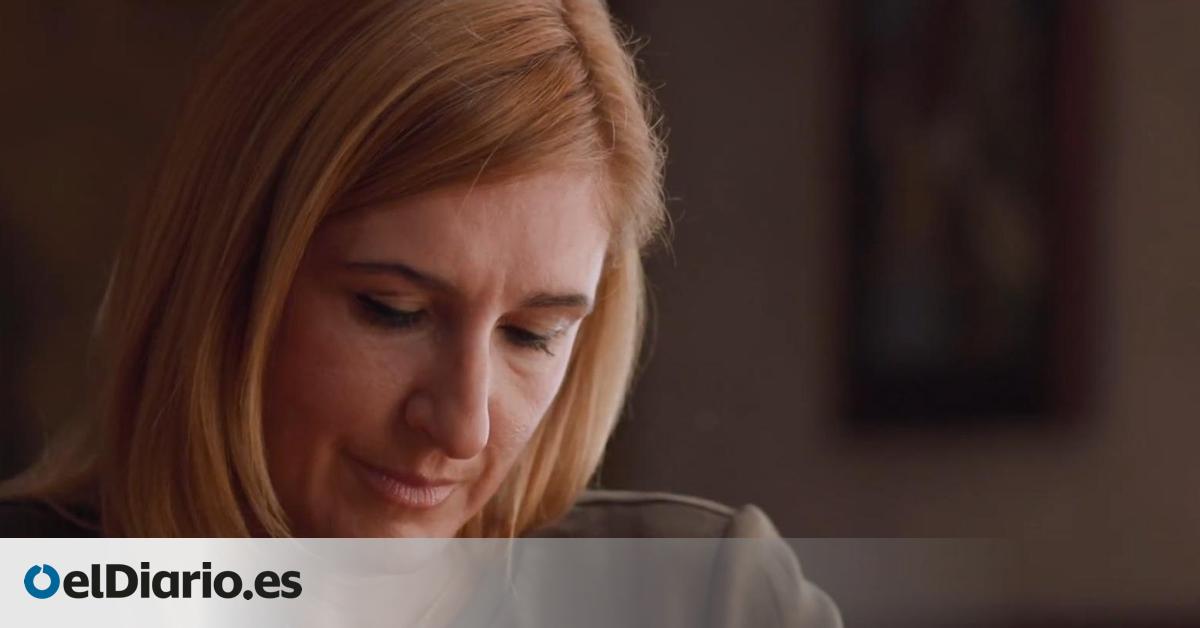
The former Minister of Emergencies, Salomé Pradas, has reconstructed in an interview on the program Saved of the Sixth on the afternoon of October 29, the fateful day that left 229 dead in the Valencian regions. It has been a story that has always revolved around a blind spot: the lack of fluid communication with Carlos Mazón while the president remained at the El Ventorro restaurant and his subsequent mysterious journey. That absence and the minutes in which she was unable to locate him in the midst of an emergency have become the thread that defines her political relationship with him and that now, after his resignation as president and in light of the judicial investigation, acquires additional relevance.
The interview has not only offered a chronological reconstruction; has exposed a personal disappointment of Pradas with Mazón in the background: a councilor who felt alone at the worst moment of the emergency and a president who was not reachable when it was most needed. The mix of lack of coordination, silences, questioned technical decisions and explanations that arrived late paints a fragile scenario for the most tragic day in the recent history of the Valencian Community.
Pradas has explained chronologically that he began to have problems contacting Mazón “before 1 p.m.,” still in full activity as president: “I might have been in a meeting or making a statement… and he didn’t pick it up.” [el teléfono]”he detailed. After several failed attempts, the instruction he received was to transfer the information through the president’s chief of staff, José Manuel Cuenca. This filter already anticipated the difficulty that he would encounter during the following hours in speaking with the president.
El Ventorro, the calls and the silence
The former councilor has detailed that she tried again to locate Mazón in the middle of the afternoon, already in a scenario of complications accelerated by the torrential rains. Calls were not returned, she says, and she continued to report the growing chaos, including the activation of the EMU. The president’s response, when a communication finally came in, was only “to continue informing him.”
But the most critical moment came with the warning about the risk at the Forata dam, a risk that could threaten a flood that endangered 80,000 people. When he tried to contact him again, Mazón did not respond. The call was returned almost ten minutes later, a period that Pradas describes as the most difficult of the afternoon. At that point, he emphasizes that he did not perceive in the president a reaction commensurate with gravity. To Gonzo’s question about whether he noticed him worried, he answers: “No.”
The definitive call
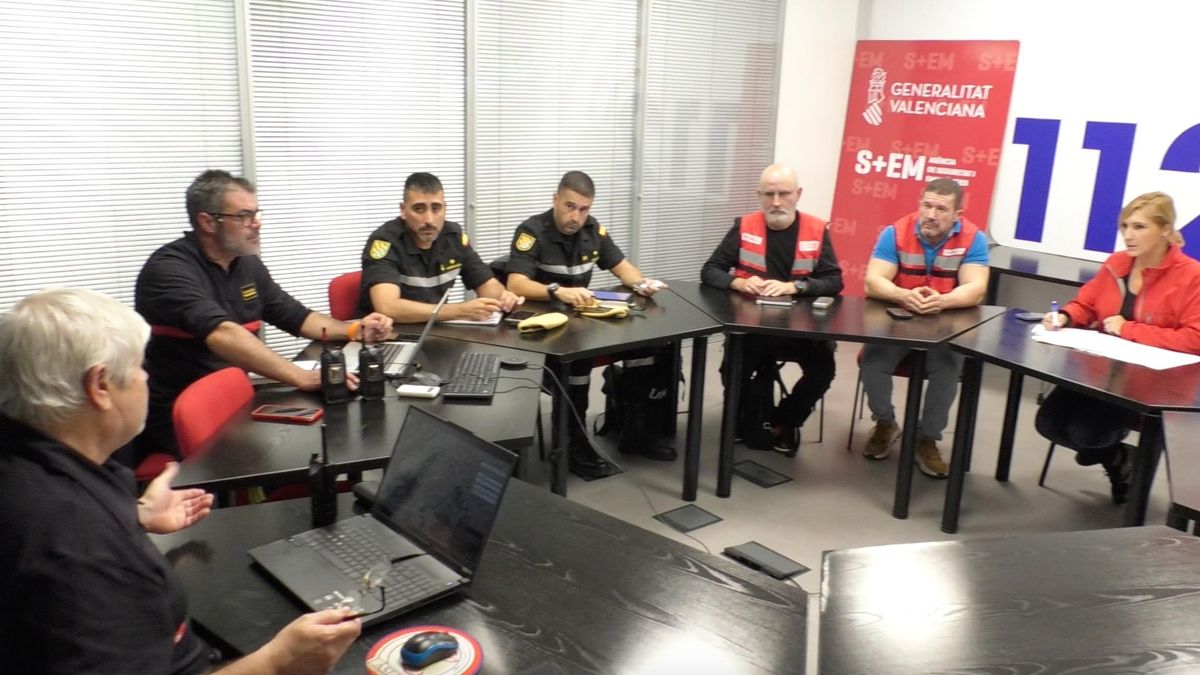
Salomé Pradas explained that, after the gap in communication with Mazón starting at 7:10 p.m., the final call came at 7:43 p.m. In this, he informed him of the situation and that the Es-Alert was going to be sent. Mazón has not yet told her that she is going to Cecopi, but the former councilor assures: “I think it is activated there, because afterwards there are calls to her cabinet and protocol personnel.”
In this context, Pradas affirms that the Es-Alert did not take long to be sent because it had to be sent to Mazón, but rather that the message had the process it should have. “I didn’t wait for Mr. Mazón at all, nor did I expect any instructions from him. It was absurd, if he didn’t take my calls, how could we be there waiting for a person who we didn’t even know at that time if he was going to come?”
However, the former councilor has pointed out that at 8:10 p.m. she called him to tell him that she was going to Cecopi – at 8:11 p.m. the ES-Alert was launched – and when she was already in the car, at 8:18 p.m. she asked him which building he was going to, and he explained it to her.
The hardest blows
Throughout the interview, Pradas has recounted what he learned days and even months later: that the president was at El Ventorro, who he was with, what times it was taking place, including the walk—according to both diners—to the parking lot where the journalist’s car was. Thus, the former councilor explained that it was not until days later that she found out that the meal was with Maribel Vilaplana and that she found out “like all Valencians, on November 8”, according to what a person from her team informed her, and that she was surprised: “I couldn’t believe it.”
In these external references he has also recalled the tone with which the mayor of Cullera, Jordi Mayor, explains that the president addressed him, a call that he made after Pradas informed him of the danger of overflowing the Forata dam, which precisely supplies the Xúquer river, which flows into this town. Pradas has stated: “I’m not going to say that he’s lying, but it’s hard for me to believe that he almost spoke to him like a friend. Maybe it’s just that I don’t want to believe it. It’s different.”
But the worst blow, according to Pradas herself, was hearing when Mazón declared to the Congressional Investigation Commission that perhaps he did not answer the calls because “he wouldn’t hear them when he was walking” and he had “his cell phone in his backpack.” “It caused me great pain, I immediately thought of the victims, because it was the worst moment of the afternoon. I wanted to inform him especially about the Forata dam and the decision to launch the Es-Alert, I did not want to ask him for his opinion or evaluation, nothing stopped the Es-Alert on Mr. Mazón’s part, because I could not even inform him that it was being debated even when it had already been decided, because he did not answer the phone.”

After the tragedy, the emptiness for the councilor
Pradas, in the days after the incident, acknowledged that she could see that she was going to be fired due to the attitude of the president, who shunned her while she told him that she wanted to talk to him. When they finally met, he told her that he was going to remodel the Consell and that she had to leave. “I told him that I thought he was being unfair to me, that he was pointing fingers at me, that he was blaming me when I had been where I should have been from the beginning.” “I wanted to tell him that with this dismissal they were looking for a scapegoat to pay or cover up anything that he might think should be covered up, and that I was surprised when he himself had defended the actions of the Generalitat Valenciana,” he lamented.
However, the former councilor has assured that she has subsequently been told that Mazón regretted having dismissed her, and that the transfer of both Pradas and Emilio Argüeso was a decision “out of mere political interest.”
Towards the end of the interview, when Gonzo asked him about personal mistakes, Pradas responded about his own: “The biggest mistake was not having told Mr. Mazón to come immediately”; Next, he pointed out what he attributes to the president: “Mr. Mazón’s biggest mistake was not being there.”
And she completed her reflection with the phrase that compromises her politically and that, in her opinion, summarizes the structural failure of that afternoon: “It would have been necessary for the highest representative of the Generalitat to have been at Cecopi.”
Others noted: from technicians to state officials
On a secondary level, but not minor, Pradas has also pointed out Saved to technical failures that, according to his testimony, aggravated the situation. He assures that the operational chief of the Fire Consortium, José Miguel Basset, showed opposition to the content of the Es-Alert due to its possible “stampede effect” and that this discrepancy contributed to delaying the sending of the notice.
According to his story, the firefighters handled their own data on flows that did not reach Cecopi in real time, something that he considers decisive and that must be clarified in court. He has also targeted the head of Emergencies, Jorge Suárez, by maintaining that he will be the one who must explain why the 112 calls did not reach Cecopi during that critical stretch of the day.
Pradas has not forgotten to give his version of the Government’s responsibilities. He has censured the state organizations, Aemet (State Meteorological Agency) and CHJ (Júcar Hydrographic Confederation), whom he has accused of “having real-time flow information, they did not transfer it.” He has also accused the president of the Júcar Hydrographic Confederation, Miguel Polo, of “hesitating” at the time of the flooding of the Poyo, which caused the controversial phrase “I don’t feel like calling him”, known in a Cecopi video.
Furthermore, he has reproached the central Executive for the fact that the resources arrived “in dribs and drabs” and has regretted that the national emergency was not declared despite the exceptional severity of the catastrophe.
Source: www.eldiario.es