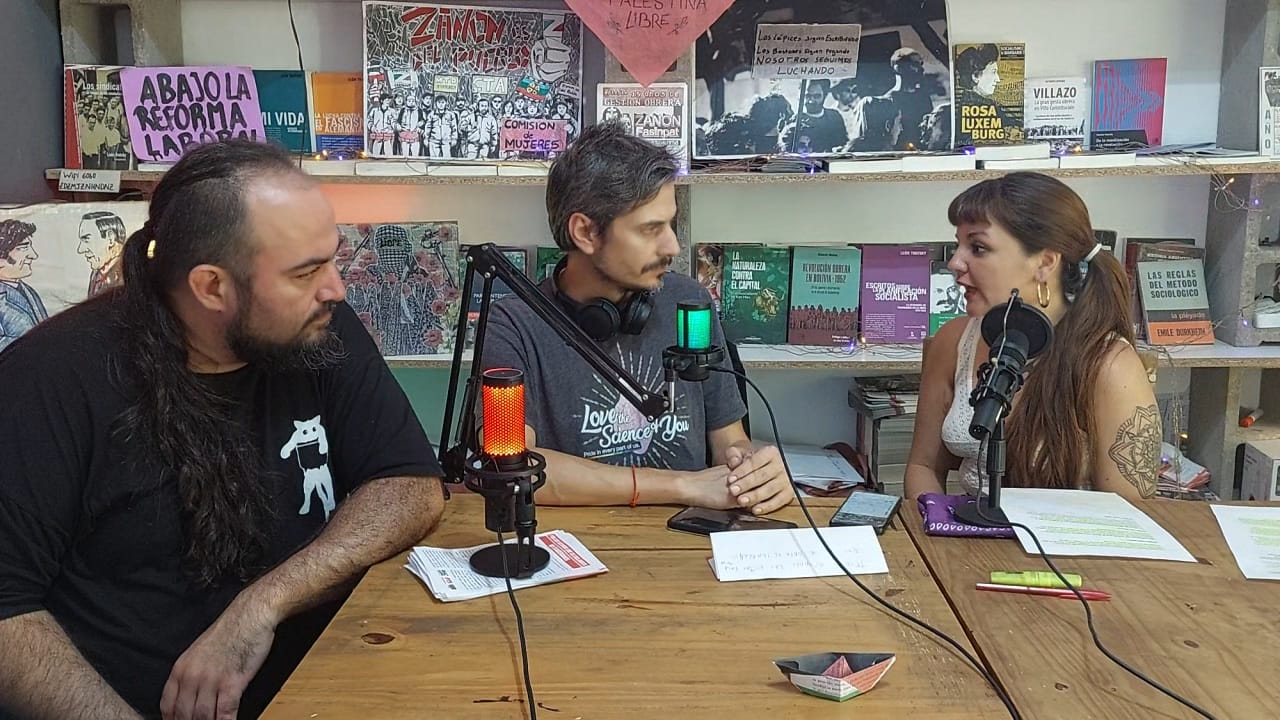
After 8M where thousands of us took to the streets, we want to bring to the table a little of the history of women who, pardon the redundancy, changed history. They are the ones who faced the fight for the recovered factories and those who learned to fight against closure or layoffs. We are going to take a little of the history of Zanon, Madygraf, Secco and Fate from the hand of their protagonists who are going to tell us their first-person experience as part of the women’s commissions.
Women’s commissions have existed for centuries in many parts of the world and went through different processes: at first limited to being external support for the men’s struggle, carrying out more “service” tasks, but they also learned to carry out debates, bring together new colleagues, obtain solidarity from the neighborhoods, face repression and even sustain strikes when there were arrests.
In this way, what at first was expressed as support, as relatives of workers, became a laboratory of emancipation where women began to have their own agenda and their own demands: equal pay, maternity leave, the fight against harassment and workplace violence, and the right to unionize. The organization into commissions allowed many women to quickly enter political and union life, opening debates about their place in society and in the labor movement.
Zanon’s example:
The Zanon Women’s Commission – a ceramic factory – was born in the first years of the struggle for workers’ management, at the beginning of the 2000s, in Neuquén. Since the so-called “9-day strike”, women – not only the few who worked in the factory, but also wives, mothers and daughters of the workers – played a key role. They put themselves at the forefront of the fight, holding tents at gates, touring neighborhoods and businesses for the strike fund and participating in each march with their flag.
His role was fundamental in raising the morale and combativeness of the workers, pushing them not to give up in the face of adversity.
They were part of the organization and today some work in the factory under worker management, along with sons and daughters who lived their childhood in the struggles and are now part of the management.
They were in charge of fundamental tasks: they went to radio and television channels to broadcast the struggle, they organized food collection, they promoted the strike fund and weaved networks of solidarity with the community. This organization was key to sustaining the struggle and guaranteeing that working-class families could resist the hardest moments of the conflict, such as eviction attempts and economic suffocation.
The role of the Women’s Commission went far beyond logistical support. They actively participated in assemblies, in decision-making and in building unity between workers and the community. They also brought Zanon’s voice to the National Women’s Meetings, where they shared their experience and debated organizational methods, contrasting the assembly practice of the factory with the consensus methods of the meetings. Her presence and her example inspired other workers and women’s commissions from recovered factories like Madygraf, which we will get into later, showing that the workers’ struggle and the women’s struggle can and should go hand in hand.
The women of Zanon also led marches and public actions, such as the mobilization on International Women’s Day, where they were protagonists in denouncing threats and defending the rights of working-class families. His intervention was recognized as a symbol of strength and unity, and his example was replicated in other experiences of workers’ and popular struggles.
In summary, the Zanon Women’s Commission was formed as a tool of organization and struggle, playing a fundamental role in resistance, dissemination and building bonds of solidarity, and demonstrating that women’s self-organization is key in any process of workers’ struggle.
Madygraf Women’s Commission
The Madygraf (former Donnelley) Women’s Commission has its origins in 2011. Back then, they began organizing to support laid-off workers and, over time, established themselves as a fundamental class institution. When the employers closed the plant in 2014, the Commission was key: they put a tent at the door and, under the motto “Families on the street never again”, they promoted the takeover and start-up of the factory, inspired by Zanon’s experience. Many wives and family members who previously did not feel challenged found in the Women’s Commission a space for support and organization.
With workers’ management, the Madygraf Women’s Commission promoted achievements such as the creation of the Game Library (for workers’ children), extended maternity leaves, “women’s day” and active participation in factory assemblies and decisions. They also promoted participation in the National Women’s Meeting, the marches for legal abortion and Ni Una Menos, and fought against machismo inside and outside the factory, with the support of their male colleagues who covered them on the machines during the mobilizations.
The Madygraf Women’s Commission is recognized for opening the doors of the factory and the workers’ club to other women, promoting the formation of women’s commissions in other places of work and study. They have been a reference for the struggles of workers at Coca-Cola, Ansabo, Molinos Minetti and Lear, and have organized massive assemblies that turned the graphics green. They also played an important role in the organization of Nordelta domestic workers, inviting them to share experiences and struggle strategies.
The members of the Commission highlighted that this space allowed them to empower themselves, organize, debate machismo and rights, and be a collective supporter. Many of them had never participated in marches before learning about the Commission, and today they are protagonists of the workers’ and feminist struggle.
More recent examples:
Among them we have the Secco energy company which, as we know, faced layoffs and achieved 11 reinstatements, a blow to the employers’ associations that intend to apply the labor reform. We can listen first-hand to Laura, telling what that experience was like of taking the lead as several women who were in charge of childhoods, how she kept them in communication with her own WhatsApp group not only in terms of actions but also supporting themselves collectively and daily.
Laura is the wife of Fernando Tripicchio, one of the workers who was fired from the energy company where he worked along with 29 others in the emergency sector and who fought for his reinstatement. Fernando even turned 50 in the middle of the struggle, surrounded by his colleagues, who hugged him and jumped while they sang happy birthday to him and then shouted “workers’ unity.”
Finally, in recent weeks we have been plagued by the conflict in Fate when we learned of the attempted closure, leaving 900 workers without their source of employment.
On February 19, billionaire businessman Madanes Quintanilla closed the FATE factory, trying to leave workers and their families on the streets. Since then they stood up to defend their source of work, taking over the plant, mobilizing, organizing the active solidarity of the neighborhood and the community, with festivals and actions, coordinating with other sectors, and facing repression. The support of their families and broad solidarity is essential and we can hear it from the children of one of the workers, Sebastián Tesoro.
All these transformative experiences lead us to reflect on the fundamental nature of the intervention of women and their families in workers’ struggles, not as witnesses but also as protagonists in the face of ongoing attacks and those to come, thus being a true laboratory of emancipation.
Source: www.laizquierdadiario.com