World Cup 2026: FIFA Faces Criticism Amid Record Ticket Prices and Geopolitical Tensions
The 2026 World Cup is set to kick off in North America, but excitement is overshadowed by backlash over unprecedented ticket costs and concerns stemming from US immigration policies and Middle East conflicts.
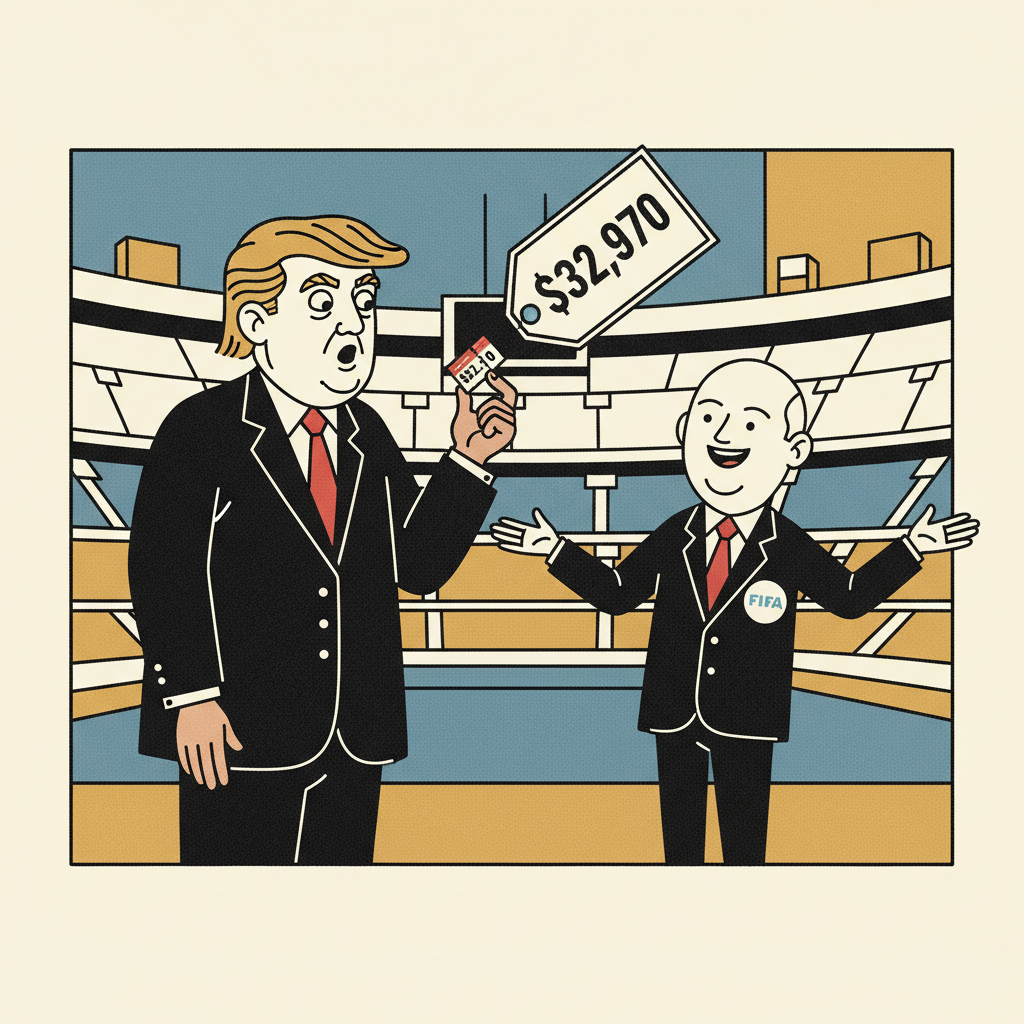
The FIFA World Cup 2026, a groundbreaking tournament spanning the United States, Canada, and Mexico, is poised to commence on Thursday. However, global governing body FIFA is navigating significant pre-tournament turbulence, including soaring ticket prices, a complex political climate in the U.S., and ongoing tensions in the Middle East. Despite FIFA President Gianni Infantino's optimistic declaration that this will be "the greatest show that the planet has ever seen," the build-up has been fraught with challenges.
This edition marks several firsts: a record 48 teams will participate, making it the largest and most logistically demanding World Cup to date, and it is the first to be co-hosted by three nations. The opening match will take place at Mexico City's iconic Estadio Azteca on Thursday, June 9, 2026, at 3:00 pm local time (1900 GMT), featuring co-hosts Mexico against South Africa. The six-week spectacle will culminate in the final on July 19 at the MetLife Stadium in New Jersey, which has a capacity of 82,500.
Amidst the anticipation, football fans are pondering if Lionel Messi, at 38, can secure a second consecutive World Cup title for Argentina, solidifying his claim as the greatest player ever. Alternatively, 41-year-old Cristiano Ronaldo might lead Portugal to their inaugural World Cup victory. The host nations, particularly England with captain Harry Kane, also hope to end a 60-year drought for a major international championship since their 1966 World Cup triumph.
Ticket Price Outrage and Political Hurdles
A major point of contention has been the astronomical increase in ticket prices. The most expensive face-value ticket for the 2022 World Cup final was approximately $1,600, whereas for 2026, the priciest FIFA-sold ticket is an staggering $32,970. This inflation is consistent across all 104 matches, with many tickets still available on secondary markets despite high demand. Even prominent figures like Donald Trump expressed surprise at the $1,000 cost for tickets to the USA's opening game against Paraguay in Los Angeles on Friday, remarking, "I wouldn't pay it either, to be honest with you."
Beyond ticket costs, the political climate in the United States has raised concerns. Human Rights Watch has warned that American policies on immigration, protests, and press freedom could lead to a tournament characterized by "exclusion and fear." These anxieties were amplified when FIFA removed Somali referee Omar Artan from the World Cup roster. Artan, who was set to be Somalia's first official at a global finals, was denied entry into the United States upon arrival at Miami International Airport on Saturday. FIFA stated its inability to intervene in the decision, subsequently omitting him from its 52-strong referee team.
Geopolitical Tensions and Tournament Logistics
The US-Israel military strikes against Iran in February have also cast a shadow over the tournament, particularly as Iran is slated to play three group games in the United States, beginning with New Zealand on June 15. Although Donald Trump initially suggested Iran should withdraw for "life and safety" reasons, he later softened his stance. Iran subsequently relocated its base camp from Tucson, Arizona, to Tijuana, Mexico. Furthermore, 15 Iranian administrative and management staff members have been denied U.S. visas, a decision Iranian authorities have condemned as "deliberate and discriminatory treatment."
On the field, the expansion to 48 teams from 32 in 2022 raises questions about the competitiveness of the group stage. A total of 72 first-round matches will see only 12 teams eliminated, with 32 advancing to the knockout rounds—the top two from each of the 12 groups, plus the eight best third-place finishers. Innovative rules include mandatory cooling breaks in each half to combat heat and humidity across the 16 venues, and stricter enforcement against time-wasting, with substitutions required within 10 seconds. A crackdown on racist abuse means players risk a red card for covering their mouth during confrontations. The final will also feature a Super Bowl-style halftime show with Madonna, Shakira, and BTS, extending the interval from 15 to approximately 25 minutes, potentially making it the longest on record.
Synthesized from primary source
France 24 — https://www.france24.com/en/live-news/20260609-world-cup-nears-kickoff-after-pre-tournament-turbulence